

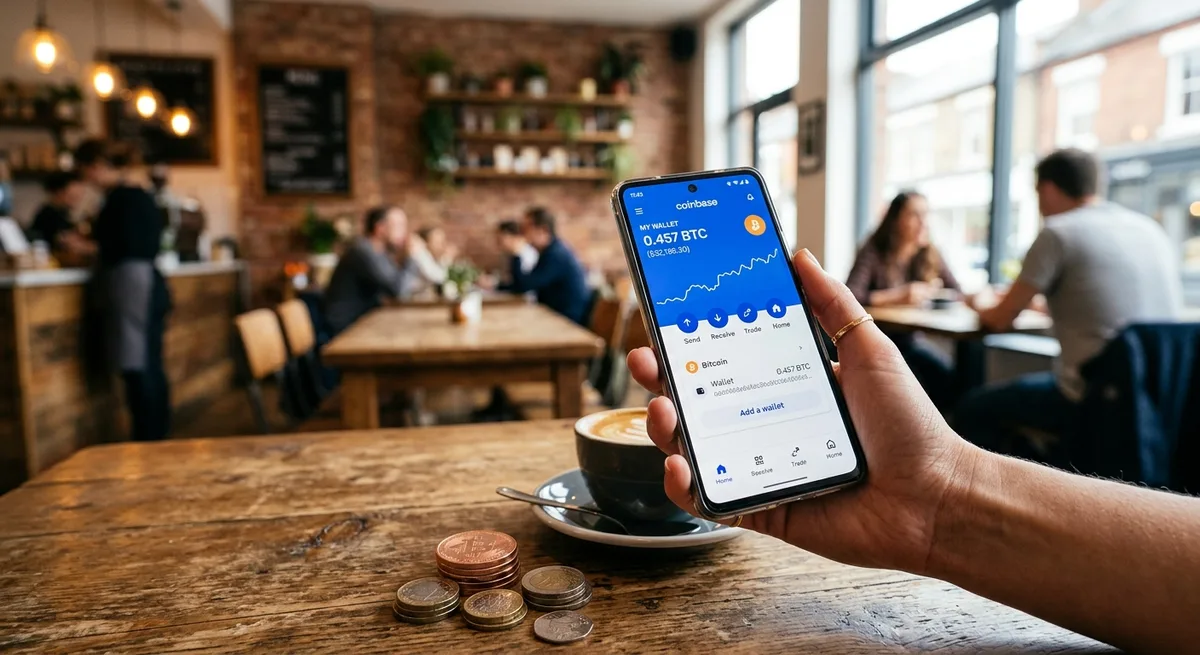
Bitcoin Payments Explained: Where and How You Can Use It
Introduction: What bitcoin payments actually mean today
Bitcoin payments are simply payments made using bitcoin instead of cash, cards, or bank-based apps. That sounds straightforward, but the reality is a bit more layered. For some people, bitcoin payments are a way to send money across borders without relying on a bank. For others, it is just another option for paying online, especially when a merchant supports crypto payments or wants a faster form of digital payment settlement.
What matters today is not the old question of whether bitcoin will replace every payment system. It has not. And it probably does not need to. The more useful question is where bitcoin works well, where it does not, and how to use it without making avoidable mistakes.
If you are a consumer, you are probably trying to figure out how to pay with bitcoin online, what kind of wallet you need, and whether fees or speed make sense for everyday purchases. If you run a business, the questions shift. Can bitcoin attract new customers? Can it reduce payment friction in certain markets? How do you handle accounting, taxes, and price swings?
This article walks through both sides in plain language. We will cover how bitcoin payments work, where you can actually use them, the main pros and cons, and how individuals and merchants can approach them in a realistic way.
How bitcoin payments work from sender to receiver
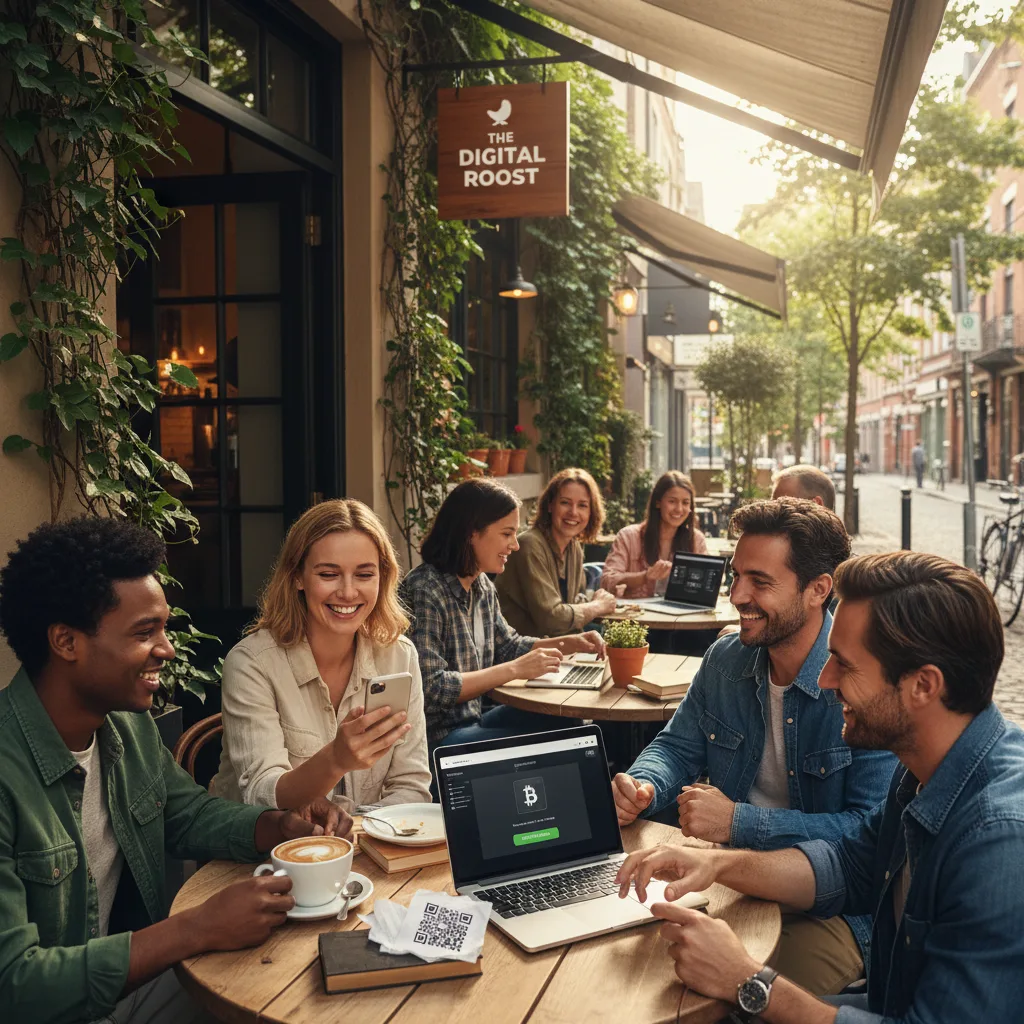
At the simplest level, a bitcoin payment moves value from one wallet to another over the Bitcoin network. The sender opens a wallet, enters the receiver’s address or scans a QR code, picks an amount, checks the fee, and confirms. After that, the network processes it and the receiver can verify the payment came through.
Unlike a card payment, there is no central company approving or rejecting the transfer in the background. The transaction is broadcast to the network and then confirmed on the blockchain. That is why people describe bitcoin as a peer-to-peer payment system. In practice, some services sit around that process to make things easier, but the core idea is still a direct transfer.
If you want a deeper breakdown of how that flow works, this guide on Bitcoin Transactions Explained Step by Step is a helpful companion. But before you send anything, you need a few basics in place.
What you need before you pay with bitcoin
Before you can make a bitcoin payment, you need three things.
First, a bitcoin wallet. This is the tool that stores your keys and lets you send or receive BTC. Some wallets are mobile apps, some are desktop based, and some are hardware devices for stronger security. If you are new to this, it helps to read Bitcoin Wallets Explained before choosing one.
Second, bitcoin in that wallet. Without BTC available, you cannot send anything. This sounds obvious, but beginners often set up a wallet and assume that is the finish line.
Third, the recipient’s payment details. That usually means a wallet address or a QR code. QR code payments are popular precisely because they cut down on typing errors. Since bitcoin transactions are generally irreversible, one wrong character can turn into a costly lesson.
It also helps to know whether you are paying on the main Bitcoin network or via Lightning. The experience can differ quite a bit depending on which route is used.
Where bitcoin comes from before it is spent
Most people get bitcoin in one of two ways. They either buy it through a crypto exchange, or they receive it directly from someone else.
For first-time users, exchanges are usually the starting point. You create an account, verify your identity if required, deposit local currency, and buy BTC. Then you move it to your own wallet so it is ready to spend. If that process is unfamiliar, What Are Bitcoin Exchanges gives a practical overview.
The second route is receiving BTC directly. Maybe a client pays you in bitcoin, maybe a friend sends some over, maybe you earn it through freelance work. In that case your wallet becomes both a receiving point and the tool for future spending.
Either way, the core idea is the same. You do not need to be an investor to use bitcoin for transactions. You just need BTC available, a wallet you control, and enough understanding to send it safely.
Where you can use bitcoin payments in real life
Bitcoin can be used in more places than many people assume, but fewer places than crypto headlines sometimes suggest. Adoption exists, but it is selective. Some industries and regions are much more open to bitcoin than others.
The most common use cases include online purchases, digital services, travel bookings, certain subscriptions, and cross-border transfers where traditional payment options are slow, expensive, or just plain limited. In emerging markets, bitcoin can also serve as a practical payment rail when local currency instability or banking friction makes alternatives harder to use.
Expect variation though. One country might have active bitcoin merchants and retail acceptance, while another is mostly limited to online services and niche communities.
Online stores, apps, and service providers that accept bitcoin
The easiest place to use bitcoin is usually online. Some ecommerce payments are handled directly by the merchant, while others go through payment processors that let customers pay in BTC while the business receives local currency.
You will find bitcoin accepted by software companies, hosting providers, VPN services, digital product sellers, gaming platforms, freelance service providers, and some subscription businesses. There is also a growing list of stores accepting bitcoin, though it shifts over time and is rarely universal across entire sectors.
That matters because most people asking where to spend bitcoin are really asking about practical internet use. Online, bitcoin can be genuinely useful when cards fail, when cross-border access matters, or when both buyer and seller prefer a different payment route.
That said, merchant adoption is still selective. Do not assume a major brand accepts bitcoin unless it clearly says so at checkout.
Physical stores and point-of-sale bitcoin payments
In physical stores, bitcoin payments usually happen through QR codes, point-of-sale apps, or payment terminals that support BTC or Lightning. You scan a code, approve the payment on your phone, and the merchant sees confirmation on their side. Simple enough in theory.
In practice, this works best when the payment is fast. You are standing at a coffee counter, phone out, and nobody wants to wait. That is one reason Lightning-based retail payments get so much attention. For small transactions, a slow confirmation makes the whole process feel clunky compared with tapping a card. How Lightning Network Works: Simple Explanation connects the dots if you want the full picture.
Point-of-sale bitcoin payments are more common in crypto-friendly cities, tourist hotspots, and regions where alternative payment rails solve real problems. In other areas, they are still niche.
Why some people and businesses prefer bitcoin payments
People do not choose bitcoin payments for one single reason. It is usually a mix of cost, access, control, and convenience in specific situations.
For some users, the appeal is global payments without depending on banking hours or regional restrictions. For some merchants, it is lower transaction fees compared with card networks or international payment providers. Others care more about settlement control, financial flexibility, or simply reaching customers who want to pay with bitcoin.
The advantages are context dependent though. They are not automatic. Fees can be low, but not always. Settlement can be fast, but not on every route. Privacy can improve, but it is not full anonymity.
Benefits for consumers
For consumers, one clear benefit is borderless money. If you need to send or spend value internationally, bitcoin can be simpler than navigating multiple banks, currency conversion delays, or payment restrictions.
Another advantage is payment flexibility. You are not tied to one app ecosystem, one local bank, or one card issuer. That makes bitcoin useful for online purchases, remote work income, and transfers between countries.
There is also the privacy angle. Bitcoin is not fully private, but it can involve less personal data sharing than many traditional services. That matters to users who would rather not hand over card details every time they buy something.
Still, bitcoin is not always the right tool. Refunds can be harder, prices can move, and the user experience is less familiar for most people. For a side-by-side comparison, Bitcoin vs PayPal: Best Payment Method is a useful reference.
Benefits for businesses accepting bitcoin
For businesses, accepting bitcoin can open access to customers who prefer crypto or have limited access to standard card-based payment processing. That matters for digital businesses, international sellers, freelancers, and niche merchants.
Another potential benefit is reducing dependency on card rails. Traditional payment processing comes with intermediaries, fees, disputes, and sometimes account restrictions. Bitcoin offers an alternative path, especially where settlement finality matters more than chargeback flexibility.
There is also an international angle. Small business payments across borders can be slow and expensive through legacy systems. Bitcoin can simplify that for merchants serving customers in multiple countries.
Trade-offs exist, of course. Staff need training. Reporting needs to be handled properly. Volatility has to be managed. And customer demand may still be limited depending on the niche. For a broader comparison, Bitcoin vs Visa: Crypto vs Traditional Payments is worth reading.
The main drawbacks and risks of bitcoin payments
Bitcoin payments are useful in specific situations, but they are not friction-free. The main limitations are price volatility, irreversible transactions, variable fees, confirmation delays, and usability challenges for beginners.
Volatility is the first thing most people notice. If the value of BTC moves significantly, the amount you pay or receive may feel quite different in fiat terms within hours. For consumers that can be annoying. For businesses it directly affects pricing and cash flow.
Irreversible transactions are another major factor. If you send to the wrong address, there is usually no support desk that can fix it. That makes accuracy more important here than in most traditional payment systems.
Then there is the simple reality that network conditions matter. Headlines about bitcoin transaction fees can be misleading because those fees change based on demand. Speed also depends on how the payment is sent and what level of confirmation the receiver requires.
Fees, speed, and user experience challenges
Bitcoin is not always cheap and it is not always instant. On the main chain, network fees can rise during periods of congestion. That means a small purchase may not make financial sense if the fee becomes disproportionate to the payment amount.
Confirmation time can also be a factor. Some merchants accept a transaction as soon as it is broadcast. Others wait for one or more confirmations before marking it complete. That delay may be fine for a larger purchase, but it is less ideal for everyday checkout.
This is where the difference between main chain payments and Lightning becomes relevant. Lightning works better for smaller, faster transactions, while the base layer suits larger settlements where finality matters more than speed. Bitcoin Transaction Speed Explained breaks down what affects timing if you want the detail.
Security mistakes and scam risks to watch for
A lot of bitcoin payment problems come from human error, not from Bitcoin itself.
The most common mistake is sending funds to the wrong address. That can happen through copying errors, malware that quietly changes clipboard content, or just carelessness. Always verify the first and last characters of an address, and confirm that the QR code or address actually came from the real merchant.
Fake merchants and phishing scams are another risk. Someone may build a lookalike website, send a fake invoice, or impersonate support to get you to pay. Wallet security matters too. If your device is compromised, your funds can be exposed.
A healthy level of skepticism goes a long way. Double-check merchant identity. Do not rush. Be especially careful when something feels unusually urgent or too good to be true. Bitcoin Scams: Common Frauds to Avoid gives a practical overview of the red flags worth knowing.
Bitcoin payments vs traditional payment methods
This is not a simple winner versus loser comparison. Cards and payment apps are strong on convenience, familiarity, and broad acceptance. Bank transfers work well for larger fiat settlements and standard business workflows. Bitcoin is strongest where global accessibility, user control, and alternative payment rails matter.
Cost also depends on context. A domestic card purchase may feel simple and cheap for the consumer while the merchant quietly absorbs meaningful fees. A bank transfer might be low cost locally but frustrating internationally. Bitcoin can sometimes reduce that friction, but not in every case.
When bitcoin is the better option
Bitcoin makes more sense when you need a payment system that operates outside normal banking constraints. International transfers are the clearest example. If sending money across borders is slow, expensive, or restricted through traditional channels, bitcoin can be the more efficient route.
It can also be useful when settlement finality matters. Once a confirmed bitcoin payment is complete, it is generally final. That appeals to merchants and independent workers who want to avoid chargeback exposure.
There is also the access argument. If someone cannot reliably use standard payment rails because of geography, banking limitations, or timing, bitcoin is always on. That is part of why using bitcoin in emerging markets continues to be a meaningful topic.
When traditional payments are still easier
Traditional payments are still easier for mainstream retail, recurring household spending, and purchases where refunds or chargebacks are likely to matter.
Credit card payments are familiar, fast, and universally understood. Most consumers know what to expect, and if something goes wrong there is usually consumer protection built in. Bank transfers also fit established accounting systems and are simpler for most businesses to reconcile.
This is especially true for buyers who do not want to think about wallet security, network fees, or price movement. For many everyday situations, tapping a card or using a local payment app is simply more comfortable. That does not make bitcoin irrelevant. It just means the right tool depends on the situation.
How to pay with bitcoin step by step
The process is usually simple once your wallet is set up. At a high level: choose a wallet, fund it, get the merchant’s payment details, check the amount and fees, send bitcoin, and track the transaction until the merchant confirms receipt.
The key is accuracy, not speed. Rushing is where mistakes happen.
Step 1 to 3: Set up a wallet, fund it, and prepare the payment
Step one is picking a wallet. A mobile wallet is often the easiest starting point for regular payments. If you plan to hold larger amounts, it is worth understanding secure storage first through How to Store Bitcoin Safely.
Step two is funding the wallet. You can buy BTC on an exchange and withdraw it, or receive bitcoin from someone directly into your wallet address.
Step three is preparing the payment. Open the merchant checkout page or point-of-sale screen, find their wallet address or QR code, and check the amount carefully. Some merchants price directly in bitcoin, while others show a fiat amount that gets converted at checkout.
Before you send anything, verify the address is correct, the merchant is legitimate, and the requested amount matches what you expect.
Step 4 to 5: Confirm, track, and complete the transaction
Step four is reviewing the transaction details and approving the payment. Your wallet will show the total amount, the estimated network fee, and the destination address. This is the moment to pause and look again before tapping confirm.
If the fee looks unusually high, it may be due to network congestion. If timing matters, check whether the merchant expects a fast settlement method or if a standard on-chain transaction is fine.
Step five is tracking the payment after you send it. Your wallet will usually provide a transaction ID so you can monitor status. You may see it enter the mempool first, then receive confirmation updates.
Some merchants mark the order as paid immediately. Others wait for one or more confirmations before finalising delivery, especially for larger purchases. Once the merchant confirms receipt, the transaction is complete.
How businesses can start accepting bitcoin payments
If you want to accept bitcoin, the first decision is not technical. It is operational. Why do you want it? Which customers do you expect to use it? Will you hold bitcoin or convert it straight away?
For most small businesses, the easiest path is adding bitcoin as an optional payment method rather than replacing what already works. That lets you test demand without disrupting the core checkout experience.
The main setup options are accepting direct wallet payments or using a payment gateway. Both work, but they suit different levels of technical comfort and risk tolerance.
Direct wallet payments vs payment processors
Direct wallet payments mean the customer sends BTC straight to a wallet you control. You get more self-custody and direct ownership, but you also handle more of the process yourself. That includes generating addresses, checking payments, managing reporting, and dealing with volatility if you keep funds in bitcoin.
A payment processor simplifies that flow. It can create invoices, automate checkout, support multiple payment options, and in some cases convert bitcoin to fiat instantly. That reduces friction for businesses that want easier day-to-day operations.
The trade-off is dependence on a third party. You gain convenience at the cost of some control. For merchants considering faster low-value payments, What Is Lightning Network Bitcoin Scaling gives useful context on how Lightning fits into the checkout experience.
How businesses handle conversion, accounting, and cash flow
Most merchants take one of three approaches. They keep the bitcoin, convert it to fiat immediately, or use a hybrid model.
Immediate fiat conversion reduces exposure to price volatility and makes payroll, rent, and supplier payments simpler to manage. A hybrid model lets you convert most revenue while keeping a small percentage in BTC for treasury purposes. Bitcoin to USD Conversion is a solid starting point if the exchange rate mechanics are unfamiliar.
Business accounting matters more than many merchants expect at the start. You need a clear way to reconcile invoices, record fiat conversion values, track fees, and match incoming transactions with customer orders. Pricing also needs thought. Some merchants lock the exchange rate for a short window at checkout to avoid mismatches caused by price movement.
This is all manageable, but it should be planned before you go live.
Regulations, taxes, and legal considerations
Bitcoin payments do not exist outside the law. The exact rules differ by country, but both consumers and businesses need to understand that using bitcoin can create tax and compliance obligations.
The biggest mistake is assuming that spending BTC is too small or too informal to matter. In some jurisdictions, paying with bitcoin can trigger tax reporting because the asset is treated as property rather than currency. In others, the framework differs, but recordkeeping still matters.
Businesses have an added layer of responsibility. Depending on where they operate, they may need to consider invoicing, anti-money laundering expectations, local consumer laws, and reporting requirements. The details vary widely, which is why the practical rule is simple: verify local requirements before treating bitcoin payments as routine.
What consumers should know
Consumers should understand that spending bitcoin can be a taxable event in some countries. If the value of your BTC has changed since you acquired it, using it for a purchase may create capital gains or losses for tax purposes.
That is why keeping records matters, even for relatively small purchases. Dates, amounts, fiat value at the time of spending, and acquisition cost can all be relevant when tax season arrives. Bitcoin Taxes Explained is worth reading for a more complete breakdown.
This does not mean every purchase becomes a headache. It means you should not assume bitcoin payments are invisible from a reporting perspective.
What merchants should know
Merchants need to think beyond just receiving BTC. Compliance requirements may include proper invoicing, bookkeeping, tax reporting, and adherence to local financial regulation, depending on the payment setup they use.
If a business works with a processor, some of that compliance workflow gets simplified, but not eliminated. If it accepts direct payments, internal controls become even more important. Businesses should understand how local authorities classify crypto payments and whether additional rules apply to custody, conversion, or customer verification.
Because the landscape keeps changing, Bitcoin Regulation Global Overview is a useful reference for seeing how much regional variation exists.
What the future of bitcoin payments may look like
The future of bitcoin payments will probably be uneven rather than universal. That is the realistic view.
Stronger adoption is likely in niches where Bitcoin solves a clear problem. Cross-border transfers, online services, creator payments, certain merchant categories, and regions with unstable banking access are stronger candidates than everyday supermarket checkout in markets where card infrastructure already works well.
Lightning growth could improve the experience for smaller payments. Better wallet design could reduce errors and lower the barrier for new users. The infrastructure around merchant tools, reporting, and payment routing is also getting better, which should help businesses test crypto without building everything from scratch.
At the same time, traditional systems are not standing still. Cards, payment apps, and instant bank transfers continue to improve. Bitcoin does not need to dominate to stay useful. It just needs to remain valuable in the areas where it offers something different.
And even in a future with broader payment adoption, many people will still want flexible ways to move between BTC and local currency. That is why understanding options like How to Cash Out Bitcoin remains part of the bigger picture.
Conclusion: Should you use bitcoin payments?
Bitcoin payments make sense when they solve a real problem for you. That might be international access, settlement control, lower fees in a specific context, or simply having more payment choice. But they are not a universal upgrade over cards, banks, or payment apps.
For consumers, the best approach is to start small. Learn how wallets work, verify payment details carefully, and only use bitcoin when the trade-off between convenience, fees, speed, and risk actually makes sense for that transaction. For businesses, it is usually smart to treat bitcoin as an additional option rather than an all-or-nothing shift.
The main point is simple. Bitcoin payments are practical in certain situations, especially for people who value flexibility, global access, and a degree of financial independence. But the right choice depends on context, not on ideology.
If you understand the mechanics, the risks, and the limits, you can use bitcoin payments with a lot more confidence and a lot less guesswork.