

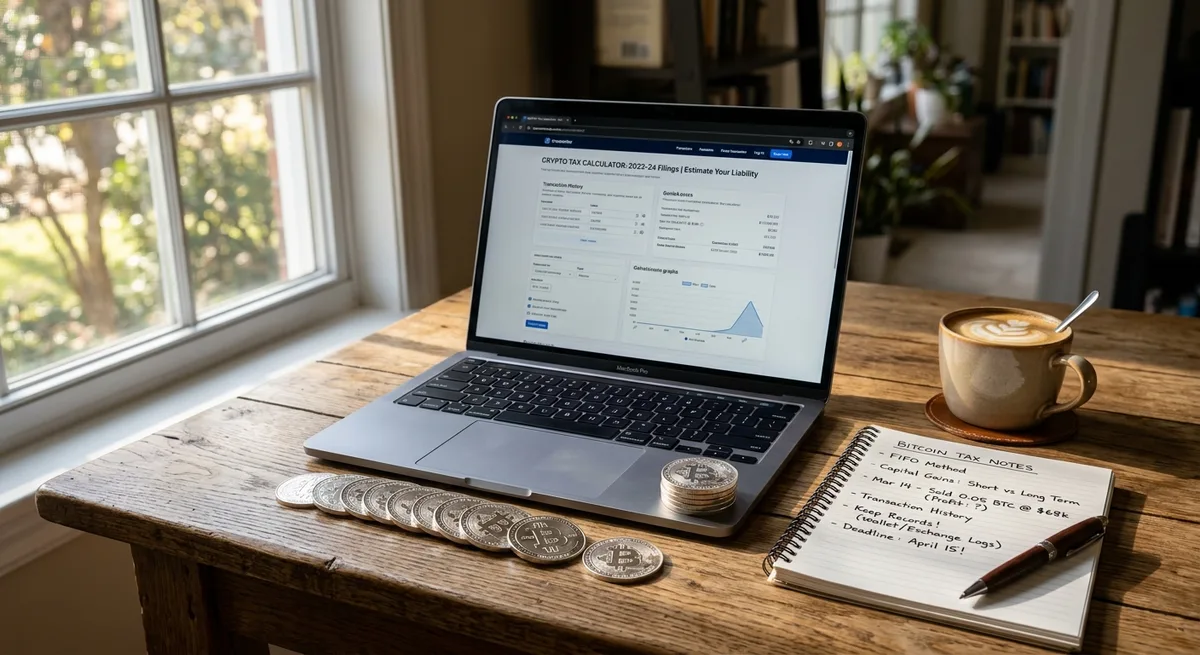
Bitcoin Taxes Explained: What You Need to Know
Why Bitcoin Taxes Matter for Every Investor and User
If you buy, hold, trade, mine, or spend Bitcoin, you’re already in the world of bitcoin taxes whether you planned for it or not. That sounds heavier than it needs to be, but it’s the reality. Tax authorities in many countries treat Bitcoin activity as something that can create obligations, even when no cash ever hits your bank account.
For beginners, a simple buy and sell can already trigger a reporting duty. For more active users, trading, mining, business payments, and cross-platform transfers make things considerably harder to track. The more you do, the easier it is to miss a taxable event without even realizing it happened.
Then there’s jurisdiction. Bitcoin isn’t taxed the same way everywhere. Some countries treat it like property. Others apply asset-based rules. Some reward long-term holdings with lower rates, others don’t. Legal status also varies. If you want a broader view of how regulation works globally before getting into tax specifics, the guide on whether Bitcoin is legal around the world is a useful place to start.
This article is a practical informational guide, not personal tax advice. The goal is to help you understand the logic behind bitcoin taxes, spot common reporting issues, and build better habits before filing season arrives.
How Bitcoin Is Taxed in Most Countries

In most countries, Bitcoin isn’t treated like regular cash for tax purposes. It’s more commonly classified as a capital asset, property, or digital commodity. That property treatment is what drives most of the tax outcomes you’ll encounter.
Here’s the basic logic. If you acquire Bitcoin and later dispose of it, the difference between what you paid and what it was worth at disposal can create a gain or a loss. That’s why tax authorities care about dates, values, and records. The question isn’t only whether you made money. It’s also what category the activity falls into and how Bitcoin is taxed under your local framework.
This is where a lot of people get tripped up. They assume crypto is only taxed when converted back to fiat. In practice, many systems focus on disposal, not just bank withdrawals. Selling, swapping, or spending Bitcoin can all matter.
The two big categories to understand are capital gains and income. Once you know the difference, the rest follows much more naturally.
The Difference Between Capital Gains and Income
Most Bitcoin tax situations fall into one of two buckets.
The first is capital gains tax. This usually applies when you dispose of Bitcoin you already own as an investment. Bought BTC at one price, sold or spent it at a higher price? You may have a gain. Sold at a lower price? That’s a loss.
The second is ordinary income. This applies when you receive Bitcoin as payment for work, business activity, mining, or similar earnings. In that case, the value of the Bitcoin when you receive it is often treated as income first, before any investment logic kicks in.
A simple example helps. You earn 0.05 BTC for a freelance job. The value of that BTC on the day you receive it may count as income. If you hold it for six months and sell it for more, that later increase may create a capital gain on top. Two separate tax moments from a single transaction. That split matters because the rates, forms, and deductions involved can be quite different.
What Counts as a Taxable Event
A taxable event usually happens when Bitcoin is disposed of or received in a way that creates income. Common examples include:
- Selling BTC for fiat currency
- Swapping BTC for another coin in a crypto-to-crypto trade
- Using BTC to pay for goods or services
- Getting paid in BTC for work or business activity
- Receiving BTC from mining in many jurisdictions
Simply buying Bitcoin and holding it is generally not taxable at the time of purchase. Tax tends to come later, at the point of disposal.
If you’re unsure how value is tracked during conversion, it helps to understand the mechanics of Bitcoin to USD conversion because the local currency value at disposal is usually central to how gains get calculated.
Common Bitcoin Transactions and Their Tax Treatment
Most people don’t run into tax trouble because the rules are impossible. They run into trouble because normal actions on exchanges and wallets feel casual while the tax treatment is not. Under most crypto tax rules, each action can carry a specific result depending on cost basis and fair market value.
Exchanges are also your primary source of transaction records, so understanding how they work matters more than people expect. This overview of what Bitcoin exchanges are gives useful context for why that transaction history is so important for taxes.
Buying and Holding Bitcoin
Buying Bitcoin with cash and holding it is usually not taxable by itself. Purchase 0.1 BTC, do nothing else, and there’s often no immediate tax event to worry about.
That said, the acquisition price still matters. It becomes part of your cost basis for future calculations, and the purchase date may affect how gains are taxed later depending on where you live. A clean record at the buy stage saves a lot of time down the road.
Selling Bitcoin for Cash
When you sell Bitcoin for cash, you typically calculate gain or loss like this:
Sale proceeds minus cost basis equals gain or loss
Example: you buy 0.1 BTC for $3,000 and later sell it for $4,200. Your realized gain is $1,200. If you sold it for $2,500 instead, you’d have a realized loss of $500.
Fees may also factor in, since they can affect your actual basis or proceeds. This is one of the most common tax calculations in crypto and it forms the foundation for everything more complicated.
Trading Bitcoin for Another Crypto
This is where a lot of people make mistakes, and honestly it’s understandable. Trading Bitcoin for ETH, a stablecoin, or any other token can trigger tax consequences even if no fiat ever reaches your bank account.
In many jurisdictions, that exchange is treated as disposing of Bitcoin at its market value at the time of the trade. So you compare the value of the BTC you gave up against your basis in that BTC.
Example: you bought BTC for $5,000. Later you trade it for ETH when that BTC is worth $6,500. That may create a taxable gain of $1,500, even though you never touched a dollar. The new asset then gets its own basis based on the market value at the time you received it. Active traders can end up with complicated reporting very quickly.
Spending Bitcoin on Goods or Services
Using BTC to buy something can be treated like selling it. From a tax perspective, the purchase may count as a disposal of the Bitcoin.
Say you bought BTC for $800 and use it to buy a laptop when that BTC is worth $1,200. The $400 appreciation may be a taxable gain. This surprises people because it feels like a straightforward payment, not an investment sale. But in many tax systems, spending an asset still requires you to calculate gain or loss on the difference.
Getting Paid in Bitcoin
If you receive BTC as salary, freelance compensation, or business revenue, the value received is often taxable as income at the time you receive it. The key figure is the fair market value on that date.
Example: you invoice a client and receive 0.02 BTC worth $1,400 that day. You generally recognize $1,400 as income. If you hold the BTC and later sell it when it’s worth $1,700, the extra $300 may become a capital gain. First income recognition, then a potential gain or loss on disposal. Two separate moments, both worth tracking.
Bitcoin Mining, Business Use, and Other Special Cases
Some Bitcoin activity sits outside simple investing. Mining and business payments are common examples, and in these cases taxes can involve both business income and later capital gain treatment, which is why they confuse a lot of people.
If your activity is regular and profit-driven, some jurisdictions may also look at self-employment tax or similar business-level obligations. That doesn’t automatically apply to everyone, but miners and business owners should take it seriously.
Taxes on Solo Bitcoin Mining
When you mine Bitcoin yourself, mining rewards are commonly taxed based on the value of the coins when you receive them. That value may count as income, especially if the activity is ongoing and profit-motivated.
You should track:
- Date of receipt
- Amount mined
- Market value at receipt
- Related expenses where deductible
Later, when you sell those mined coins, you may also have a capital gain or loss based on the difference between what they were worth when you mined them and what you sold them for. For a deeper look at this specific setup, read solo mining and taxes.
Taxes on Cloud Mining
Cloud mining income can be harder to classify because the contract structure matters. In some cases, payouts may be taxed as income when received. In others, the details of the service agreement affect how costs and receipts are treated.
Documentation matters a lot here. Keep records of:
- Contract terms
- Payment dates
- Payout amounts
- Service fees
- Value at receipt
If you use this model, this guide on cloud mining and taxes walks through common reporting issues worth knowing about.
If You Also Mine Altcoins
This article focuses on Bitcoin, but altcoin taxation often follows similar principles. Receiving newly mined coins may create income, and later selling them may create gains or losses.
That said, reporting can vary depending on token type, platform, and local law. If your activity includes multiple coins, this breakdown of tax implications for altcoin mining is worth your time.
Tax Considerations for Businesses Accepting Bitcoin
If a business accepts BTC as payment, the value received is often recognized as business income at the time of receipt. Merchant acceptance isn’t just a payment preference. It creates bookkeeping records that need to be accurate from day one.
Business owners should track:
- Invoice amount in local currency
- BTC amount received
- Date and time of payment
- Exchange rate used
- Any fees
If the business holds the BTC and later sells or spends it, that later disposition can create an additional gain or loss. Good bookkeeping from the start makes all of this much more manageable.
How to Calculate Your Bitcoin Taxes Step by Step
The easiest way to make bitcoin taxes manageable is to treat them like a process, not a mystery. Move from transaction history to classification to gain calculation, and the work becomes far more straightforward.
Step 1: Gather Every Bitcoin Transaction
Start with complete wallet records and exchange statements. Pull data from every platform you’ve used, not just your main exchange. That includes buys, sells, transfers, trades, payment receipts, mining payouts, and withdrawal logs.
Screenshots or exports help if a platform no longer has clean records available. You want a complete transaction history before you try to calculate anything.
Step 2: Determine Cost Basis and Sale Value
For each disposal, identify what you originally paid and what the Bitcoin was worth at disposal in your local currency. Include transaction fees where relevant, since they can affect basis or proceeds.
This is the stage where most errors begin, especially if you moved BTC between wallets and accidentally treated internal transfers as sales. Staying consistent with your pricing source across records helps a lot.
Step 3: Apply the Correct Accounting Method
Many tax systems allow methods like FIFO or specific identification, but local rules decide what’s actually acceptable.
FIFO means the first Bitcoin you bought is treated as the first Bitcoin you sold. Specific identification means you track exactly which units were disposed of. Whatever method you use, consistency matters. Switching casually from year to year can create reporting problems that are annoying to untangle.
Step 4: Separate Income From Investment Activity
Earned crypto and investment activity should not be mixed without checking the rules. BTC received from freelance work, mining, or business operations may begin as income. BTC bought with your own cash is usually investment property from the start.
That distinction affects tax treatment, deduction options, and how you keep records. Once you separate those categories cleanly, you’re in a much better position to report correctly.
How to Report Bitcoin on Your Tax Return
The exact forms vary by country, but the reporting process usually follows the same broad path. You identify taxable transactions, calculate gains and income, organize supporting documents, and enter the results on the right forms according to local requirements.
This is the practical side of bitcoin taxes. It’s not just about knowing the rules. It’s about being able to show your numbers if anyone asks.
Records You Should Keep
Good record-keeping is your best defense against mistakes and the thing most people skip until it’s too late. Keep:
- Dates of acquisition and disposal
- Amounts of BTC involved
- Value in local currency at each event
- Wallet addresses where relevant
- Exchange records and fees paid
- Invoices and payment proofs
- Screenshots as backup
The goal is a usable audit trail, not just a pile of random exports. If a tax authority asks how you reached a number, you should be able to show it clearly.
Why Tax Software Can Save Time
Crypto tax software can pull exchange data, reconcile transfers, calculate gains, and support portfolio tracking across platforms. For anyone with more than a handful of transactions, it genuinely saves time.
Still, don’t trust imports blindly. Software often misreads transfers, duplicates entries, or loses cost basis when a wallet isn’t connected properly. Review the output carefully before you file anything.
When It Makes Sense to Speak With a Tax Professional
A tax professional is worth considering if you have high trading volume, mining activity, business use of Bitcoin, international exchange activity, mixed personal and business wallets, or incomplete records. Jurisdiction-specific advice matters because small local differences can change your outcome meaningfully. A professional shouldn’t replace your own tracking, but they can help you avoid expensive assumptions.
Regional Differences You Need to Check Before Filing
Tax residency and local regulations matter more than most people expect. Two people with identical Bitcoin transactions can face very different results depending on their country, state, or region.
Don’t assume a guide written for another jurisdiction applies to you. Verify local thresholds, forms, deadlines, and definitions through official tax authority sources. This is especially important if you moved countries, used foreign exchanges, or have multiple income sources.
Questions to Ask for Your Jurisdiction
Before you file, check these points:
- Are crypto-to-crypto trades taxable where you live?
- Are there different rates for short-term and long-term holdings?
- Can losses offset gains, and if so under what conditions?
- Are mining rewards taxed as income on receipt?
- Do small transactions have any exemption?
- What is the filing deadline?
- What records are you required to keep?
- Which forms must be used?
These questions shape your whole reporting approach. Even with the right answers in hand, people still make a few very predictable mistakes.
Common Bitcoin Tax Mistakes to Avoid
Most crypto tax problems come from underreporting, missing data, or assumptions that feel logical but aren’t how the rules actually work.
One example is cashing out from mining or cloud platforms. Many people focus only on the withdrawal stage, but the tax event may have happened earlier depending on the setup. If withdrawals are part of your process, this article on cloud mining withdrawal methods is useful for understanding the operational side.
Assuming You Only Owe Tax When You Withdraw to a Bank
This is probably the biggest misconception in crypto, and it catches people off guard regularly. In many jurisdictions, tax can be triggered when you trade BTC for another coin or use it to buy something. Waiting until the bank withdrawal to start tracking often means you’re already behind before you’ve even opened a spreadsheet.
Forgetting Fees, Transfers, and Small Transactions
Fees can affect basis and proceeds. Transfers between your own wallets are usually not taxable, but if software misreads them as disposals, your numbers get distorted fast. Small purchases also matter. A coffee bought with BTC may still be reportable depending on local rules. These details seem minor but they change your totals, and incorrect transfer labels can turn a clean return into a messy one.
Failing to Keep Consistent Records Over Time
Incomplete basis tracking is a serious problem for active users. If you’re using multiple wallets and exchanges without maintaining cross-platform records, you can easily lose track of when and where your BTC was acquired. That leads to missing basis, incorrect gains, and reporting that’s difficult to defend. The fix is boring but effective: keep one system for all accounts and update it regularly rather than trying to reconstruct everything at tax time.
Can You Reduce Your Bitcoin Tax Bill Legally?
Yes, but the useful strategies are usually practical rather than flashy. Good tax planning often comes down to timing, documentation, and loss harvesting where it’s permitted.
A few things that genuinely help:
- Track basis accurately so you don’t accidentally overpay
- Use losses to offset gains if your jurisdiction allows it
- Plan disposals rather than making random sells
- Separate personal, trading, and business activity clearly
- Hold longer when local rules reward long-term treatment
If your crypto activity includes mining infrastructure or energy use, there may also be incentives worth exploring outside the Bitcoin rules themselves. For miners, this article on renewable energy tax incentives for mining is worth a read.
Legal savings usually come from organization and informed timing, not from loopholes.
FAQ About Bitcoin Taxes
Do I Pay Tax If I Only Hold Bitcoin?
Usually not, as long as you buy and keep it without disposing of it. But keep your purchase records. Long-term holding still needs a clear basis when you eventually sell, trade, or spend it.
Is Converting Bitcoin to Another Crypto Taxable?
In many jurisdictions, yes. A token swap is often treated as a disposal of Bitcoin at its market value at the time of the trade.
Do Small Bitcoin Payments Need to Be Reported?
Often yes, though some places have de minimis rules. There’s no universal exemption for small purchases, so check your local rules.
What If I Lost Access to My Wallet or Records?
Try to rebuild lost records using exchange exports, blockchain history, emails, invoices, and screenshots. If records are incomplete, speak with a tax professional before filing so you can document your reconstruction method properly.
Conclusion: Stay Compliant Without Overcomplicating Bitcoin Taxes
Bitcoin taxes are manageable when you break them into a few core ideas. Know what counts as a taxable event. Track every transaction early. Separate income from investment activity. Check your local rules before you file.
That’s really the core of it. You don’t need to know everything at once, but you do need a system that makes informed decision-making possible. The sooner you build that system, the easier tax season becomes.
Most people don’t get into trouble because Bitcoin is too complicated. They get into trouble because they wait too long to organize. Start early, stay consistent, and bitcoin taxes become a process you can handle rather than a mess you have to fix at the last minute.