

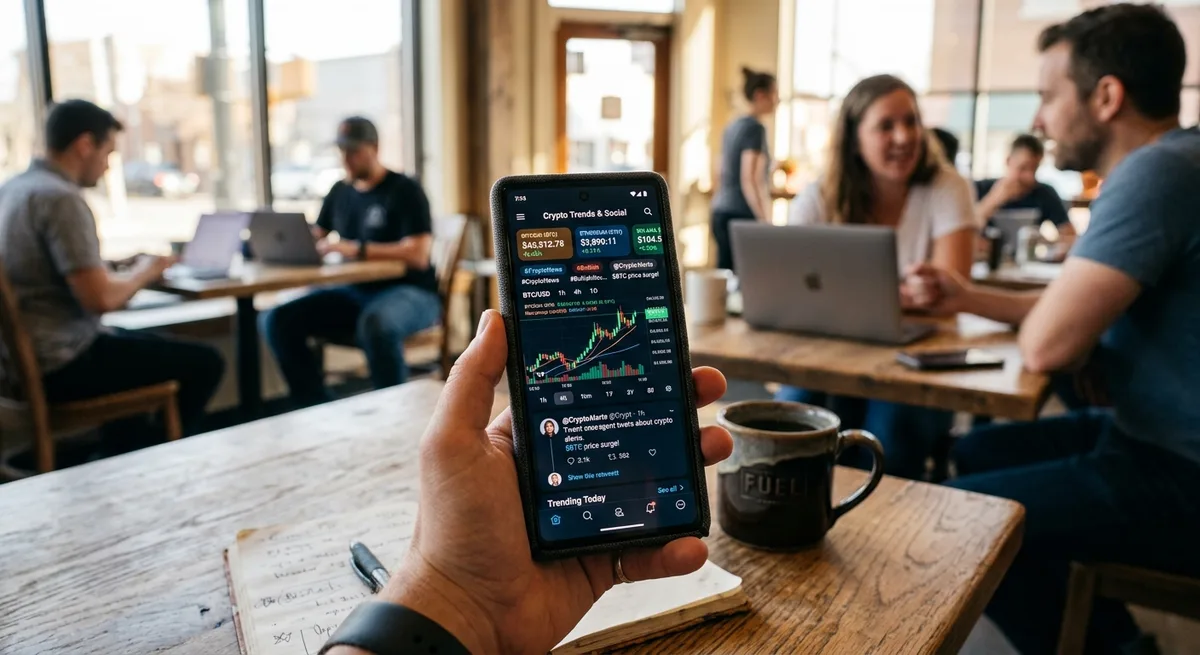
Crypto and social media are tied together in a way that traditional markets never experienced. A single post can shift attention toward a coin, a thread can spark a multi-day rally, and a rumor can wipe out billions in market cap before the official news even confirms anything. That sounds dramatic, but anyone who has been around long enough has seen it happen more than once.
This article is a practical breakdown of how social media and crypto markets actually interact. Not the romantic version where every viral tweet becomes a trading signal, but the realistic version where attention, sentiment, liquidity, and behavior all feed into price. Whether you’re a beginner trying to make sense of the noise, an active trader looking for an edge, a marketer studying narratives, or an analyst tracking market behavior, the goal here is the same: understand the mechanics, not the hype.
Introduction: Social Media Is Now Part of Crypto Market Structure
Crypto markets are reactive by design. They trade 24/7, participation is global, and most assets are driven less by earnings reports and more by narratives. That combination makes the market unusually sensitive to anything that shifts attention.
Stocks have earnings seasons, opening bells, and analyst reports. Crypto has Twitter threads at 3 a.m., Telegram groups that never sleep, and Reddit posts that go viral over a weekend. Social platforms are not just where people talk about crypto. They have become part of the actual market structure, feeding sentiment and liquidity in real time.
If you ignore this layer, you’re only seeing half of the chart.
Why Crypto Reacts So Strongly to Social Media

Crypto reacts harder than traditional markets for a few reasons, and they all stack on top of each other.
First, the barrier to participation is extremely low. Anyone with a wallet and an internet connection can trade within minutes. There’s no broker approval, no waiting period, no minimum account size. Second, the market is retail-heavy. While institutional money matters more than it used to, retail still drives a large share of speculative flows, especially outside the top assets. Add meme culture, thin liquidity in smaller tokens, and a nonstop news cycle, and you have a market that’s almost designed to overreact.
It also helps to understand that price is influenced by many overlapping forces. Social attention is just one of them. If you want a wider view, the article on factors influencing Bitcoin price goes deeper into the structural drivers behind price movement.
24/7 Markets Create Faster Feedback Loops
There’s no closing bell in crypto. That single fact changes everything about how information spreads.
When a tweet goes viral on a Sunday evening, traders react immediately. There’s no overnight gap, no waiting for markets to open, no time for the noise to settle. Reactions happen in minutes, sometimes seconds. That speed creates feedback loops where price moves on attention, attention attracts more posts, and more posts attract more buyers.
Low-liquidity hours amplify this. A coordinated push on a Saturday morning can produce a much bigger move than the same effort on a Tuesday afternoon, simply because fewer participants are around to absorb it.
Retail Traders Often Move Before Institutions
Retail tends to be fast. Maybe too fast.
When a narrative starts forming online, retail traders are usually the first to act, especially when they feel they’re early to something. That eagerness creates sudden spikes in volume and volatility before larger players even decide whether the story is worth taking seriously.
This isn’t a criticism. Being early is part of how retail competes with institutions. But it’s worth recognizing that the first wave of buyers in a social-driven move is rarely operating on deep analysis. They’re trading the attention itself.
Smaller Coins Are Easier to Move
A viral post can shake a low-cap token. It usually can’t move Bitcoin much on its own.
The reason is simple: liquidity. Pushing the price of a coin with a few million dollars in daily volume requires almost nothing compared to moving a multi-hundred-billion-dollar asset. That’s why most “this coin pumped 400% after a tweet” stories involve smaller tokens.
Larger assets like Bitcoin and Ethereum can still react to social media, but they generally need stronger catalysts: macro events, ETF news, regulatory shifts, or sustained narrative pressure. A single influencer post rarely does it.
The Main Social Platforms That Influence Crypto Markets
Not every platform impacts crypto the same way. Each has a different speed, depth, and audience profile, and understanding those differences helps you read signals more accurately.
Twitter Crypto Influence: The Fastest Signal Layer
When people talk about twitter crypto influence, they’re really talking about speed. Twitter (now X) is where information surfaces first. Founder updates, exchange announcements, whale comments, analyst threads, breaking news, governance debates. It almost always shows up here before anywhere else.
That speed makes it valuable, but also dangerous. The same platform that surfaces real signals is also where rumors spread fastest. A misinterpreted screenshot can move a coin before anyone verifies it. Treat Twitter as the radar, not the truth.
Reddit: Community Sentiment and Long-Form Debate
Reddit moves slower, but it goes deeper.
Threads can stretch into hundreds of comments where people argue, fact-check, and pick apart ideas. Subreddits build long-term conviction around specific projects, and that conviction can shape sentiment for months. Serious research communities exist alongside pure hype threads, so it pays to know which is which.
Reddit is less about real-time signals and more about understanding what a community believes, and whether that belief is hardening or cracking.
TikTok: Simple Narratives, Fast Hype
TikTok is where crypto reaches people who don’t normally read crypto content.
Short videos with strong hooks, simplified claims, and emotional delivery can pull casual investors into specific coins almost overnight. The reach is enormous, and the audience is often less experienced. That combination creates fast, sharp hype cycles that can fade just as quickly.
Big reach is not the same as good analysis. A 2 million view video about a coin tells you something about attention. It tells you almost nothing about fundamentals.
YouTube, Telegram, and Discord: Deeper Influence but Higher Risk
YouTube shapes longer-form opinions. People sit through 20-minute videos because they want a more detailed perspective, and that depth makes YouTube influencers particularly effective at building conviction.
Telegram and Discord operate differently. They’re built around tight-knit communities, presale groups, alpha channels, and direct contact between project teams and holders. That closeness creates strong engagement, but it also creates fertile ground for coordinated pumps, insider rotations, and outright scams. The same channel that brings you early information can also be the one set up to exit on you.
How Crypto Influencers Shape Market Sentiment
Crypto influencers play a real role in how narratives spread. They can amplify attention, validate emerging ideas, simplify complex topics for new audiences, and accelerate herd behavior, sometimes for better and sometimes for worse.
The honest version is this: influencers don’t usually create narratives. They surf them. But once enough of them are surfing the same wave, that wave gets bigger.
The Difference Between Analysts, Builders, Traders, and Hype Accounts
Not every account with a blue check is doing the same job.
Analysts share data, on-chain metrics, valuation models, and structured arguments. Builders post product updates, technical decisions, and roadmap shifts. Traders share setups, levels, and risk frameworks. Hype accounts mostly chase engagement, pump narratives, and rarely talk about risk.
All four can be useful in their own way, but you have to know which one you’re reading. Confusing a hype account for an analyst is one of the more expensive mistakes new traders make.
Why Follower Count Does Not Equal Market Insight
A million followers means a person can move attention. It doesn’t mean they understand the market.
Some of the sharpest analysts in crypto have small followings. Some of the loudest voices have terrible track records that nobody bothers to check. Before trusting someone’s view, look at their history. Do they explain risks? Do they acknowledge when they’re wrong? Do they disclose positions? Do their predictions hold up over time, or do they conveniently delete the bad ones?
Reach is a megaphone, not a credential.
Paid Promotions and Hidden Incentives
This is the part nobody likes to talk about, but it shapes a huge portion of crypto content.
Sponsored posts, token allocations, affiliate deals, and undisclosed partnerships are common. When an influencer suddenly starts promoting a small-cap coin with urgent language, “this is the one,” “don’t miss it,” “100x potential,” it’s worth asking why they’re so excited now and not three months ago.
Sometimes the answer is genuine conviction. Often it isn’t.
Social Media Trading: How Traders Use Online Signals
Done well, social media trading isn’t about copying influencers. It’s about using social platforms as one input among many. Traders monitor sentiment, trending tickers, influencer mentions, developer updates, community growth, and breaking news, then test those signals against actual market data.
If you want a more complete view of how trading frameworks come together, the ultimate Bitcoin trading guide covers the structural side that pairs well with the sentiment side covered here.
Sentiment Tracking
Sentiment isn’t just bullish or bearish. It’s about intensity, direction, and quality.
Are posts becoming more optimistic or more cautious? Is engagement rising or fading? Are people calling for “the next leg up” or quietly accumulating? Overheated sentiment often shows up before tops. Quiet disinterest often shows up before bottoms. Neither is a guarantee, but both are worth tracking.
Volume Confirmation
Buzz without volume is just noise.
When a coin trends online, the first question is whether real money is following. If price is rising on shrinking volume, the move is fragile. If sentiment spikes but liquidity doesn’t, the rally probably won’t hold. Social attention only matters when the market is putting capital behind it.
Buying a coin just because it’s trending is one of the easiest ways to become the exit liquidity for someone who got there earlier.
Narrative Rotation
Crypto attention rotates. Bitcoin runs, then Ethereum catches up, then Layer 2s, then AI tokens, then meme coins, then gaming, then real-world assets. Each narrative gets its turn.
Social media often reveals these rotations before charts do. When you see analysts shift from “ETH levels” to “AI token watchlists,” and the same shift appears across multiple unrelated accounts, the rotation is already underway. Spotting it early is one of the more practical uses of social monitoring.
Market Hype: When Attention Turns Into Price Action
Market hype follows a fairly predictable path. A post goes viral. More accounts repeat the idea. Traders enter. Volume rises. Price moves. The move attracts more attention. Late buyers chase. Eventually, the energy runs out.
Understanding this path is more useful than trying to predict each step. If you want to dig deeper into why crypto prices swing so hard in the first place, Bitcoin volatility explained covers the mechanics behind the moves.
The Hype Cycle in Crypto
Most hype cycles look something like this:
- Early signal: a small group notices something interesting.
- Narrative formation: posts start framing it as a real thesis.
- Viral expansion: larger accounts pick it up and reach broader audiences.
- FOMO: late buyers rush in, afraid of missing out.
- Peak attention: mainstream coverage, celebrity tweets, casual investors entering.
- Correction: early buyers take profit, momentum stalls.
- Aftermath: either real adoption follows, or the narrative collapses.
These cycles are part of how crypto behaves through broader market phases. If you want to see how they fit into longer-term structure, Bitcoin market cycles: bull vs bear is worth reading.
FOMO and Herd Behavior
FOMO is uncomfortable to admit, but it affects almost everyone at some point.
When you see a coin running and everyone online is celebrating, your brain treats it as social proof. If so many people are buying, it must be safe, right? That feeling is exactly when risk is highest, not lowest. The crowd entering late is not the crowd that made the money. They’re the crowd providing exit liquidity for the people who got in early.
Good decisions are usually a little boring. Hype decisions feel exciting in the moment and painful later.
When Hype Becomes Dangerous
Some signs that a market is overheating:
- Price targets that have no grounding in anything measurable
- Urgency language (“last chance,” “don’t sleep on this”)
- Celebrity endorsements appearing out of nowhere
- Low-effort viral posts replacing actual analysis
- Telegram groups growing thousands of members per day
- Anyone who mentions risk being mocked or banned
When you see most of these at once, the move is usually closer to its end than its beginning. For a deeper look at what happens when this energy reverses, causes of crypto market crashes breaks down the mechanics of major downturns.
Case Studies: Social Media Events That Moved Crypto Markets
Examples make this easier to see. Here are a few worth understanding, not because they predict the future, but because the patterns repeat.
Elon Musk, Dogecoin, and the Power of Viral Endorsement
Dogecoin started as a joke and became a real market force largely because of social media attention, with Elon Musk’s posts playing a central role. Repeated tweets, memes, and public appearances brought Dogecoin into mainstream conversation, pushing both visibility and volatility to extremes.
The upside was undeniable: massive awareness, new investors, and global recognition. The downside was just as real. Anyone who bought on the loudest days of euphoria experienced sharp drawdowns afterward. Endorsement can create attention. It can’t guarantee value.
GameStop-Era Retail Culture and Meme Coin Behavior
The GameStop saga showed something important: when online communities organize around a shared identity, they can move markets. Crypto absorbed that lesson quickly.
Meme coin culture borrows directly from this energy. Humor, anti-establishment sentiment, inside jokes, and a sense of belonging become market forces. People don’t just buy a meme coin. They buy into a group. That makes the moves stronger on the way up and often messier on the way down.
Exchange Announcements and Founder Posts
Official posts move markets too, sometimes more than influencer hype.
A listing announcement on a major exchange can send a coin up 30% in minutes. A founder posting about a partnership, upgrade, or security audit can shift sentiment overnight. Delays, hacks, or quiet team departures move things the other way. These are the posts worth paying attention to, because they’re tied to actual project events rather than pure speculation.
Negative Social Media Events: Hacks, Rumors, and Fear
Social media doesn’t only create pumps. It accelerates panic too.
A rumor about an exchange’s solvency, a screenshot of a suspicious transaction, a thread about a regulatory action, any of these can trigger sell-offs faster than official channels can confirm or deny. Sometimes the rumor turns out to be true. Sometimes it doesn’t, but by then the damage is done.
If you want a calmer framework for handling these moments, how to survive market volatility is worth keeping bookmarked.
Useful Data Points to Include in the Article
Numbers tell the story better than opinions. When studying social media’s impact on crypto, the most useful data points compare social mention volume, engagement spikes, trading volume, price movement, and volatility before and after major social events. Patterns become much clearer when you look at the data side by side.
Suggested Visual: Social Mentions vs. Price Movement Chart
A chart overlaying social mention volume against price movement can show how often attention spikes align with market moves. Just remember: correlation isn’t causation. Sometimes price moves first and posts follow. Sometimes posts move first. Sometimes both react to a third factor that isn’t visible in either chart.
Suggested Visual: Platform Influence Comparison Table
A comparison table across Twitter/X, Reddit, TikTok, YouTube, Telegram, and Discord makes the differences obvious. Useful columns include speed of signal, depth of analysis, hype risk, audience type, and practical usefulness for traders. Twitter scores high on speed, Reddit on depth, TikTok on reach but low on quality, and Telegram on community but high on manipulation risk.
Suggested Visual: Crypto Hype Cycle Infographic
An infographic showing the cycle from early signal to viral hype, FOMO, peak attention, correction, and either stabilization or collapse helps readers recognize where they are in real time. Most people see the cycle clearly only after it ends. The point of the visual is to help you see it while it’s still happening.
How to Read Social Media Without Getting Manipulated
This is the part most traders eventually figure out the hard way. Social media is a tool, not an oracle. Used well, it gives you context. Used poorly, it pushes you into trades you wouldn’t take if you slowed down for ten minutes.
Check the Source Before the Signal
Before reacting to anything, ask the basics. Who posted this? What’s their track record? Do they have a position in what they’re promoting? Have they been accurate in the past, or only loud? Do they disclose conflicts of interest?
You’d be surprised how often a five-minute check on someone’s history changes your view of their content.
Separate News From Interpretation
The event and the reaction to the event are not the same thing.
When something major happens, the first wave of posts is interpretation, not reporting. People are guessing, speculating, and framing the news to fit their existing positions. Find the primary source before trusting viral summaries. An official announcement, the original tweet, the actual on-chain transaction, the regulatory filing itself. Then form your own view.
Look for Confirmation Outside Social Media
Social buzz means more when it’s confirmed by data outside social platforms.
Check price action, volume, liquidity, project documentation, official announcements, on-chain activity, and broader market conditions. If a coin is trending online but on-chain activity is flat and volume is low, the story doesn’t match the reality. That mismatch is usually a warning.
Avoid Trading Only Because Something Is Trending
By the time a coin is trending everywhere, most of the move has often already happened.
The traders who profited the most got in when the narrative was still quiet. The traders who get hurt the worst usually arrive at peak attention. Before entering any trade based on social signals, define your entry, your exit, and the level where you admit you were wrong. If you can’t define those, you’re not trading. You’re guessing in public.
What Social Media Means for the Future of Crypto Markets
Social platforms are getting more integrated into crypto, not less. The next few years will probably push that integration further.
AI Sentiment Tools Will Become More Common
AI tools that scan posts, detect sentiment shifts, monitor influencer activity, and flag unusual narrative acceleration are already being used by professional traders. Expect them to become standard for retail too.
These tools won’t make trading easy. They’ll just raise the floor of what’s possible, which means traders who ignore them will be at a growing disadvantage. The edge will move from “having information” to “interpreting it better than the algorithms.”
Communities May Matter More Than Traditional Marketing
In crypto, a strong community can do what a marketing budget cannot.
Communities support adoption, provide liquidity, attract developers, and keep attention alive through quiet periods. Projects with weak or paid-for communities tend to fade fast once the initial hype is gone. Projects with real, engaged communities can survive bear markets and come back stronger.
This shifts how investors evaluate new tokens. Community health is becoming a real metric, not just a vibe.
Regulation Around Crypto Promotion May Tighten
Regulators are paying more attention to influencer disclosures, celebrity endorsements, paid promotions, and misleading marketing. Some jurisdictions have already taken action against influencers who promoted tokens without disclosing payments.
This is probably healthy for the long-term credibility of the space, even if it shrinks some of the louder corners of crypto Twitter. Expect more rules, more enforcement, and more accountability over time.
Practical Checklist: Before Acting on a Social Media Crypto Signal
Before risking real money on something you saw online, slow down. A short checklist makes a big difference.
Questions to Ask Before Entering a Trade
- Who is promoting this, and what’s their incentive?
- Is there real news behind the move, or just attention?
- Has the price already moved significantly?
- Is volume confirming the move, or is it shrinking?
- What’s the downside if I’m wrong?
- Where exactly would I exit?
- Am I early to this idea, or arriving late?
If you can’t answer most of these clearly, it’s probably not your trade to take.
Red Flags to Watch For
Some warning signs are obvious once you know what to look for: guaranteed returns, anonymous teams, sudden waves of influencers promoting the same coin within hours of each other, locked comment sections, fake partnership claims, suspiciously low liquidity, and aggressive urgency in the messaging.
One red flag might be a coincidence. Three or more usually isn’t.
Conclusion: Social Media Moves Crypto, But It Should Not Move You Blindly
Social media and crypto markets are deeply connected. Attention shapes sentiment, sentiment shapes behavior, and behavior shapes price. That’s not going to change, and pretending it doesn’t matter is its own kind of mistake.
But here’s the part worth holding onto: social platforms are inputs, not instructions. They help you see what people are talking about, what’s gaining traction, and where attention is rotating. They don’t tell you what to do with that information. That part is still yours.
The traders who do well in this environment aren’t the ones who follow every signal. They’re the ones who combine social awareness with independent analysis, real risk management, and the patience to skip trades that don’t make sense. Use social media to stay informed. Use your own judgment to decide.
That’s the version of social media trading that actually works over time. The rest is just noise dressed up as opportunity.