


NFTs are one of those topics where the price tags often make less sense than the technology behind them. A picture of a pixelated character sells for millions, while thousands of other collections quietly fade into nothing. So what gives NFTs value, really? Not magic, not luck, and definitely not just hype. It comes down to a mix of scarcity, demand, utility, culture, and trust, and the way these forces interact in a market that is still figuring itself out.
This article is a calm, beginner-friendly breakdown for anyone who wants to understand NFT valuation without falling for the noise. We will look at why some digital collectibles become expensive, why most do not, and how to think about NFT demand before you ever click “buy”. Expect honesty more than excitement.
Introduction: Why NFT Value Is Hard to Understand at First
NFTs break the old rules of ownership. You cannot hold them, frame them, or lock them in a safe. The “thing” you own is a record on a blockchain that says: this token is yours. That is a big mental jump, and it is fair to feel skeptical the first time you encounter it.
The confusion gets worse when you see a JPEG sell for the price of a house. From the outside, it looks irrational. From the inside, it is a market reacting to scarcity, status, belief, and timing, just like any other market that trades digital collectibles.
Some NFTs have genuine demand and a credible reason to exist. Many do not. Both can sit on the same marketplace, look similar, and even share the same hype cycle. Understanding the difference is the whole point of this article.
What Is an NFT, in Simple Terms?
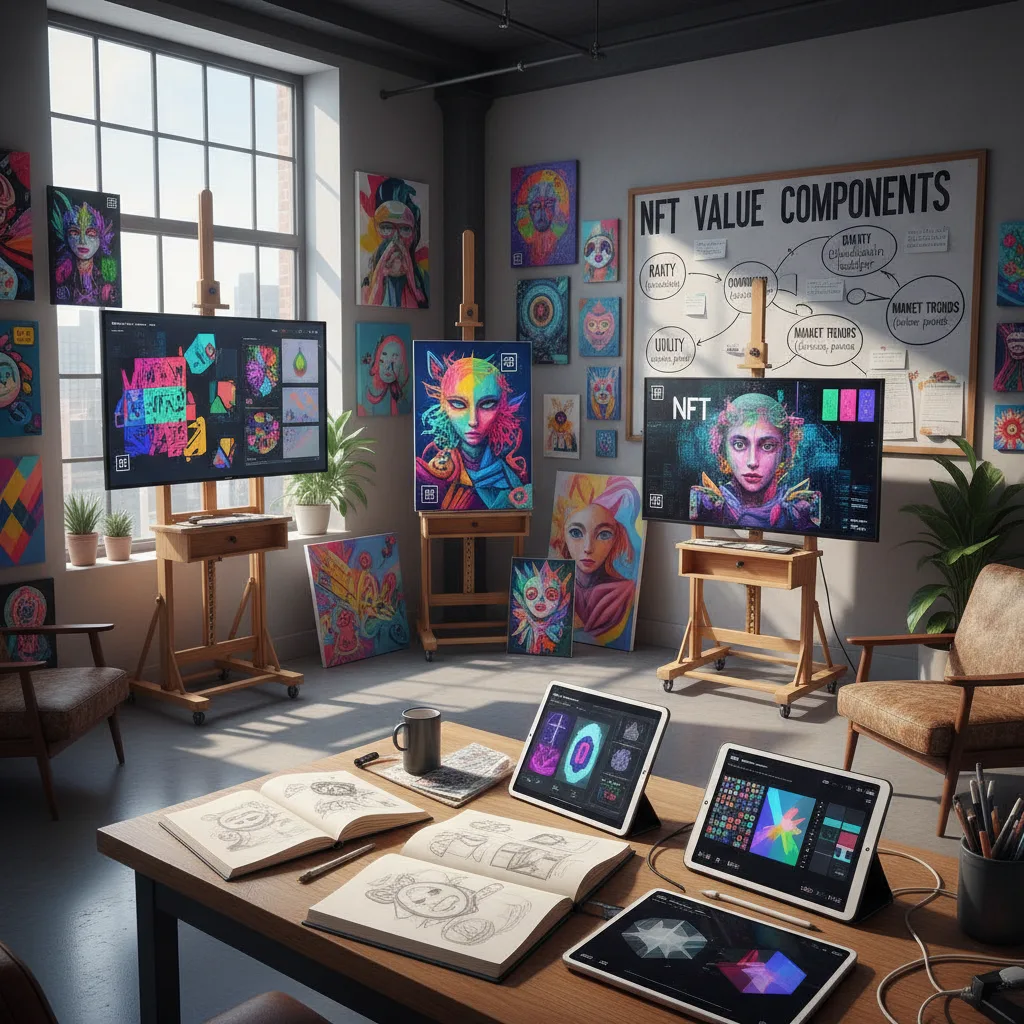
An NFT, or non-fungible token, is a unique digital token recorded on a blockchain. “Non-fungible” just means it cannot be swapped one-for-one like a coin. Each one is distinct, with its own identifier and ownership trail.
NFTs are commonly linked to digital art, profile pictures, music, in-game items, event tickets, memberships, or virtual land. Some grant additional rights or benefits. Most do not give you copyright or commercial ownership of the underlying art. That is a detail many buyers miss until they read the fine print.
If you are completely new to the underlying tech, it is worth taking a moment to understand how it works. This short read on what blockchain is, explained for beginners gives you the foundation without drowning you in jargon.
The Difference Between an NFT and a Regular Digital File
Yes, anyone can right-click and save the image attached to an NFT. That part is true. But they cannot copy the blockchain record that proves who owns it.
Think of it like this: a poster print of a famous painting can hang on your wall, but it is not the signed original. The market values the original because of its provenance and authenticity, not the pixels themselves. The comparison is not perfect, since NFTs and physical art behave differently, but it captures the basic idea.
Why Blockchain Matters for NFT Ownership
Blockchain records every transfer, every sale, and every wallet that has ever touched an NFT. That history is public and verifiable. You do not need to trust a gallery, a platform, or a middleman to confirm authenticity.
This transparency is part of what supports value. Provenance is no longer hidden in paperwork, it is sitting in a public ledger anyone can check. For collectors who care about origin, that is meaningful.
What Gives NFTs Value?
Here is the honest answer: NFTs get their value from a combination of scarcity, demand, creator reputation, utility, community, cultural relevance, provenance, liquidity, and broader market sentiment. No single factor guarantees anything. A rare NFT nobody wants is worth nothing. A popular project with no scarcity often loses steam fast.
If you have read about what gives Bitcoin value, you will recognize the underlying logic. Value emerges when enough people believe an asset is worth holding and trading, and when that belief is supported by structural reasons rather than pure hype.
Let us go through the main drivers behind NFT demand one by one.
Scarcity and Rarity
Limited supply matters. A one-of-one piece, a low mint count, or a rare trait inside a larger collection can push prices higher. Collectors like the feeling of owning something few others can.
But scarcity by itself does nothing. I could mint a single NFT of my grocery list tomorrow. It would be perfectly scarce and perfectly worthless. Scarcity only translates into value when demand exists to meet it.
Demand and Market Attention
NFT demand comes from buyer interest, trading volume, social attention, and the simple feeling that something is “happening” around a project. When attention rises, prices often follow.
The flip side is just as real. Attention shifts quickly in crypto. A collection that was everywhere last month can be silent today. Understanding how prices respond to attention is similar to understanding how Bitcoin price is determined: supply meets demand, and demand depends on belief.
Creator Reputation and Brand Strength
Known artists, credible teams, and established brands carry weight. Buyers are often betting on future relevance, and a respected creator increases the odds that the project still matters in two years.
This is why NFTs from recognized digital artists or major fashion houses tend to hold attention longer than anonymous launches with no track record. Reputation is not everything, but it filters out a lot of noise.
Provenance and Ownership History
Provenance is the ownership trail of an NFT. If a piece was created by a famous artist, held by a notable collector, or tied to an important moment in NFT history, that history can add value.
It is the digital version of an old painting having a documented chain of owners. Collectors care about lineage.
Utility and Real-World Benefits
Some NFTs unlock things: access to private communities, event tickets, gated content, in-game items, physical merchandise, staking rewards, or future airdrops. This is what people mean when they talk about NFT utility.
Promised utility and delivered utility are not the same. Plenty of roadmaps look impressive on launch day and quietly fall apart six months later. When evaluating utility, ask what already exists, not what is “coming soon”.
Community and Social Status
Owning certain NFTs signals belonging. It is a membership card, a profile picture, an identity marker in a digital tribe. Strong communities can sustain interest for years.
Weak communities, the kind that exist only to pump price, tend to disappear the moment the chart turns red. You can usually tell the difference within an hour of joining their Discord.
Why NFTs Are Expensive: The Main Drivers Behind High Prices
So why do some NFTs sell for absurd amounts? It is rarely one thing. The expensive ones usually combine scarcity, cultural weight, network effects, wealthy collectors, speculation, historical significance, and emotional attachment. When several of these stack together, prices can climb fast.
Speculation and Future Expectations
A big part of why NFTs are expensive is simple: buyers expect someone else to pay more later. That expectation is a real economic force, and it works the same way across collectibles, stocks, and crypto.
It is also where most of the risk lives. The same logic that drives prices up can drive them down just as quickly. This dynamic shows up across crypto markets, and you can see similar mechanics in the factors influencing Bitcoin price. Speculation is not inherently bad, but treating it as a guarantee is.
Cultural Relevance and Meme Value
NFTs tied to internet culture, early crypto history, or iconic memes often hold value beyond their visual appeal. They become cultural artifacts. People pay for the story as much as the image.
That is why a pixelated character minted in 2017 can be worth more than a far more polished piece minted last week. Timing and cultural anchoring matter.
Whale Buyers and Thin Markets
NFT markets are often thin. A handful of large buyers, sometimes called whales, can move floor prices significantly. One big bid can lift a collection. One big sell can crash it.
Listed prices on marketplaces also tell only part of the story. A floor of 5 ETH does not mean you can sell yours for 5 ETH right now. It means someone is asking that price. Whether anyone is buying is a different question.
NFT Valuation: How to Estimate What an NFT Is Worth
NFT valuation is not a clean science. It is a mix of data, judgment, and risk management. There is no formula that tells you what something will sell for next month. What you can do is build a framework that reduces obvious mistakes.
If you are familiar with how analysts try to price other crypto assets, like in these Bitcoin valuation models, you already know that even structured methods have limits. NFTs sit even further on the subjective end of the spectrum.
Here is what to look at.
Check the Floor Price, but Do Not Trust It Blindly
Floor price is the lowest current listing in a collection. It is useful as a quick reference, nothing more. A single panic seller can drop the floor 20% in minutes. Wash trading and fake listings can also distort it.
Use floor price as a starting point in your NFT valuation, not as a verdict.
Look at Recent Sales, Not Just Asking Prices
Real sales matter more than optimistic listings. Check the recent transaction history, average sale price, and how often pieces actually change hands. A collection with hundreds of listings and almost no sales is telling you something.
Asking prices show what sellers hope for. Sales show what buyers actually pay. Those are very different numbers.
Evaluate Rarity and Traits
In collection-based NFTs, trait rarity often affects price. Rarity tools rank each token based on how unusual its attributes are. A rare background or a one-in-a-thousand trait can carry a premium.
The catch: rarity only matters if the market cares about that specific trait. Sometimes the rarest item in a collection is also the least popular because nobody likes the look.
Study the Project Team and Roadmap
Look at who is behind the project. Have they shipped anything before? Are they doxxed or anonymous? Do they communicate clearly, or do they go silent when prices drop?
A realistic roadmap with delivered milestones beats a flashy roadmap full of promises. Be patient when evaluating this. A few weeks of observation tells you more than a marketing video ever will.
Measure Community Health
Spend time in the Discord and on X. Are people discussing the project, the art, the use cases? Or are they only asking when the next pump is coming?
Check holder distribution too. If a handful of wallets hold most of the supply, the market is fragile. A healthy community is broad, engaged, and not entirely focused on price.
Check Liquidity Before Buying
An NFT can look valuable on paper and still be impossible to sell. Liquidity is the missing ingredient in a lot of NFT valuation discussions.
Look at trading volume, bid depth, and how often similar pieces actually sell. If a collection moves once a week, expect to wait a long time when you want out.
Examples of NFTs That Became Valuable
A few projects became valuable for clear, structural reasons. Looking at them is more useful than memorizing definitions.
CryptoPunks: Early History and Scarcity
CryptoPunks launched in 2017, long before NFTs were a mainstream idea. There are only 10,000 of them. They are widely recognized as the project that helped define the entire category.
Their value comes from being early, scarce, historically significant, and visually iconic. You cannot recreate that combination by launching a new project today. History is a one-time resource.
Bored Ape Yacht Club: Community, Brand, and Access
BAYC built something different. It combined profile-picture identity, an active community, celebrity attention, and tangible membership benefits like events and merchandise drops. For a while, owning a Bored Ape was a status symbol in crypto circles.
Prices have also fallen significantly from their peaks, which is worth noting. Even strong communities are not immune to broader market shifts and shifting attention.
Beeple’s Everydays: Creator Reputation and Historic Sale
When Beeple’s “Everydays: The First 5000 Days” sold at Christie’s for $69 million, it was a turning point. The value came from a respected artist with a decade of consistent work, attention from the traditional art world, and the historic nature of the sale itself.
It showed that NFT value can sit firmly on creator reputation when everything else aligns.
Why Some NFTs Lose Value
Most NFTs do not appreciate. They quietly lose value, then become unsellable. The reasons are usually predictable: weak demand, oversupply, abandoned roadmaps, broken trust, or a wider market downturn that drags everything down with it.
NFT markets also move in cycles, similar to what you see in Bitcoin market cycles, bull vs bear. During bull phases, almost everything rises. During bear phases, weak projects are exposed and disappear.
Hype Without Fundamentals
Some collections rise fast because of influencer pushes, marketing budgets, or pure FOMO. Once the noise stops, there is nothing left to hold the price up. Buyers wake up, look at the project, and realize there was never a real reason to keep holding.
If a project needs constant hype to stay alive, that is the signal.
Oversupply and Copycat Projects
When a successful collection appears, dozens of copycats follow. The result is a flood of similar art, similar promises, and similar communities. Attention spreads thinner. Most copies fail because they bring nothing new.
Oversupply is a quiet killer in NFT markets. The more crowded a niche becomes, the harder it is for any single project to stand out.
Broken Trust and Poor Execution
Failed promises, inactive teams, sudden silence, smart contract bugs, and outright rug pulls destroy value fast. Trust takes months to build and minutes to lose.
If a team stops communicating during a downturn, that usually answers most of your questions about the future.
How to Think About NFTs Before Buying
NFTs are high-risk assets. Treating them like a savings account is a fast way to lose money. The mindset that works is closer to that of a thoughtful collector or an early-stage investor: do your own research, accept uncertainty, and only commit what you can afford to lose.
Ask What You Are Really Buying
Before clicking buy, get clear on what you actually want. Are you buying art you love, access to a community, a status symbol, future utility, or a speculative bet on the price going up? All of these are valid, but they require different expectations.
Confusing one for the other is where buyers get hurt.
Separate Personal Value From Market Value
You can love an NFT and still recognize the market may never agree with you. You can also buy something you find ugly because the market clearly wants it. Both are fine, as long as you know which one you are doing.
Mixing the two is what leads to “I really like it” being used as a financial justification. That rarely ends well.
Avoid Buying Only Because the Price Is Rising
FOMO is the most expensive emotion in crypto. If your only reason for buying is that the chart is going up, slow down. Check the volume, look at who is buying, read the latest news, and ask whether the move is sustainable.
The best entries usually feel boring, not urgent.
Suggested Visuals and Infographics
A few simple visuals can make these ideas easier to absorb, especially for beginners.
Infographic: The 8 Main Factors That Give NFTs Value
A clean infographic listing the eight core value drivers works well here: scarcity, demand, creator reputation, provenance, utility, community, cultural relevance, and liquidity. One icon per factor, short description underneath.
Checklist Graphic: How to Evaluate an NFT Before Buying
A buyer checklist with floor price, recent sales, rarity, team credibility, roadmap delivery, community health, liquidity, and personal risk tolerance gives readers something they can save and use before each purchase.
FAQ: Common Questions About NFT Value
A few quick answers to the questions that come up most often.
Can an NFT Have Value If Anyone Can Screenshot It?
Yes. A screenshot copies the image. It does not copy the verified ownership record on the blockchain. The market values that record, not the pixels. Whether that matters to you personally is a separate question.
Are NFTs Valuable Because They Are Rare?
Rarity helps, but only when there is real demand. A rare NFT nobody wants is just a rare unwanted thing. NFT demand and rarity work together, not separately.
Is NFT Valuation Reliable?
Not very. NFT valuation is less precise than valuation in liquid markets like stocks or major cryptocurrencies. Prices depend heavily on sentiment, attention, and comparable sales, and any of those can shift quickly. Use valuation as a guide, not a guarantee.
Why Do Some NFTs Sell for Millions?
Million-dollar sales usually involve a combination: rarity, cultural significance, a respected creator, wealthy collectors with deep pockets, speculation, and timing. Remove any one of those and the price often does not hold. Why NFTs are expensive at the top end is almost always a story of multiple forces stacking at once.
Conclusion: So, What Gives NFTs Value?
NFTs have value when enough people believe the ownership, scarcity, utility, culture, and community around them are worth paying for. That belief is not random. It is built on real factors: who created the piece, how scarce it is, what it unlocks, who else holds it, and how the broader market feels about it.
What gives NFTs value is the intersection of those forces, not any single one of them. Strong NFTs combine several. Weak ones rely on hype and fade when attention moves on.
If you are considering buying, slow down. Look at NFT demand with a critical eye. Treat NFT valuation as a framework, not a promise. Decide what you are really buying, set your risk limits, and accept that uncertainty is part of the game. The market rewards patience and research far more than it rewards excitement. That is true in crypto in general, and it is especially true here.