

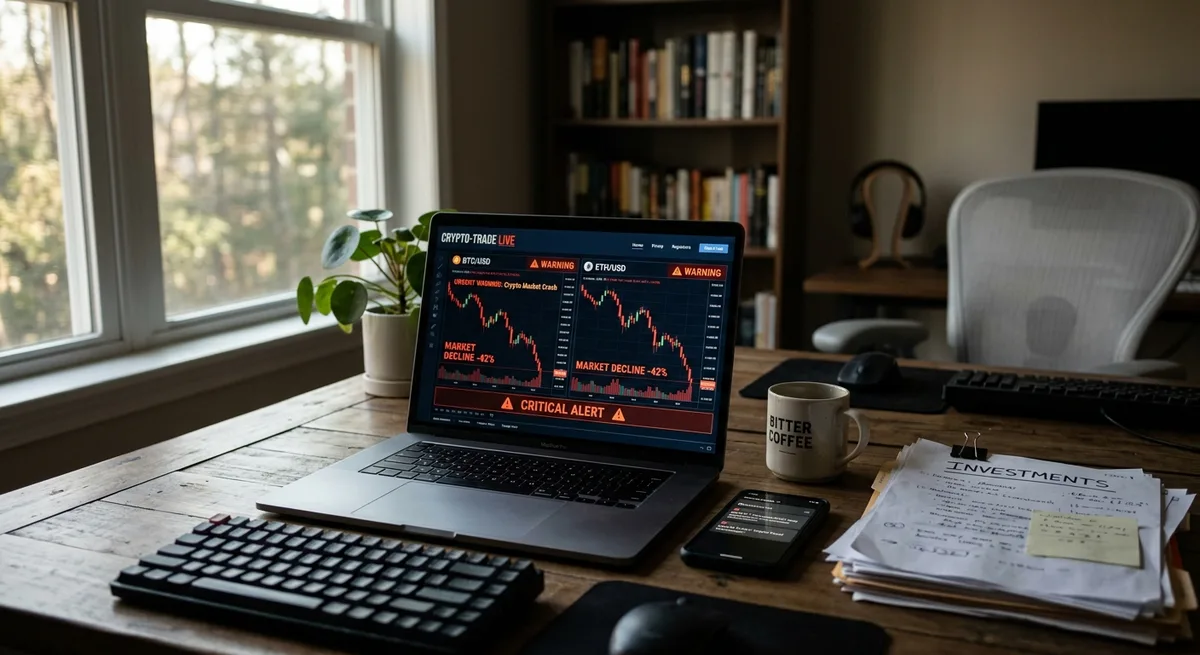
Crypto has matured, but so have the people trying to take it from you. The tactics that worked five years ago still work today, only now they come wrapped in better design, smoother videos, and far more patience. This guide is here to help you spot the patterns behind the noise, not to scare you out of the market.
I write this as someone who has watched plenty of friends, and a few sharper minds than mine, fall for things that looked perfectly normal at the time. That is the point of scams in 2026: they rarely look like scams anymore. They look like opportunities.
Introduction: Why Crypto Scams in 2026 Deserve Extra Attention
The reason crypto scams 2026 deserve a closer look is simple. Adoption is wider, the tools available to scammers are sharper, and the average user is still learning faster than they can verify. AI-generated content, polished DeFi front-ends, automated Telegram bots, and new token launches every hour create the perfect environment for confusion. And confusion is where scammers thrive.
Scammers follow attention, liquidity, and uncertainty. Wherever those three meet, fraud usually follows. When Bitcoin rallies, the giveaways multiply. When a new narrative trends, fake projects spin up overnight. When prices drop, recovery scams appear. None of this is new, but the production quality has improved drastically.
This article is not meant to make you paranoid. It is meant to sharpen your filters, so you can keep participating in crypto without becoming the easy target.
Quick Scam Warning Crypto Investors Should Know Before Reading Further

Before going into each scam type, here is a fast scam warning crypto users should keep top of mind. If something matches more than one of these signals, slow down.
- Promises of guaranteed or fixed daily returns
- Urgency, countdowns, or “limited spots” pressure
- Anonymous teams with no verifiable history
- Screenshots of profits instead of on-chain proof
- Unsolicited DMs from “managers,” “support,” or “mentors”
- Requests to connect your wallet to an unfamiliar site
- Pressure to deposit more after a small successful test
- Withdrawal requests blocked by sudden “tax” or “fee” payments
None of these alone proves fraud. Two or three together usually do.
What Makes the Latest Crypto Scams Different in 2026?
The latest crypto scams are not necessarily more creative, they are more convincing. Scammers now use AI-generated messages that mimic native speakers, fake influencer videos that look indistinguishable from real ones, cloned mobile apps with working interfaces, and Telegram groups filled with automated accounts that respond instantly to build a sense of community.
Wallet-draining contracts have also become more sophisticated. Instead of one obvious signature request, malicious sites layer permissions in ways that quietly grant access to multiple tokens at once. By the time you notice, the wallet is empty.
Scams Are Becoming Less Obvious and More Professional
If you still picture scams as broken English emails from a stranded prince, update that image. Many scam projects in 2026 have clean branding, detailed whitepapers, fake legal pages, “audited” badges, and active social channels with thousands of followers. Some even pay real developers to ship working features before pulling the rug.
A polished website proves nothing. Design has never been cheaper, and templates are everywhere. The question is not how the project looks, but who is behind it and what they actually do with your funds.
Scammers Follow Market Hype Cycles
Scams cluster around whatever the market is currently obsessed with. Bitcoin rallies bring giveaway scams. AI tokens bring fake AI trading bots. Meme season brings rug pulls. Gaming and RWA cycles bring fake staking platforms. New exchange listings bring impersonation pages.
Ask yourself a simple question whenever something feels urgent: who benefits if I act fast? If the answer is “the person pushing this,” that is usually enough to step back. For a deeper look at recurring patterns, the breakdown in Bitcoin Scams: Common Frauds and How to Avoid Them is worth reading alongside this one.
1. Fake Crypto Investments Promising Guaranteed Returns
Fake crypto investments remain the single most common scam category, and probably will be for years. The pitch is always similar: a private group, a personal trading manager, an AI-powered platform, or an exclusive fund that delivers consistent returns regardless of market conditions.
The numbers vary, but the structure is the same. You see profits on a dashboard. You feel smart. You deposit more. Then the withdrawal stops working.
How Fake Investment Platforms Usually Work
The flow is almost always the same. First contact happens through social media, a dating app, or a “wrong number” message that turns into a friendly chat. Trust gets built slowly, sometimes over weeks. Eventually, the topic of crypto comes up casually, followed by a recommendation for a platform that has worked wonders for them or a family member.
You deposit a small amount. The dashboard shows profits. You try a small withdrawal, and it works. That single successful withdrawal is the hook. Now you are ready to deposit more. The bigger amount goes in, the profits keep growing on screen, and when you try to withdraw, the platform asks for a “tax payment,” a “verification fee,” or a “minimum balance” before releasing funds. None of it is real.
Red Flags of Fake Crypto Investment Offers
The warning signs are consistent across nearly every case:
- Guaranteed daily or weekly returns
- No verifiable team or company address
- Vague explanations of how profits are generated
- Heavy referral incentives or pressure to invite others
- Screenshots and testimonials instead of on-chain proof
- Time-limited access or VIP tiers that require larger deposits
If a strategy were truly that profitable and that safe, it would not need to recruit strangers through Instagram.
2. AI Deepfake and Impersonation Scams
AI has changed what “proof” means online. A familiar face on video, a recognizable voice in a livestream, or a CEO announcing a giveaway is no longer enough to confirm anything. Deepfakes have become cheap, fast, and frighteningly good.
In 2026, expect to see impersonations of major exchange founders, well-known influencers, and even smaller community figures. Scammers do not need perfection. They only need to look real enough during a hype moment when people are not thinking clearly.
Fake Influencer Giveaways and Livestreams
The classic format keeps returning because it keeps working. A fake livestream shows a famous founder announcing a “send 1, receive 2” promotion. Comments are filled with bots claiming they just received their multiplied amount. A QR code or wallet address sits on screen with a countdown.
No legitimate person, project, or company will ask you to send crypto first to receive more back. That is not how anything in crypto actually works. If you see it, close the tab.
How to Verify Whether a Crypto Announcement Is Real
Verification takes thirty seconds and saves a lot of regret. Open the official website directly, not through a link in the video. Check verified social accounts that you have followed for a while. Look at multiple independent sources, ideally ones that have no financial reason to push the news. If a token or address is involved, check it on-chain. If the announcement only exists on one channel that just appeared, treat it as fiction until proven otherwise.
3. Phishing Links, Wallet Drainers, and Fake Airdrops
This category has quietly become one of the most damaging in 2026. You do not need to send funds anywhere. You just need to click the wrong link and sign the wrong transaction. Within seconds, your wallet can be drained of tokens you have held for years.
Fake airdrops, NFT claim pages, DeFi reward portals, and cloned versions of real protocols are the most common entry points. The pages look correct. The branding matches. The URL is one letter off, or sits on a fresh domain that looks plausible.
The Real Risk Behind “Connect Wallet” Buttons
Connecting a wallet by itself does not move your funds. The danger comes from what you sign afterward. A malicious site can request approval for unlimited token spending, permission to transfer your NFTs, or signatures that authorize drainer contracts to sweep your wallet later.
The simple rule: never sign a transaction you do not understand. If a site asks for an approval and you cannot read what it actually does, reject it. Tools that let you review and revoke approvals are worth using regularly, especially after testing new platforms.
Seed Phrase Scams Are Still Everywhere
No legitimate wallet, exchange, support agent, or project will ever ask for your seed phrase. Not for recovery, not for verification, not for “syncing,” not for any reason at all. If anyone asks, the conversation is over.
Common variations include fake support forms after you post a question publicly, Telegram DMs from “team members,” fake wallet recovery pages that appear at the top of search results, and urgent emails claiming your account will be locked. They all want the same twelve or twenty-four words.
4. Fake Exchanges, Clone Apps, and Withdrawal Traps
Fake exchanges have become more sophisticated. Some are built from scratch with fake order books, manipulated balances, and customer support that responds within minutes. Others are clones of real platforms with a slightly altered domain or a fake mobile app uploaded outside official stores.
The pattern usually ends the same way: deposits work fine, trading appears to work fine, and the trouble begins at withdrawal. Suddenly there is a KYC requirement that asks for more documents, a “minimum balance” rule that requires another deposit, or escalating fees that always stay just out of reach.
How Fake Exchanges Build Trust
Scammers know that trust is built through small wins. They allow a tiny withdrawal early on, post fake reviews on aggregator sites, run referral bonuses to bring in real users, and copy the branding of established exchanges down to the smallest detail.
One successful small withdrawal proves nothing. It is part of the script. The real test only happens when the deposit is large enough to be worth stealing.
Exchange Safety Checks Before Depositing Funds
Before sending funds to any exchange, especially one you discovered through an ad or a recommendation:
- Verify the exact domain. Type it manually, do not click ads.
- Check the app store listing for developer name, reviews, and download history.
- Look up regulatory registrations where they should exist.
- Search for the exchange name plus “withdrawal problem” or “scam.”
- Test support quality with a real question before depositing.
- Confirm trading volume across independent trackers.
If anything feels off, trust that feeling. There is no shortage of legitimate platforms.
5. Cloud Mining Scams and Unrealistic Mining Contracts
Cloud mining sits in a strange place. The concept itself is not inherently a scam, but the category attracts so many fraudulent operators that beginners almost always run into one first. Fake dashboards, impossible return projections, vague hardware claims, and hidden fees define this space.
Some platforms do not own any hardware at all. They simply pay early users with deposits from later users until the model collapses. Others operate real mining but structure contracts so heavily against the customer that profits are mathematically impossible. The detailed walkthrough in Don’t Get Fooled: How to Avoid Cloud Mining Scams covers the most common traps in this category.
Why “Passive Mining Income” Attracts Scammers
The appeal is obvious. Mining without hardware, noise, electricity costs, or technical setup sounds like the perfect entry point. That is exactly why scammers target this market so aggressively. The customer wants simplicity, and simplicity is easy to fake.
Not every cloud mining offer is a scam, but most are structured to favor the operator. Reading Is Cloud Mining Safe? Beware of These Top Security Risks before signing anything is a fair starting point if you are serious about this route.
How to Compare Cloud Mining Contracts Without Getting Trapped
If you are going to evaluate cloud mining, treat it like any other investment. Look at contract length, maintenance fees, payout transparency, proof of mining pool participation, and how breakeven is calculated. Ask how withdrawals work in low-revenue months. A side-by-side breakdown in Don’t Get Scammed: The Ultimate Cloud Mining Contract Comparison gives a useful framework for this.
If a provider cannot answer basic questions clearly, that itself is the answer.
6. Pump-and-Dump Groups and Meme Coin Manipulation
Coordinated pump-and-dump groups never really left. They just rebranded as “signal groups,” “alpha calls,” and “exclusive trading communities.” The setup is consistent: a small group of insiders accumulates a low-liquidity token, then pays influencers or uses their own large audience to push it, knowing they will sell into the buying pressure.
By the time the average buyer hears about a token, the insiders are already exiting. The chart looks like a win for thirty minutes, then collapses.
Why Beginners Often Enter Too Late
Public hype is a lagging indicator. By the time a meme coin trends on Twitter or appears in five Telegram groups, the people who bought early have already decided when to sell. New buyers are the exit liquidity.
Before buying anything trending, check who holds it. If a handful of wallets own most of the supply, you are not investing, you are volunteering. Look at token unlocks, liquidity locks, and whether the narrative is being pushed by a small number of coordinated accounts.
Practical Checks Before Buying a Trending Token
A quick checklist before clicking buy on any hyped token:
- Is the contract verified and does it match the official channels?
- Is liquidity locked, and for how long?
- How concentrated is the token among the top wallets?
- Are founder or team wallets identifiable, and have they sold recently?
- Does the community feel organic or filled with copy-paste replies?
- Is trading volume real or wash-traded across a few wallets?
If you cannot answer most of these, you do not have an edge. You have a guess.
7. Romance, Pig Butchering, and Long-Term Trust Scams
This category is the hardest to talk about because it preys on emotions, not greed. Pig butchering scams build relationships over weeks or months. The fraudster acts as a friend, a romantic interest, or a successful acquaintance who casually mentions their crypto profits. There is no rush at first, which is exactly what makes it work.
The patience is the weapon. By the time the investment topic appears, the target already trusts the person. Logic gets bypassed not because the victim is naive, but because the manipulation was designed to feel like a real human connection.
The Pattern: Trust First, Investment Later
The structure follows a predictable arc. Initial contact through a dating app or social platform. Weeks of normal conversation. A gentle introduction of crypto as part of their lifestyle. A platform recommendation framed as helpful advice. A small deposit that “performs well.” A larger one. Then problems with withdrawals.
People who fall for this are not foolish. They are targeted precisely because they are trusting and emotionally available. The scam is built to bypass the parts of your thinking that would normally protect you.
Warning Signs in Personal Crypto Conversations
If someone you have only met online is steering conversations toward crypto investments, slow down. Specific warning signs include refusing to video call, pushing a specific platform you cannot find independent reviews of, sending screenshots of profits, encouraging secrecy from family or friends, and reacting with frustration when you ask basic questions.
A real friend does not get upset when you want to verify something.
8. Coin-Specific Scams Targeting Bitcoin, XRP, and Popular Assets
Scammers love well-known coins because the names already carry trust. A new investor recognizes Bitcoin and XRP. They do not necessarily recognize the dozens of fake projects, wallets, support pages, and staking platforms that piggyback on those names.
Common formats include fake Bitcoin giveaways, XRP “support” scams that appear at the top of search results, cloned wallet pages, fake staking promotions, and impersonated project updates claiming new airdrops or migrations. For XRP holders specifically, the guide on how to secure your XRP investments from hacks and scams covers the most common attack angles.
Bitcoin Scam Patterns That Keep Returning
Bitcoin scams are almost cyclical. Every bull run brings the same formats back: fake giveaways tied to famous names, phishing wallets disguised as official software, fake recovery services targeting previous victims, and “trading experts” who promise to multiply your holdings if you let them manage your account.
These work because each new wave of users meets them for the first time. The article How to Spot Bitcoin Scams walks through the most recurring formats and how they evolve between cycles.
How to Avoid Crypto Fraud in 2026: A Practical Safety Framework
If you want to avoid crypto fraud reliably, the answer is not memorizing every scam type. New ones appear constantly. The answer is building habits that work regardless of which scam is currently trending.
Three habits cover most of the ground.
Step 1: Slow Down Before Sending Money
Urgency is the single most consistent feature across every scam category. Countdown timers, “limited spots,” exclusive access, last chance, hurry before the price moves. All of it serves one purpose: to stop you from thinking.
A real opportunity will still exist tomorrow. If it will not, it was never really an opportunity, it was a trap with a deadline. Pause. Sleep on it. Ask someone whose judgment you trust. Decisions made under pressure are decisions made for someone else’s benefit.
Step 2: Verify the Source, Not Just the Message
A message saying “the team announced X” means nothing on its own. Verify it at the source. Open the official website by typing the URL manually. Check verified social accounts. Look at pinned announcements. Compare what you see across two or three independent channels.
Contract addresses should come from the official project page, not from a random reply or a screenshot. URLs should be checked character by character. Verified handles change over time, so make sure the account you are reading is the one you actually followed.
Step 3: Test With Small Amounts, But Do Not Let That Create False Confidence
Small test transactions are useful for confirming that an address works or that a withdrawal mechanism exists. They are not proof of legitimacy.
Plenty of scams allow small withdrawals deliberately. The small win is part of the script. Treat a successful test as one data point among many, not as a green light to commit serious capital.
Wallet Security: Protecting Your Crypto Before a Scam Reaches You
Scam prevention is half awareness and half setup. Even if you make every right decision, a single bad signature on the wrong day can cost you. That is why wallet structure matters as much as scam recognition. The breakdown in Is Your Crypto Safe? Discover the Hidden Security Flaws covers some of the less obvious gaps people leave open.
Separate your wallets by purpose. Keep your long-term holdings somewhere they almost never touch the internet. Use a different wallet for daily transactions, airdrops, and experiments. Limit the approvals you leave active, and revoke ones you no longer use.
Hot Wallet vs Cold Wallet Risk Management
Hot wallets are convenient. They are also constantly online, which means constantly exposed. They make sense for funds you actively use, but not for funds you plan to hold for months or years. Cold storage exists because online exposure is a permanent risk surface. A clearer side-by-side comparison is available in Cold Wallet vs Hot Wallet Safety.
A useful rule: if losing a wallet’s contents would meaningfully hurt you, that wallet should not be hot.
Safe Bitcoin Storage as a Model for Better Crypto Habits
Bitcoin storage principles transfer well to almost every other crypto asset. Backups stored offline. Seed phrases written on durable material, never typed into a phone or saved in cloud storage. Multiple physical copies in separate locations. Minimal browser extensions on the device you use for transactions. The guide on how to store Bitcoin safely lays out a practical version of this.
These habits feel excessive until the day they save you. Then they feel obvious.
Why Hardware Wallets Matter More as Scams Get Smarter
Hardware wallets keep your private keys offline, even when your computer is compromised. That alone removes a huge category of risk. They are not a magic shield, you can still sign a malicious transaction if you are not paying attention, but they make most remote attacks far harder. The mechanics are explained well in How Hardware Wallets Protect Your Crypto.
As wallet-draining contracts and phishing pages get more sophisticated, the gap between hot wallets and hardware wallets keeps widening.
What to Do If You Think You Have Been Scammed
If you are reading this part because something already happened, take a breath. This is more common than people admit, and panic is the worst state to make decisions from. The goal now is damage control, not blame.
Immediate Actions to Take
Move quickly and methodically:
- Stop all communication with the scammer. Do not warn them, do not argue.
- Do not send any more funds, regardless of what they promise.
- Disconnect any wallets from suspicious sites.
- Revoke active token approvals using a trusted approval checker.
- Move remaining funds from the compromised wallet to a fresh wallet with a new seed phrase.
- Document everything: transaction hashes, addresses, screenshots, usernames, URLs, dates, and times.
The faster you cut exposure, the more you preserve.
Beware of Crypto Recovery Scams
Within days, sometimes hours, of being scammed, victims often start receiving messages from “recovery experts” who claim they can get the funds back for an upfront fee. Almost all of these are second-round scams targeting the same person.
Legitimate recovery is rare and difficult. It usually requires law enforcement involvement, exchange cooperation, and time. Anyone guaranteeing recovery, especially for an advance payment, should be treated as another scammer.
Where to Report a Crypto Scam
Reporting matters even when recovery is unlikely. It helps blockchain analytics firms tag addresses, alerts exchanges to freeze incoming funds, and contributes to law enforcement cases. Report the incident to the exchange or wallet provider involved, to relevant blockchain analytics tools that accept public reports, and to your local cybercrime authority.
Include transaction hashes, wallet addresses, screenshots of conversations, usernames, URLs, and timestamps. The more complete your report, the more useful it becomes.
Suggested Visual Elements for the Blog
Visuals make scam recognition faster, especially for newer readers who may not absorb long checklists.
Infographic: The 2026 Crypto Scam Red Flag Checklist
A single-page visual listing the most common warning signs works well as a reference: guaranteed returns, urgent deposit pressure, fake support DMs, suspicious wallet connection requests, anonymous teams, blocked withdrawals, and “tax payments” before release.
Flowchart: Should You Trust This Crypto Opportunity?
A simple yes/no decision tree helps readers walk through their own situation. Questions worth including: Did you verify the source independently? Is the team identifiable? Are withdrawal rules clear? Are risks disclosed? Do you actually understand what you would be investing in? A “no” on more than one of these usually answers the question on its own.
FAQ About Crypto Scams in 2026
What are the most common crypto scams in 2026?
The biggest categories are fake investment platforms with guaranteed returns, phishing and wallet-draining sites, fake exchanges and clone apps, cloud mining scams, AI deepfake impersonations, pump-and-dump schemes around meme coins, and long-term romance or pig butchering scams.
How can I tell if a crypto investment is fake?
The most reliable signals are unrealistic returns, lack of transparent team information, vague explanations of how profits are generated, pressure tactics, and any kind of friction or fees when you try to withdraw. Verify independently before sending funds, and treat referrals from strangers with extra caution.
Are crypto scams getting more advanced?
Yes, in presentation and automation. The visuals, websites, and impersonations are more convincing than ever, and AI has made personalized scams much cheaper to run. The underlying psychology, though, still relies on the same triggers: greed, urgency, trust, and confusion. Recognizing those triggers matters more than recognizing any specific scam format.
What is the safest way to protect my crypto?
Layered habits, not a single tool. Use cold storage for long-term holdings. Protect your seed phrase offline. Verify every link and contract address before interacting. Keep separate wallets for different activities. Revoke unnecessary approvals regularly. And never sign a transaction you do not understand.
Conclusion: Stay Skeptical, Stay Curious, and Protect Your Crypto in 2026
Crypto scams 2026 will keep evolving because the incentives are too high for them not to. New tools, new narratives, and new market cycles will keep giving scammers fresh angles. What does not change is the pattern underneath: urgency, false trust, fake proof, and pressure to act before thinking.
The good news is that you do not need to outsmart every new scam. You need to build habits that protect you regardless of the format. Slow down before sending money. Verify sources directly. Separate your wallets. Keep your seed phrase offline. Question opportunities that arrive uninvited.
Staying in crypto for the long run is less about catching every winner and more about not losing what you already have. Skepticism is not pessimism here, it is a survival skill. Stay curious, keep learning, and let the people in a hurry chase the next shiny promise without you.