

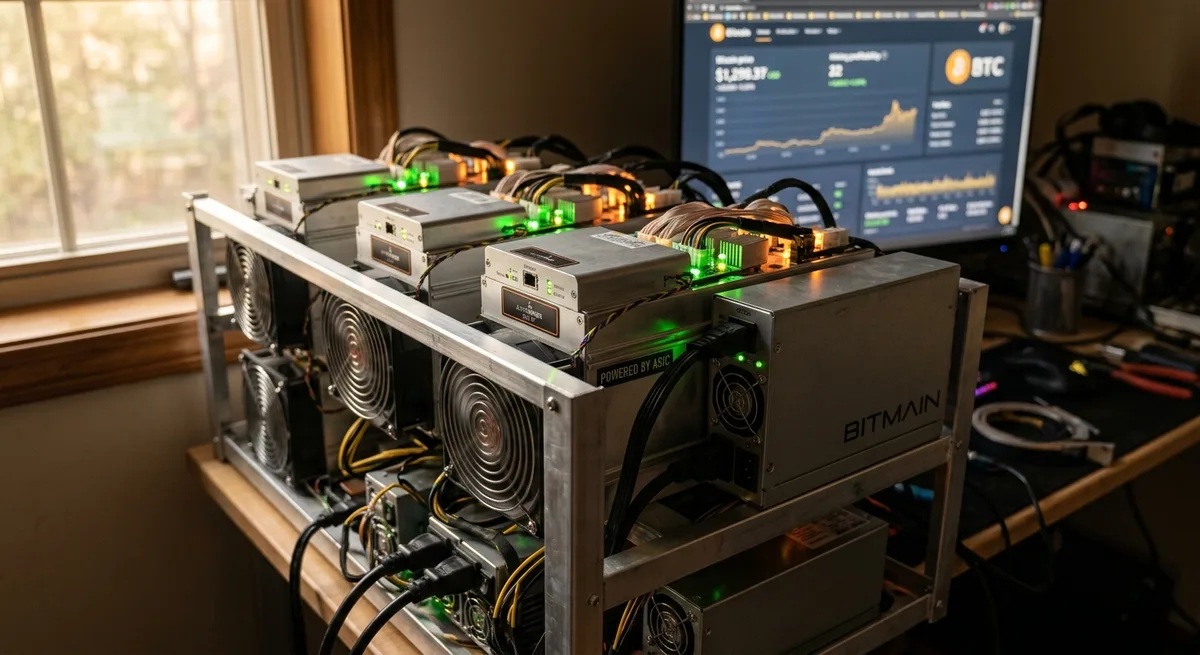
Bitcoin Mining Profitability and Rewards
What Happens If Bitcoin Mining Becomes Unprofitable?
Here is the short answer: Bitcoin does not suddenly stop working. What usually happens is that the least efficient miners shut down first. That reduces total hash rate for a period, makes the network a bit less competitive, and then Bitcoin’s built-in difficulty adjustment kicks in. Mining can become viable again for whoever is left standing.
This is also the practical answer to what happens when a large part of the market stops making money from mining. The network contracts before it recovers. Miners with high energy bills, outdated machines, weak balance sheets, or poor operational discipline tend to exit first. The more efficient ones often survive and may even see margins improve after the dust settles.
That matters whether you are an investor watching network health, someone curious about mining, or an operator trying to understand risk. Mining profitability is not a fixed state. It moves with price, fees, competition, energy costs, and hardware performance. If you want a broader reality check on whether mining still makes sense at all, this breakdown on is mining still worth it is worth reading alongside this one.
To understand why unprofitability happens at all, you need to start with the economics.
Why Bitcoin Mining Profitability Changes in the First Place
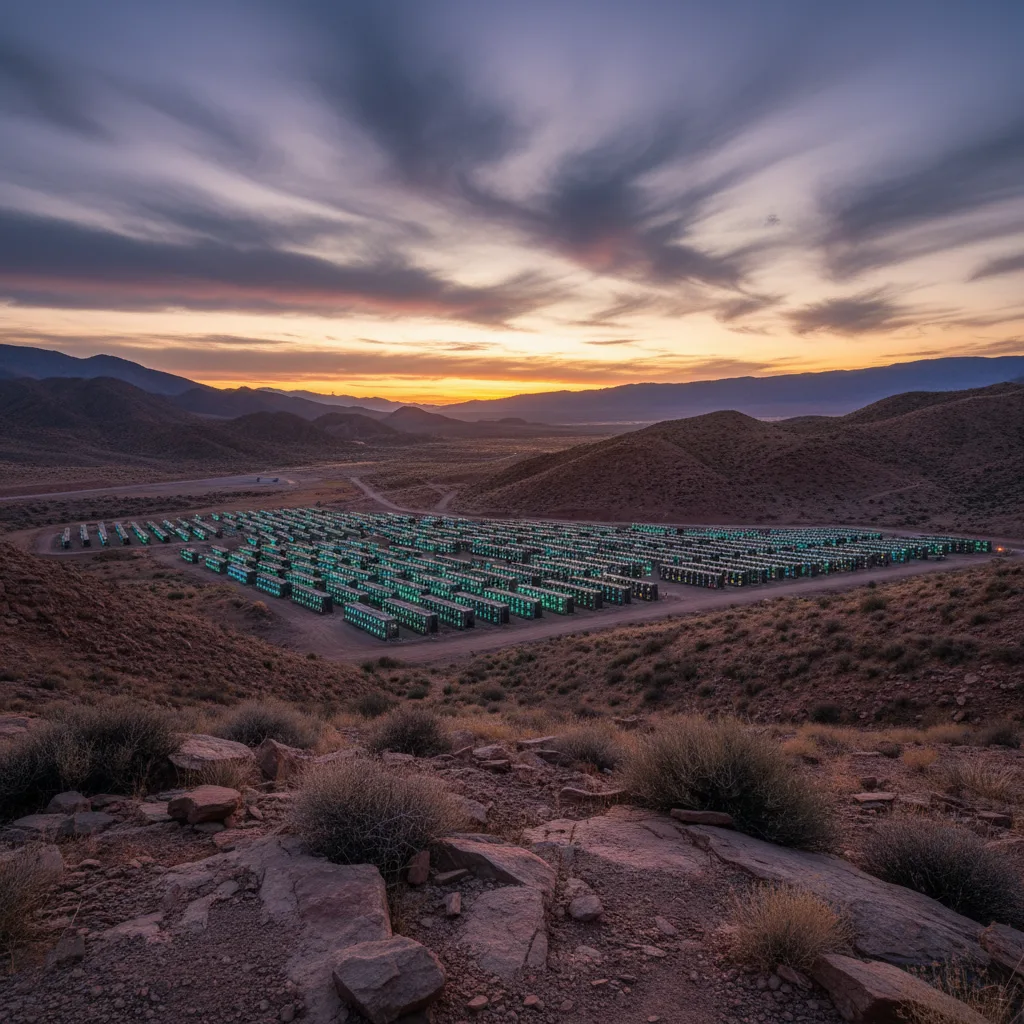
Mining profitability shifts because revenue and costs are both constantly moving. On the revenue side, miners earn Bitcoin through block rewards and transaction fees. On the cost side, they pay for electricity, machines, cooling, repairs, hosting, and capital. The spread between those two sides determines whether mining makes money or burns it.
Many beginners ask where bitcoin mining rewards actually come from. The answer is pretty simple. Two sources: the block subsidy, which is newly issued Bitcoin built into the protocol, and transaction fees paid by users who want their transactions included in a block. How much each contributes depends heavily on market conditions at any given moment.
Profitability also depends on competition. More miners joining means difficulty rises and each machine earns less on average. Miners leaving means difficulty can eventually fall and survivors may earn more. Mining is a live economic system, not a fixed yield product. The numbers shift constantly.
If you want to run real scenarios rather than guess, a mining profitability calculator can help you model price, difficulty, and energy assumptions before committing anything.
Revenue Side: Block Rewards and Fees
Every time a miner successfully adds a block, they receive the block subsidy plus whatever transaction fees were included in that block. Simple enough in theory.
The subsidy has historically been the main source of income, but it shrinks over time because of the halving schedule. Every halving cuts new issuance in half. That forces miners to increasingly rely on a higher Bitcoin price, stronger transaction fees, lower operating costs, or better hardware efficiency. Usually some combination of all four.
Transaction fees matter most during busy network periods. When block space is in high demand, users compete to get confirmed faster and fees rise. That extra fee revenue can provide a real buffer when margins are tight. It is also part of how bitcoin transaction fees support miners as subsidies gradually shrink over time.
So who actually benefits from bitcoin mining? Miners do when operations are efficient, but the network benefits too. Mining secures Bitcoin, processes transactions, and keeps block production competitive rather than centrally controlled. If you want a good overview of how this payout model shifts over time, how mining rewards change over time lays it out clearly.
Revenue is only half the picture, though. The real stress almost always shows up on the cost side.
Cost Side: Power, Hardware, Cooling, and Maintenance
For most miners, electricity is the biggest ongoing expense. A machine that looks profitable at one power rate can quietly bleed money at another. A small difference in cents per kilowatt hour can decide whether an operation survives or not. This is why how electricity costs affect bitcoin mining earnings is such a recurring conversation.
Questions about where to get free electricity for bitcoin mining come up all the time. In practice, truly free power is rare and usually comes with tradeoffs, limitations, or problems you do not want. What miners actually look for is cheap, stable, and reliable power. The best locations for low cost mining tend to be places with energy surpluses, colder climates, or supportive industrial infrastructure.
Then there is hardware. ASICs lose value as newer, more efficient models arrive. Even a machine that still runs may no longer compete well enough to justify its power draw. Add in cooling, ventilation, maintenance, internet stability, repairs, hosting fees, and downtime, and many setups that looked profitable on paper turn out to be fragile in practice. You are sitting there with a spreadsheet that says green, and reality has other plans.
If you are comparing energy sources and want to think beyond sticker price, this guide on the best electricity sources for crypto mining adds useful context.
What Actually Happens When Mining Becomes Unprofitable
When margins go negative, the process is usually gradual rather than dramatic. Not everyone shuts down at once. Different miners have different costs, different hardware, and different financial cushions. The market sorts itself in layers.
This matters because miners are not one single group. The space includes public mining companies, private industrial farms, small scale operators, home miners, hosting clients, and mining pools coordinating payouts. Some are heavily capitalized. Others are running on thin margins. When pressure hits, the weakest operators feel it first.
If you want a post-halving view of how this pressure tends to develop, is mining still profitable after the halving gives a practical baseline.
Smaller or Inefficient Miners Shut Down First
Smaller and inefficient miners are usually the first out because they have the least room for error. Older ASICs consume more electricity for less output. High power rates eat margins quickly. Poor treasury management makes it worse. A miner who financed machines at the top of the market and is now facing lower revenues can find that pressure becomes unsustainable fast.
In a downturn, every machine gets measured against its break-even point. The units with the worst efficiency get switched off first. This is one reason why the impact of unprofitable mining on the network is often less severe than people initially assume. The system sheds weak capacity before it touches the strong capacity.
Some people search for where to mine bitcoin for free as if location alone can solve the problem. It cannot. Competitive mining requires disciplined economics. Even hobby miners using excess household power still deal with wear, noise, heat, and opportunity cost. If you want to compare how power costs change outcomes across different setups, electricity costs in solo vs pool mining is worth a look.
Hash Rate Falls, Then Difficulty Adjusts
If enough miners shut down, total network hash rate drops. Blocks may come in more slowly for a while because the network is still calibrated for a higher level of competition. But Bitcoin is designed for exactly this situation. Roughly every 2016 blocks, the protocol adjusts difficulty to push average block times back toward ten minutes.
This is why panic around when bitcoin mining ends is often misplaced. Mining does not end because profitability tightens. The network changes the rules of competition through difficulty adjustment so remaining miners can keep producing blocks at a stable rate. It is an elegant mechanism, and it works.
This process is also central to the future of mining as block rewards continue to shrink. Lower revenue forces weaker miners out, but difficulty adjustment helps restore balance for whoever stays. If you want a cleaner explanation of how this works, difficulty adjustment explained covers it well.
Profitability Can Return for the Survivors
Unprofitability is not always permanent. In many cases, it is a reset. Once inefficient miners leave and difficulty adjusts lower, the miners still running may earn more Bitcoin per unit of hash power. If price also stabilizes or rises, margins can recover quickly.
There is no magic list of platforms that removes mining risk, despite what some corners of the internet suggest. The miners who survive tough periods usually do so through cost discipline, efficient hardware, smart treasury management, and realistic expectations. Not shortcuts.
The same logic applies whether you are solo mining, using hosting, or running an industrial operation. It is a business with cycles. If you want a more practical guide to getting through the difficult phases, the new mining economics is worth reading.
Does Unprofitable Mining Threaten Bitcoin’s Security?
Lower miner profitability does create real pressure, but it does not automatically break Bitcoin. The genuine security concern is whether hash rate falls so far, so fast, that attacking the network becomes cheaper than it should be. That is the actual risk worth watching.
There is no central safety net that steps in if margins disappear. Security comes from economic incentives, distributed competition, and the protocol’s adjustment mechanisms. If miners can still earn enough after difficulty adjusts, the network tends to find equilibrium again.
What matters most is the speed and depth of any decline. A temporary hash rate drop is stress. A sustained and extreme collapse would be more serious, because decentralization risks increase if only a small group of powerful operators can survive the conditions. For a deeper look at this relationship, how difficulty adjustments could impact network security is useful reading.
Short-Term Stress vs Long-Term Network Resilience
Bitcoin has already been through miner capitulation before. Hash rate has dropped during bear markets, after sharp price drawdowns, and around major profitability squeezes. The system did not break. That does not make it immune to risk, but it does show that temporary stress is not the same as systemic failure.
You will find threads asking when bitcoin mining will end because people want blunt answers from real discussions. The honest answer is that mining ends for individual operators all the time. Companies shut down. Rigs become obsolete. Power contracts change. But the network itself is built to keep going as miners enter and exit based on incentives.
Mining pools also play a role in how pressure is distributed, smoothing payouts and helping miners manage variance during uncertain periods. If you want to understand that dynamic better, how mining pools handle difficulty adjustments covers it clearly.
Historical Examples of Bitcoin Mining Profitability Pressure
Bitcoin mining has always moved in waves. Profitability rises in bull markets when price jumps faster than costs. It contracts during bear markets when price falls, fees cool off, and miners are stuck with equipment and energy commitments that no longer pencil out.
This context matters when people mix up two very different ideas. One is temporary unprofitability for miners right now. The other is the eventual point when the full Bitcoin supply has been issued, which is much further out in the future. Those are not the same event, and they should not be confused.
Historically, miner capitulation has happened during deep drawdowns and around halving periods. Each time, the market reset. Less efficient operators exited, stronger ones adapted, and the network kept functioning. If you want to understand how these cycles repeat, Bitcoin halving cycle frequency gives helpful context.
How Halvings Squeeze Miner Margins
A halving cuts the block subsidy in half overnight. Costs do not come down with it. Electricity still costs what it costs. Hardware still depreciates. Cooling and hosting still need to be paid. That is why the halving is such a significant economic event for miners, not just a narrative milestone.
After each halving, the industry faces a forced reset. Operators with low-cost power and efficient machines have a chance to stay competitive. Those with weak economics often get pushed out. In the short term, this can look like mining is becoming unsustainable. Usually it reflects an adjustment phase rather than a permanent breakdown.
If you want a direct explanation of why subsidy cuts hit so hard, block subsidy reduction and crypto profits is worth reading.
Cloud Mining and “Passive” Mining Alternatives
Cloud mining is an arrangement where you pay a company to rent mining power instead of buying and running hardware yourself. In theory, this removes the need to manage machines, cooling, noise, repairs, or electricity directly. No shed full of humming ASICs, no power bills landing on your doorstep.
That is why it appeals to beginners. It looks simpler, it sounds passive, and it seems like a way around the complexity of traditional mining. But cloud mining versus traditional mining profitability is often not as favorable as the marketing suggests. The provider needs to make money too, which means fees, spreads, and contract terms can heavily reduce your upside.
If you are comparing different routes into mining exposure, cloud mining vs hardware is a good place to start before committing anything.
Is Cloud Mining Profitable or Just Easier to Sell?
Cloud mining can be profitable under a narrow set of conditions. Many contracts, though, are structured so the provider captures most of the upside while you absorb much of the downside. Maintenance fees, fixed terms, payout thresholds, and early termination clauses can make break even harder than it initially looks.
This applies to so-called free mining platforms too. If a platform claims you can mine for free, the real monetization is usually happening elsewhere through hidden fees, aggressive upsells, poor payout rates, or user acquisition tactics. Free rarely means free.
For many users, cloud mining is easier to buy than it is to evaluate. That does not automatically make it bad, but it makes it risky if you have not worked through the actual numbers. A detailed cloud mining ROI analysis can help cut through the marketing.
Security Risks and Red Flags in Cloud Mining
The biggest red flags are guaranteed returns, vague company information, unclear hardware ownership, fake office addresses, no proof of mining operations, and withdrawal problems. If the business looks opaque, that is a serious warning sign.
A lot of scams use mining language because it sounds technical enough to discourage deeper questioning. If you cannot verify who controls the operation, where the machines are, what the fee structure looks like, and how payouts are calculated, you are essentially taking a bet on blind trust. That is not a great position in crypto.
Be skeptical of any company that leans harder on referral incentives than on operating transparency. For a practical checklist of what to watch for, cloud mining safety risks is a useful reference.
How Miners Try to Stay Profitable During Tough Periods
When margins compress, experienced miners focus on what they can actually control. They upgrade to more efficient ASICs. They move to lower-cost energy regions. They improve airflow and cooling to cut waste. They renegotiate hosting terms, shut down their least efficient units, and reevaluate whether their pool setup is working for them.
One detail that gets overlooked is fees. Pool fees, hosting charges, maintenance costs, and financing terms can quietly eat into profits even when headline revenue looks acceptable. This is why hidden pool mining costs deserves more attention than most beginners give it.
There is no universal fix. The right move depends on your scale, energy price, machine efficiency, and balance sheet. But the underlying principle is consistent: good miners manage downside before they chase upside.
Solo Mining vs Pool Mining in a Low-Margin Market
In a low-margin environment, solo mining becomes harder to justify for most people because payout variance is high. You might go a long time without finding a block, and that makes cash flow unpredictable. Pool mining gives up some upside through fees, but it offers more regular payouts and smoother planning.
When profitability is already under pressure, consistent income matters. It helps miners cover fixed costs and avoid being forced out by short-term variance. Solo mining can still make sense at larger scale or for operators with specific strategic goals, but for most people in a tough market, pools are the more practical choice.
This is also where questions about who controls mining pools become relevant. Large pools do carry influence, which is why decentralization is worth watching. But from an operator’s perspective, a well-run pool can genuinely improve your ability to survive when margins are thin. For a direct comparison, solo vs pool mining ROI is a helpful next step.
What Investors and Non-Miners Should Watch
You do not need to own a single ASIC for mining economics to matter to you. If you invest in Bitcoin, miner profitability affects network sentiment, supply behavior, and sometimes broader market structure. During periods of stress, miners may sell more of their holdings to cover costs, which can add market pressure at the margin.
Investors should keep an eye on hash rate trends, difficulty changes, transaction fee activity, and how the network responds around halvings. Global energy prices matter too when they shift sharply. Miner capitulation can also signal whether the network is simply shedding weak hands in a healthy reset, or dealing with a deeper structural problem.
Forum discussions can be a useful sentiment check, but raw community sentiment should never replace actual data. Real insight comes from combining network metrics with miner economics and price context.
Key Metrics That Signal Mining Stress
A few things worth tracking:
- Hash rate: a meaningful drop suggests miners are switching off machines.
- Difficulty: a downward adjustment after a hash rate decline signals the network is rebalancing.
- Miner reserves and outflows: rising sales pressure can indicate cash flow stress.
- Fee revenue: strong transaction fees can soften the blow of lower subsidy value.
- Break-even estimates: understanding which ASIC models are under water at current power prices tells you which segments of the market are most exposed.
Hash rate charts, difficulty trend lines, miner revenue breakdowns between subsidy and fees, and estimated break-even curves by power price tend to be far more informative than headlines. Worth bookmarking if you track this space seriously.
Conclusion: Bitcoin Mining Doesn’t Need Every Miner to Stay Profitable
What happens if bitcoin mining becomes unprofitable is not that Bitcoin stops. The more realistic outcome is that inefficient miners exit, hash rate dips for a period, difficulty adjusts, and incentives rebalance across the network.
That does not mean there is no risk. Temporary stress, lower competition, and more pressure on smaller operators are all real consequences. But Bitcoin was designed with this kind of economic shakeout in mind. Mining pressure is part of the system, not a sign the system is failing.
For miners, the lesson is to think in terms of efficiency, cost control, and survival through cycles. For investors, miner stress is a useful signal, not a reason for instant panic. And for beginners: profitability in mining is always conditional, always competitive, and always worth checking with real numbers before committing capital.
Bitcoin mining does not need every participant to stay profitable at the same time. It only needs enough incentive to keep attracting and retaining miners after each reset. That is exactly why the system tends to bend before it breaks, and why understanding the mechanics matters more than reacting to the noise.