

What Is Bitcoin Mining?
If you’ve ever asked what is bitcoin mining, here’s the short answer: it’s the process that keeps Bitcoin running. Mining confirms transactions, secures the network, and releases new bitcoins into circulation according to fixed rules.
That sounds technical, but the idea is simpler than it first appears. Strip away the jargon and what exactly is bitcoin mining comes down to this: a competitive system where specialized computers do computational work so the Bitcoin network can agree on which transactions are valid and in what order they happened.
Miners are a core part of Bitcoin’s design, but they’re only one piece of a bigger picture. If you want a broader foundation first, this guide on what Bitcoin is helps connect the dots. From there, we can zoom in and look at mining in plain language before getting into the mechanics.
Bitcoin Mining in Simple Terms
So, what is bitcoin mining in simple terms?
Think of Bitcoin as a public record book that no single company or government controls. People send bitcoin to each other, and those payments need to be checked and recorded. Mining is the system that handles that job.
Miners use computing power to gather recent transactions into blocks and compete for the right to add the next block to Bitcoin’s history. The winner gets paid, but in exchange they help secure the network.
This is where beginners often get confused. What the heck is bitcoin mining if nobody is digging anything out of the ground? The word “mining” is really a metaphor. Instead of digging for gold, miners use machines to perform work that protects the network and follows Bitcoin’s rules.
Miners are not uncovering hidden coins buried somewhere online. They’re verifying transactions, helping the network reach consensus, and earning newly issued bitcoin plus transaction fees when they succeed.
That basic definition matters. Once you understand what miners are actually doing, the next question becomes obvious: why does Bitcoin even need mining?
What Is the Point of Bitcoin Mining?
To understand what is the point of bitcoin mining, it helps to start with the core problem Bitcoin is trying to solve.
In digital systems, copying information is easy. Without a reliable mechanism, someone could try to spend the same coins twice. This is called double spending. Bitcoin mining helps stop that by creating a trusted order of transactions.
Mining gives the network a way to agree on one shared transaction history without relying on a central authority. No bank has to approve payments. No company controls the ledger. Instead, miners compete under the same rules and the network accepts valid work.
Mining solves several problems at once:
- It orders transactions in time
- It makes rewriting the blockchain extremely expensive
- It protects the network against fraud and manipulation
- It helps Bitcoin stay decentralized instead of being controlled by one gatekeeper
This is also where nodes come in. Nodes verify Bitcoin’s rules and share data across the network, while miners propose new blocks. If you want a clearer picture of that difference, this guide on what a Bitcoin node is is worth reading.
So what problems does bitcoin mining solve? Coordination, security, and trust in an open network where participants don’t need to know each other. Once that purpose clicks, the process itself becomes much easier to follow.
How Bitcoin Mining Works Step by Step
If you’re wondering what’s the process of mining bitcoin, it helps to see it as a sequence rather than one mysterious action.
At a high level, this is what is bitcoin mining actually doing:
- Users send bitcoin transactions
- Those transactions spread across the network
- Miners collect valid transactions into a candidate block
- Miners compete to solve a proof of work challenge
- One miner finds a valid block
- The network checks it and adds it to the blockchain
- The winning miner receives a reward
That’s the full loop. If you want more detail on how payments move through Bitcoin before they reach miners, this walkthrough of Bitcoin transactions explained step by step is a useful companion. Now let’s break the mining flow into smaller pieces.
Step 1: Transactions Enter the Network
Every mining cycle starts when someone sends bitcoin.
A wallet creates a transaction and broadcasts it to the Bitcoin network. Nodes and miners receive it, check whether it follows the rules, and if it does, it waits in a holding area until a miner includes it in a block.
This is the first practical step in what is mining bitcoin. Nothing is mined yet in the reward sense. The network is simply receiving payment requests and lining them up for confirmation.
Some transactions get confirmed quickly. Others wait longer, especially when the network is busy. That leads directly into how miners decide what goes into the next block.
Step 2: Miners Group Transactions Into a Block
Miners don’t confirm transactions one by one. They bundle them together into blocks.
Unconfirmed transactions sit in what’s commonly called the mempool. Think of it as a waiting room. Miners select transactions from that pool and build a candidate block they want to submit to the network.
So what are bitcoin miners mining exactly? They’re mining the right to add a valid block to the blockchain. That block contains a set of transactions, and miners usually prioritize the ones offering higher fees because that increases potential earnings.
This is why fees matter. When many users are competing for block space, miners typically include the transactions that pay more first. Once a block is assembled, the miner starts the computational race required to make it valid.
Step 3: Proof of Work and Hashing
This is the part people usually mean when they talk about mining.
Bitcoin uses a system called proof of work. Miners take the block data and run it through a hashing function again and again, changing a small value each time. Their goal is to produce a hash that falls below the current network target. Imagine spinning a combination lock millions of times per second hoping to land on the right number.
You don’t need the math to understand the logic. The important point is that this process takes real computational effort. It’s hard to find a valid result, but easy for the network to check once someone finds one.
That’s the reason behind why crypto mining exists in proof of work systems. It creates a cost to block production, which makes attacking or rewriting the network far more difficult. If you want to compare this model with newer systems, this guide on proof of work vs proof of stake explains the difference clearly.
Once a miner finds a valid hash, the race ends for that round and the network moves to verification.
Step 4: The Winning Block Is Verified by the Network
After a miner finds a valid block, it broadcasts that block to the rest of the network.
Nodes check the block to make sure it follows Bitcoin’s rules. They verify the proof of work, confirm the transactions are valid, and reject the block if something is wrong. If it passes those checks, it becomes part of the blockchain.
This is the practical outcome of what is the bitcoin mining process. One accepted block updates the shared ledger across the entire network, and the miner who found it receives the reward.
That’s how Bitcoin keeps moving forward, block by block. But many people still struggle to picture what mining actually looks like outside the theory.
What Does Bitcoin Mining Look Like in Practice?
If you ask what does bitcoin mining look like, the answer today is very different from the early Bitcoin days.
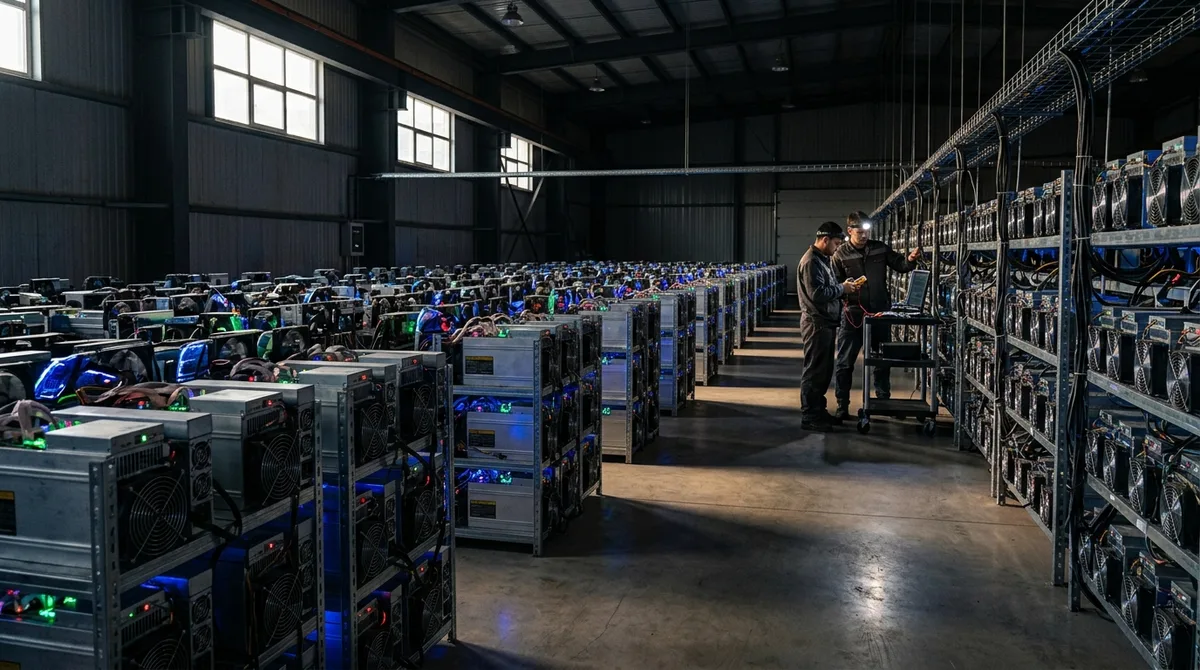
Modern mining usually happens in dedicated facilities filled with specialized machines called ASICs. These machines are built for one purpose: running Bitcoin’s hashing algorithm as efficiently as possible. They sit in long rows on shelves and racks, surrounded by heavy ventilation, industrial wiring, and constant monitoring. The noise alone is something most people don’t expect.
A typical setup includes:
- ASIC miners running nonstop
- Power distribution systems
- Cooling fans or immersion cooling
- Network connections
- Software to track performance and uptime
This is not a person clicking a button on a laptop in a bedroom. That image is outdated. Bitcoin mining has become a competitive infrastructure business.
If you want to see the practical side more closely, this guide on Bitcoin mining setups and rigs shows what modern equipment and operations actually involve. Once you see the scale, the next question becomes who can realistically participate today.
Who Can Mine Bitcoin Today?
In theory, anyone can mine Bitcoin. In practice, not everyone can do it competitively.
There are three common ways people participate:
- Solo mining, where one miner works independently and keeps the full reward if they find a block
- Pool mining, where many miners combine their hash power and share rewards based on contribution
- Industrial mining, where large operations run massive numbers of machines at scale
For most individuals, solo mining is unrealistic because the odds of finding a block alone are extremely low unless you control enormous hash power. Mining pools are more accessible because they smooth out income, even though rewards are smaller per participant.
This is also part of why mining cryptocurrency attracts people. Mining can generate revenue, but only when the economics make sense. Hardware cost, electricity price, cooling, maintenance, and competition all factor in.
Bitcoin mining is open in principle. But openness is not the same as profitability. That depends heavily on difficulty and competition.
Mining Difficulty, Competition, and Why It Keeps Getting Harder
Bitcoin mining doesn’t stay equally easy over time.
As more miners join the network and total hash power rises, Bitcoin adjusts the mining difficulty to keep block production roughly on schedule. The target is about one new block every ten minutes.
That adjustment happens automatically. If blocks are being found too quickly, difficulty rises. If too slowly, it falls.
This is a key part of how bitcoin mining works in practice. The network is self-adjusting. It doesn’t care whether more hardware enters the market or old machines shut down. It changes the challenge so that issuance stays predictable.
The result is straightforward: when competition increases, mining gets harder. A machine that was profitable a few years ago may simply be too weak today. That’s why miners constantly watch hash rate, efficiency, and operating costs.
If you want to go deeper into the mechanics, this explanation of difficulty adjustment makes the process much easier to understand. And once difficulty is clear, the next thing to look at is the reward model that keeps miners in the game.
How Miners Get Paid
Mining only works because miners have an incentive to spend money on hardware and electricity.
They earn in two ways:
- Block subsidies: new bitcoins created by the protocol
- Transaction fees: paid by users who want their transactions included
When a miner finds a valid block, they receive both. That reward isn’t arbitrary. It follows Bitcoin’s fixed issuance schedule, which includes an event called the halving. Roughly every four years, the block subsidy is cut in half.
New bitcoin issuance declines over time as a result. Early miners earned much larger subsidies than miners do today. Over the long run, transaction fees are expected to play a bigger role.
If you’ve wondered, in a practical sense, what is bitcoin mining actually doing, one honest answer is that it turns security work into an economic system. Miners protect the network because they’re paid to do so.
For a closer look at the economics, this breakdown of Bitcoin mining profitability and rewards covers the numbers behind the model. That incentive structure is essential, but it also leads directly into one of the biggest criticisms of mining.
The Energy Debate Around Bitcoin Mining
Bitcoin mining uses a lot of electricity. That part is real.
The reason is straightforward: proof of work is designed to require real-world energy and hardware. That cost is what helps secure the network. Critics argue the electricity use is wasteful, especially compared with systems that use far less energy.
This is why the question what the hell is bitcoin mining often comes with concern about environmental impact. People see the power usage and assume the problem is obvious. In reality, it’s more layered than that.
The criticism usually focuses on carbon emissions, local grid strain, and the idea that mining consumes power that could be used elsewhere. Those are valid concerns in some contexts.
The counterargument is that not all electricity is equal. Mining operations often seek the cheapest power available, which can include surplus energy, stranded energy, curtailed renewables, or locations where excess production would otherwise go unused. Some operators also help stabilize grids by shutting down during peak demand periods.
None of that means mining has no environmental cost. It means the impact depends heavily on where the mining happens, what energy source is used, and how the operation is managed.
If you want a more balanced look, this article on Bitcoin mining energy and environmental impact goes deeper without turning it into a one-sided debate.
Common Misconceptions About Bitcoin Mining
Bitcoin mining gets misunderstood because the topic sits between finance, computing, and economics. That creates a lot of half-true explanations online, including oversimplified takes you might find in a wikihow bitcoin mining article or a random what is bitcoin mining quora thread.
Here are some of the most common ones worth clearing up.
Miners create bitcoin out of nothing. Not exactly. New bitcoins are issued according to protocol rules as part of block rewards. Miners don’t invent supply whenever they want.
Mining means solving random math for no reason. The computation isn’t random busywork. It’s what makes block production costly and network attacks expensive.
You can mine Bitcoin efficiently on any PC. That used to be more realistic in Bitcoin’s early years. Today, standard computers aren’t remotely competitive against ASIC machines.
Mining and nodes are the same thing. They’re related but different. Nodes verify and relay data. Miners compete to add new blocks.
Mining is guaranteed passive income. It’s not passive in the simple sense. It’s a business with operational costs, downtime risk, difficulty changes, and market volatility.
Once these misconceptions are out of the way, it becomes easier to understand how mining has evolved globally.
Bitcoin Mining in China and the Global Shift in Mining
For years, China played a major role in Bitcoin mining.
A large share of global hash power was located there because of access to hardware supply chains, cheap electricity in certain regions, and large-scale industrial operations. That’s why people still search for what is bitcoin mining china when trying to understand the history of the industry.
Then the landscape shifted. Chinese authorities cracked down on mining activity and many miners shut down or relocated. Hash power moved to other countries, including the United States, Kazakhstan, Russia, and several other regions with favorable energy or regulatory conditions.
This mattered for two reasons. First, it showed that mining is mobile. Second, it showed that Bitcoin can adapt when a major mining hub disappears. The network didn’t stop. Difficulty adjusted, miners relocated, and the system kept producing blocks.
That global shift also reminds beginners that mining is shaped by more than technology. Regulation, energy markets, and geography all play a role.
Beginner FAQ About Bitcoin Mining
People search for explanations in different formats and languages, including terms like what is bitcoin mining in hindi, because the same beginner questions come up everywhere. Here are the short answers that matter most.
Is bitcoin mining legal? It depends on the country and sometimes the region. In many places it’s legal. In others it’s restricted or effectively banned because of energy policy or regulation.
Is bitcoin mining profitable? Sometimes, but not automatically. Profit depends on hardware efficiency, electricity cost, Bitcoin price, mining difficulty, and operational reliability.
Is bitcoin mining bad for the environment? It can have a meaningful environmental impact, especially when powered by high-emission energy sources. The full picture depends on where the electricity comes from and how the operation is structured.
Should beginners try bitcoin mining? Usually only after understanding the numbers. Mining is not the easiest entry point into crypto. For most beginners, learning how Bitcoin works first is a smarter move than buying hardware immediately.
Is Bitcoin Mining the Same as Running a Node?
No.
A node validates transactions and blocks, stores Bitcoin data, and helps relay information across the network. A miner does something different: it competes to create new blocks through proof of work.
You can run a node without mining. You can also mine while relying on node infrastructure. They support the same network, but they’re not the same role. Many beginners assume every miner is just a validator and every node is a miner. Bitcoin separates those functions more clearly than most people expect.
Can You Still Mine Bitcoin From Home?
Yes, but it’s harder than many people think.
Home mining exists, especially for hobbyists or people with unusually cheap electricity. But there are real barriers: ASIC machines are expensive, they generate significant heat, they’re noisy enough to be annoying in a living space, and they draw serious power from your mains.
On top of that, home miners compete with industrial operations that often have better energy rates and more efficient infrastructure. It’s still possible. It’s rarely easy or casually profitable.
Is Bitcoin Mining Worth It for Beginners?
Usually, not as a first step.
Mining is best viewed as an operating business, not a simple passive income trick. You need capital for hardware, ongoing cash flow for electricity, space for the machines, tolerance for noise and heat, and realistic expectations about return on investment.
The economics can shift quickly. Difficulty can rise. Bitcoin price can fall. A machine that looks profitable on paper can disappoint in practice.
For beginners, the smarter move is usually to understand the system first, and only then decide whether mining fits your goals, budget, and risk tolerance.
Conclusion: What Bitcoin Mining Really Comes Down To
So, what is bitcoin mining really?
It’s the mechanism that secures Bitcoin, confirms transactions, and introduces new coins according to fixed protocol rules. Miners compete to add blocks, the network verifies their work, and the blockchain moves forward without needing a central authority.
That’s the core answer to what is bitcoin mining and why it matters. Even if you never plan to mine yourself, understanding it helps you understand how Bitcoin stays decentralized, why proof of work is important, and where many of the system’s tradeoffs come from.
You don’t need to run a mine to benefit from knowing how it works. But if you want to understand Bitcoin beyond the headlines, mining is one of the most important places to start.