

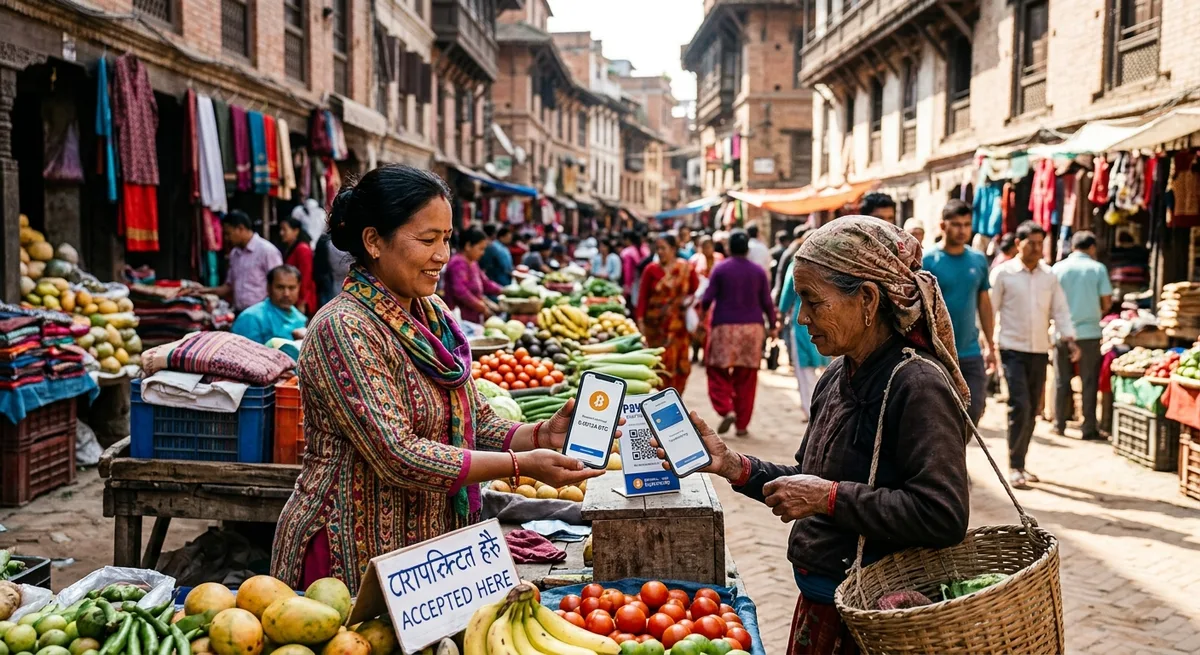
Crypto stopped being a niche internet experiment a long time ago. Walk through a market in Lagos, scroll through freelancer groups in Manila, or talk to a remittance receiver in Caracas, and you’ll quickly notice something: people aren’t debating whether crypto is “the future.” They’re already using it. Quietly, practically, often out of necessity.
That’s the part of the story that often gets lost in Western headlines. The conversation around crypto adoption developing countries isn’t really about price predictions or speculation. It’s about access, survival, and finding tools that traditional finance hasn’t provided. And the more you look, the clearer it becomes that this shift is real, but also messy, uneven, and full of trade-offs worth understanding.
Introduction: Why Crypto Adoption in Developing Countries Matters
In many parts of the world, the financial system simply doesn’t do what people need it to do. Bank accounts are hard to open, transfers are slow and expensive, local currencies lose value, and getting paid by someone abroad can feel like a small administrative war.
That gap is exactly where crypto stepped in. Crypto adoption in developing countries isn’t mainly driven by speculation. It’s driven by inflation eating into salaries, by relatives sending money home, by freelancers wanting to be paid in something more stable than their local currency, and by people who just want a payment app that works.
This article walks through how that adoption is unfolding: who is using crypto, why they’re using it, where it’s growing, where it’s being blocked, and what to realistically expect next. No hype. Just a clear look at the dynamics shaping one of the most interesting financial shifts of the decade.
What Crypto and Blockchain Mean in Simple Terms

Before going further, a quick reset for anyone newer to the topic. Cryptocurrency is digital money that moves over the internet without needing a bank to approve the transaction. Bitcoin is the most well-known example, but there are thousands of others, each with different goals and use cases.
The technology that makes this possible is the blockchain. Think of it as a shared, public record book that nobody can secretly edit. Every transaction gets verified and added to that record. No central company holds the keys, which is why crypto can work in places where banks are limited, slow, or untrusted.
If you want a deeper but still beginner-friendly explanation, this guide on what blockchain is is a good starting point. For the rest of this article, that base is enough: digital money, no central gatekeeper, recorded on a public ledger.
The Main Drivers Behind Crypto Adoption in Developing Countries
People rarely adopt new financial tools out of curiosity alone. They do it because something in their current situation isn’t working. In developing economies, three pressures keep showing up.
Limited Access to Traditional Banking
A huge portion of the global population is unbanked or underbanked. No bank account, no credit history, no easy way to receive international payments. For them, opening a bank account isn’t a 10-minute online process. It can require paperwork, minimum balances, in-person visits, and trust in institutions that have historically let them down.
Crypto wallets flip that equation. A smartphone and an internet connection are often enough to start sending, receiving, and storing value. That’s the core of the financial inclusion crypto narrative: not replacing banks for everyone, but reaching the people banks never bothered to serve.
Projects focused on cross-border payments are pushing this further. XRP’s role in emerging markets is one example of how blockchain rails are being used to give people access to financial services that simply didn’t exist in their region a decade ago.
Inflation, Currency Instability, and Store-of-Value Demand
If your salary loses 30% of its purchasing power in a year, you start looking for alternatives. That’s not theory in countries like Argentina, Turkey, Lebanon, or Nigeria. It’s daily life.
For many people in those situations, holding Bitcoin or a dollar-pegged stablecoin feels safer than holding the local currency, even with crypto’s well-known volatility. It’s not because Bitcoin is “stable.” It’s because the alternative is watching savings melt in real time.
That said, this is where realism matters. Bitcoin can drop 40% in a few months. Stablecoins can depeg. Calling crypto a guaranteed safe haven is dishonest. The honest version is this: in unstable economies, even a volatile asset can look attractive compared to a collapsing currency. There’s a deeper breakdown of this dynamic in this article on Bitcoin growth in developing countries.
Mobile Payments and Digital-First Behavior
A lot of developing markets skipped the desktop banking era entirely. People went straight from cash to mobile money. That mobile-first habit makes crypto wallets feel less foreign and more like a natural next step.
Peer-to-peer platforms, mobile exchanges, and lightweight wallets are doing the heavy lifting here. Someone in Kenya can send value to someone in Ghana with a few taps. No SWIFT codes. No three-day wait. That kind of experience, once people try it, is hard to unlearn.
Bitcoin in Emerging Markets: Why It Often Leads the Conversation
When people in developing countries enter crypto, Bitcoin is usually the first name they hear. It’s the brand. The one that survived multiple cycles. The one with the longest track record and the deepest liquidity.
The bitcoin emerging markets story isn’t about ideology for most users. It’s about three things: it works, it’s recognized, and it can be converted to local currency relatively easily through peer-to-peer markets. In countries with capital controls or limited dollar access, that matters more than any whitepaper. There’s a useful overview of how this momentum built up in this article on Bitcoin adoption growth.
Who Is Using Bitcoin in Developing Economies?
It’s rarely the stereotype people imagine. The typical Bitcoin user in an emerging market isn’t a tech bro day-trading from a laptop. It’s often more grounded than that.
You’ll find freelancers receiving payments from clients in the US or Europe. Small business owners hedging against local currency drops. Families receiving remittances from a relative working abroad. Students saving in something that won’t lose value before graduation. Traders, yes, but also long-term savers who treat Bitcoin almost like a digital gold reserve.
For more concrete examples and numbers, this breakdown of who actually uses Bitcoin gives a clearer picture than most adoption reports do.
Bitcoin Payments in Everyday Use Cases
Bitcoin payments in developing countries don’t look like a coffee shop accepting BTC for a latte. They look more practical and, frankly, more important.
Common use cases include peer-to-peer trades, paying remote contractors, receiving donations, settling informal cross-border trade, and converting in and out of local currency on demand. Some merchants accept it directly, but most adoption happens through wallets and exchanges that bridge crypto and cash. If you want a realistic view of where and how Bitcoin actually gets spent, this guide on Bitcoin payments is worth a read.
Crypto Remittances: One of the Strongest Real-World Use Cases
If there’s one use case where crypto genuinely shines in developing economies, it’s remittances. Every year, hundreds of billions of dollars flow from workers abroad back to their families. Traditional rails, like Western Union or bank wires, often take days and charge fees that can hit 7% or higher.
For someone sending $200 a month to their family, losing $14 to fees is not a rounding error. It’s groceries. That’s why crypto remittances are growing so fast in corridors like US to Mexico, UAE to Philippines, and Europe to West Africa.
How Crypto Can Lower Remittance Costs
The basic flow is simple. The sender buys crypto, sends it to the recipient’s wallet within minutes, and the recipient either holds it or converts it to local currency through a peer-to-peer marketplace or a local exchange. Fees can drop to a few cents on certain networks, and settlement happens in minutes instead of days.
Some networks were built specifically for this. XRP’s approach to cross-border payments is one example of how blockchain infrastructure is targeting the remittance market directly, focusing on speed and cost rather than speculation.
Risks Around Crypto-Based Remittances
It’s not all upside. Volatility is a real issue if money sits in Bitcoin for too long. Stablecoins reduce that risk but introduce others, like issuer trust and regulatory exposure. Then there are the human risks: someone sends crypto to the wrong wallet address, loses their seed phrase, falls for a fake exchange, or gets scammed by a “helper” promising better rates.
The smart approach is boring but effective. Use trusted platforms, convert to local currency quickly if you can’t afford volatility, double-check addresses, and never share private keys. Crypto remittances can save real money, but only if the user knows what they’re doing.
Financial Inclusion Crypto: How Digital Assets Can Expand Access
Financial inclusion is one of those phrases that gets thrown around so often it starts to lose meaning. In the context of crypto, it’s actually concrete. It means giving people tools to save, transact, and earn in ways their local system doesn’t offer.
Crypto isn’t a replacement for a working financial system. Nobody serious is arguing that. But in places where the system is broken, slow, or exclusionary, crypto can fill specific gaps: international payments, digital savings, dollar exposure, access to global markets, and basic store-of-value functions.
Opportunities for Freelancers, Small Businesses, and Entrepreneurs
A graphic designer in Buenos Aires working for a US client used to lose a chunk of every payment to fees, delays, and unfavorable exchange rates. With crypto, that same payment can land in their wallet in minutes, converted to whatever currency they prefer.
Small businesses do something similar. Importers pay suppliers directly, online sellers receive payments from international buyers, and creators get tipped by global audiences without needing a complex banking setup. None of this is glamorous. It’s just infrastructure that finally works.
Stablecoins and Their Role in Developing Economies
Stablecoins, especially dollar-pegged ones like USDT and USDC, have quietly become one of the most used crypto assets in developing markets. They give people dollar exposure without needing a US bank account.
For savings, they offer protection from local currency drops. For payments, they’re fast and predictable. For remittances, they avoid the volatility problem that pure Bitcoin transfers can introduce.
But stablecoins come with their own risks. They depend on the issuer being solvent and honest. They can be frozen by the issuer or regulators. And they can lose their peg in extreme conditions. Useful tool, not a magic one.
Countries and Regions Where Crypto Adoption Is Growing
Adoption isn’t evenly spread, and lumping entire continents together usually misses the point. A few regions stand out for very different reasons.
Latin America: Inflation, Remittances, and Dollar Access
Argentina and Venezuela are textbook cases. Years of currency instability pushed people toward Bitcoin and stablecoins as everyday savings tools. Brazil has become one of the most active crypto trading markets in the world, with growing institutional involvement. El Salvador grabbed headlines by adopting Bitcoin as legal tender, with mixed real-world results.
Across the region, the common thread is the same: people want dollar exposure, cheaper remittances, and protection from local economic shocks.
Africa: Mobile Money, Peer-to-Peer Markets, and Youth Adoption
Nigeria consistently ranks among the top countries in the world for peer-to-peer crypto activity. Kenya, with its long history of mobile money, has been quick to integrate crypto into existing payment habits. Ghana and South Africa are seeing strong growth in trading, remittances, and stablecoin usage.
A young, digitally native population combined with a real need for better payment rails makes Africa one of the most interesting regions to watch. Adoption here isn’t theoretical. It’s already woven into how many people get paid and send money.
Southeast Asia and South Asia: Digital Payments and Global Work
The Philippines, Vietnam, Indonesia, India, and Pakistan all show high adoption, but for different reasons. The Philippines leans heavily on remittances. Vietnam has a huge retail trading culture. India has one of the largest absolute numbers of crypto holders in the world, despite regulatory uncertainty. Pakistan’s adoption is fueled by both remittances and a search for alternatives to a struggling currency.
Online work plays a big role too. Millions of freelancers in this region serve clients abroad, and crypto rails make payment cleaner and faster than traditional options.
Global Adoption Trends: What the Data Shows
When you look at global adoption indexes from firms like Chainalysis, the pattern is consistent: developing countries dominate the top rankings, not Western economies. That alone tells you something about where real demand is.
Transaction volumes, peer-to-peer activity, stablecoin flows, and exchange registrations all point in the same direction. Adoption is broadening, not narrowing. But adoption is also a fuzzy word. Owning a token is different from using it weekly. Trading is different from saving. Receiving remittances is different from running a business on crypto rails.
Why Adoption Numbers Can Be Misleading
A country can show high crypto ownership and still have very shallow real-world usage. Maybe everyone bought during a bull run and now holds. Maybe activity is concentrated in a small group of heavy traders. Maybe most of the volume is speculation, not utility.
The honest read of the data requires looking at what people are actually doing with crypto, not just how many wallets exist.
What Strong Crypto Adoption Actually Looks Like
Real adoption shows up in repeat behavior. Recurring remittance flows. Merchants who keep accepting crypto month after month. Stablecoin volumes growing in line with payroll cycles. Local exchanges with real liquidity. Education resources in local languages. Clear, workable regulation.
When those signals stack up, you’re looking at adoption that can survive a bear market. When they don’t, you’re mostly looking at speculation in disguise.
The Regulatory Landscape in Developing Countries
Regulation is the wildcard. It can accelerate adoption or push it underground, sometimes within the same year. Different countries are taking very different approaches, and the result is a patchwork that’s hard to summarize cleanly. If you want a broader global view, this overview of Bitcoin’s legal status is a good reference point.
Why Governments Are Cautious About Crypto
Governments worry about capital flight, tax evasion, money laundering, and losing control over monetary policy. Those are legitimate concerns, not just excuses. Consumer protection matters too. Plenty of people in developing countries have lost savings to crypto scams, and regulators take that personally.
The problem is that overly harsh restrictions tend to push activity into informal channels rather than eliminate it. Banning exchanges doesn’t stop demand. It just makes the market less safe.
What Balanced Regulation Could Look Like
The countries getting this right tend to follow a similar playbook. License exchanges and enforce basic standards. Require clear consumer disclosures. Tax crypto gains in a way that’s transparent and enforceable. Allow stablecoin usage with oversight. Run fintech sandboxes to test new ideas without breaking the whole system.
It’s not glamorous, but it works. The goal isn’t to “win” crypto. It’s to let it grow safely.
Challenges Holding Back Crypto Adoption
Growth doesn’t mean smooth growth. There are real barriers, and ignoring them would paint a misleading picture.
Volatility and Market Risk
Bitcoin and most altcoins are volatile. That makes them hard to use as everyday payment tools without quick conversion to local currency or stablecoins. A merchant who accepts Bitcoin in the morning and sees a 10% drop by evening isn’t going to keep accepting it for long. This is exactly why stablecoins ended up filling the payment niche while Bitcoin leans more toward savings and store-of-value use.
Scams, Low Financial Literacy, and Security Mistakes
This is the painful part. Crypto markets attract scams, and developing countries often have less consumer protection. Fake exchanges, Ponzi schemes promising 5% daily returns, phishing messages, romance scams that end in crypto transfers. The list is long.
Add in the technical learning curve, like managing private keys and seed phrases, and you get a lot of preventable losses. Education isn’t optional here. It’s the difference between crypto helping someone and ruining them.
Internet Access, Fees, and Technical Barriers
Not everyone has reliable internet or a modern smartphone. Network fees on some blockchains spike during busy periods, which prices out smaller transactions. Wallet interfaces can be confusing, especially in languages they weren’t designed for. Liquidity on local exchanges can be thin, leading to bad conversion rates.
These aren’t reasons to dismiss crypto. They’re reasons to be honest about what still needs to improve.
The Social and Economic Impact of Crypto Adoption
Adoption isn’t just an economic story. It shapes how people work, build businesses, and connect to the global economy. The effects are real, but they cut both ways.
Supporting Independent Workers and Digital Entrepreneurs
Freelancers, remote workers, content creators, and small online businesses are some of the biggest beneficiaries. Crypto gives them access to a global client base without needing complex banking infrastructure. A developer in Pakistan can be paid the same day they finish a project for a client in Germany. That kind of access used to be reserved for people in specific countries with specific banks.
Encouraging Local Innovation and Fintech Growth
Wherever demand grows, builders follow. Local exchanges, payment apps, wallet startups, education platforms, and blockchain developer communities are sprouting across emerging markets. That ecosystem creates jobs, attracts investment, and builds skills that stay in the country.
It also creates competition for traditional banks, which sometimes responds with better products. Even users who never touch crypto can benefit from that pressure.
What Investors and Policymakers Should Watch Next
For anyone trying to understand where this is heading, predictions are mostly noise. Signals are more useful.
Key Adoption Signals to Monitor
Stablecoin transaction volume in specific corridors. Peer-to-peer trading activity. New exchange registrations and licensing approvals. Merchant tools that make crypto acceptance easier. Mobile wallet downloads in target regions. Remittance corridor data. Regulatory announcements that either open or close the door.
None of these alone tell the full story. Together, they sketch a real picture of where adoption is deepening and where it’s stalling.
The Difference Between Hype and Durable Adoption
Hype shows up as price-driven excitement, viral influencers, and sudden spikes in new wallets that disappear within months. Durable adoption looks different. It’s slower, quieter, and built on people who use crypto repeatedly because it solves a real problem in their life.
If you want to evaluate a market or a project, ask one question: would people still be using this if the price wasn’t going up? When the answer is yes, you’re probably looking at something that lasts.
Conclusion: Crypto Adoption in Developing Countries Is Real, but Uneven
Crypto adoption in developing countries is real. Not because of hype, but because it solves practical problems for millions of people. Cheaper remittances. Protection from inflation. Access to global payments. Tools that work when traditional banking doesn’t.
But it’s also uneven, risky, and far from a finished story. Regulation is still being written. Scams still cost people their savings. Volatility still makes everyday use complicated. The same technology that helps a freelancer in Lagos get paid can also wipe out the savings of someone who didn’t understand what they were buying.
The honest takeaway is this: crypto isn’t a magic fix for broken financial systems, and it isn’t something serious people should ignore either. It’s a tool. In the right hands, with the right knowledge, it can genuinely change lives in places where the old system never showed up. The real work, for users, investors, and policymakers, is making sure adoption grows in a way that lasts.