

Bitcoin Mining Rigs and Hashrate Terms
What Is a Bitcoin Mining Rig?
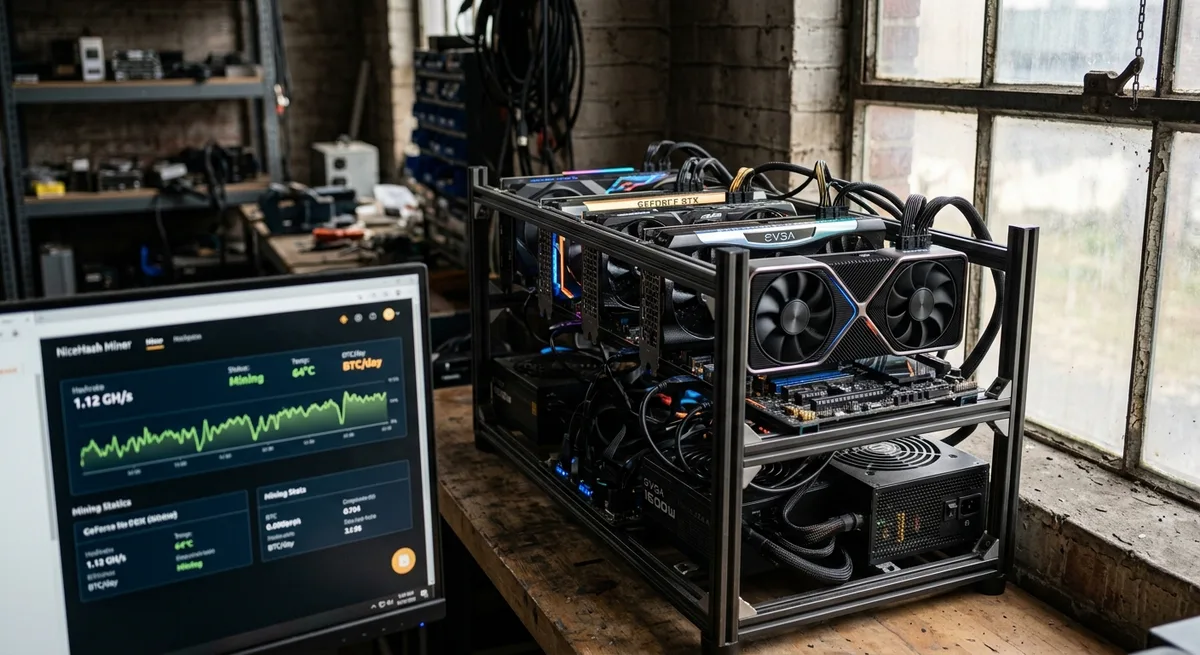
The simplest answer: a bitcoin mining rig is a specialized machine built to process Bitcoin transactions and help secure the network, in exchange for potential rewards.
It is not just any computer. A mining rig is purpose-built to perform enormous numbers of cryptographic calculations every second. Those calculations are how miners compete for the right to add a new block of transactions to the blockchain. When a miner succeeds, they can earn newly issued bitcoin plus transaction fees.
For beginners, it helps to think of a rig as a work machine rather than a personal device. You are not buying it to browse the web or run spreadsheets. You are buying it to do one thing extremely well: hash at high speed, as efficiently as possible.
That is also why mining rigs matter beyond just earning coins. They are part of the infrastructure that keeps Bitcoin decentralized and resistant to manipulation. Every active miner adds computing power to the network, making it harder for any single party to take control. If you want a broader overview before going deeper, this guide on what Bitcoin mining is gives useful context.
Before deciding whether mining is worth your time or money, it helps to see where a rig actually fits in the bigger process.
How a Bitcoin Mining Rig Fits Into the Bigger Bitcoin Mining Process
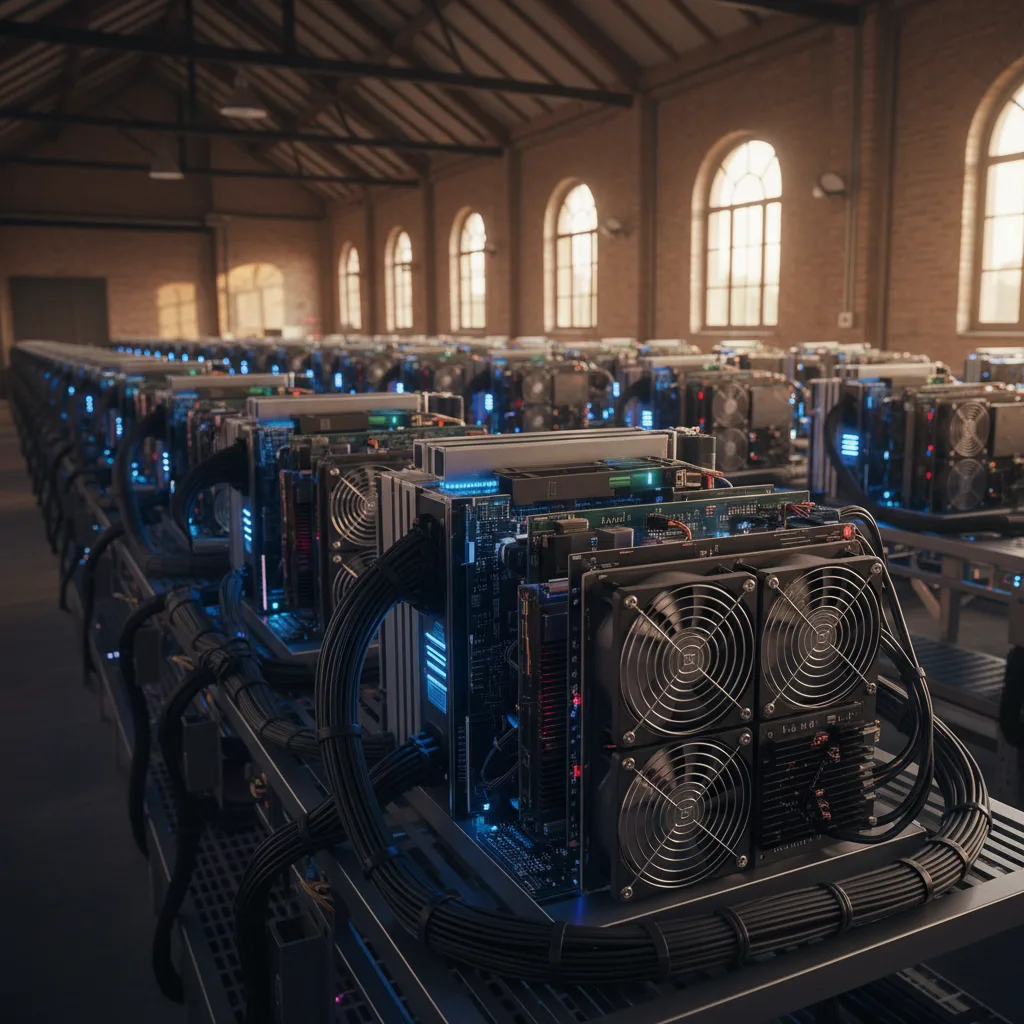
Bitcoin mining is the process of confirming transactions and packaging them into blocks. Miners around the world compete to solve a mathematical puzzle tied to the next block. The first miner to solve it gets to add that block to the blockchain and collect the reward.
That is exactly where the rig comes in. If you have ever wondered what digital currency mining machines actually do in practice, they are the tools that perform the heavy computational work behind the network. They run constantly, testing different values and searching for one that meets Bitcoin’s current difficulty target.
Here is the practical version of what happens:
- Transactions are broadcast to the network
- Those transactions are grouped into a candidate block
- Mining rigs race to find a valid hash for that block
- The first valid result is accepted by the network
- The winning miner or mining pool receives the reward
A mining rig is your ticket into that competition. Without hardware, you are simply not participating. If you want to see how a basic setup comes together, this walkthrough on Bitcoin mining setup rigs is a good next step.
To understand why rigs look the way they do today, it helps to know why regular computers stopped being enough.
Why Bitcoin Uses Specialized Mining Hardware
In Bitcoin’s early years, people mined with ordinary CPUs and later with GPUs. That phase did not last long. As more miners joined the network, competition intensified. Bitcoin automatically adjusts mining difficulty to keep block production consistent, which means the network gets harder as total computing power grows.
That dynamic made general-purpose machines uncompetitive. A normal desktop or laptop can still technically perform hashes, but it cannot do so at the scale needed to compete with modern miners. The electricity cost alone would usually wipe out any realistic reward.
This is why bitcoin mining hardware became specialized. Manufacturers developed ASICs, which stands for Application Specific Integrated Circuits. These chips are designed exclusively for mining and nothing else. They are far faster and more power-efficient than CPUs or GPUs for Bitcoin’s SHA-256 algorithm. For a more detailed look at the hardware side, this guide to the ultimate hardware you need to strike crypto gold lays out the bigger picture.
Once you understand why specialized hardware took over, the natural next question is what a mining rig actually consists of.
What Makes Up a Bitcoin Mining Rig?
A Bitcoin mining rig is usually a few core parts working together.
The most important is the miner itself, typically an ASIC unit. This is the machine doing the hash calculations. Everything else exists to support it.
Power supply comes next. Mining hardware draws a lot of electricity, so it needs a stable and properly matched power source. An underpowered or low-quality supply can cause shutdowns, instability, or damage over time.
Then there is the internet connection. A miner does not need blazing fast speeds, but it does need a stable connection so it can communicate with the network or a mining pool without dropping offline constantly.
Cooling is non-negotiable. Mining rigs generate continuous heat. Without proper airflow and temperature control, performance drops and hardware wears out faster than it should.
Finally, software. The machine needs firmware or mining software to communicate with the network, report performance, and connect to pool servers.
That is the simple version of mining rig components. Every part affects reliability, efficiency, and long-term cost. Beginners often fixate on advertised hashrate, but that is only one piece of the equation.
To make this more practical, it helps to compare the main hardware options people ask about first.
ASIC Miners vs GPUs vs Laptops
For Bitcoin mining today, ASICs dominate. That is the most important thing to understand upfront.
An ASIC miner is built specifically for Bitcoin. It delivers high hashrate and much better energy efficiency than anything else. If your goal is actually mining Bitcoin rather than just experimenting, ASICs are the standard choice.
GPUs still have a role in other areas of crypto mining. They are flexible and can handle different algorithms, which is useful in the broader mining world. But for Bitcoin specifically, that era has passed.
Laptops are where many beginners get curious. “Which laptop is best for bitcoin mining?” is a common question, and the honest answer is that no laptop is a sensible choice for serious Bitcoin mining. You can use a laptop to monitor a miner or run related software, but using it as the actual mining machine makes little sense. It is inefficient, generates heat inside a compact device, and produces nothing competitive against ASIC hardware. The machine will run hot and loud, and you will have very little to show for it.
If keeping power use under control is a priority while you evaluate equipment, this guide to top energy efficient mining hardware for maximum profits is worth reading.
Once you have the right hardware type, the next challenge is keeping it powered and cooled properly.
The Role of Cooling and Power Delivery
Mining rigs run hard, all the time. Unlike a home PC that idles between tasks, a mining machine is designed for continuous, full-load operation. That constant work produces a lot of heat, and heat is one of the biggest enemies of hardware lifespan.
Picture a small spare room with two or three ASICs running. Within minutes, the temperature climbs noticeably. If the machines get too hot, fans ramp up, components wear faster, and the unit may throttle performance or shut down entirely. A miner that looks profitable on paper can quickly become a frustrating machine that keeps going offline.
Power delivery matters just as much. A rig needs stable voltage, proper cabling, and enough capacity from the circuit it is plugged into. Overloading a household outlet or ignoring local electrical limits creates both a safety risk and an uptime problem.
This is why mining rig cooling is not optional. It is part of the setup from day one. Ventilation, exhaust planning, dust control, and room temperature all play a role. For practical options, this guide on the best cooling solutions for your mining farm is a useful reference.
Once the physical setup is sorted, the software side starts to matter just as much.
What Is Bitcoin Mining Software and Why Do You Need It?
In plain language, bitcoin mining software is the layer that allows your hardware to communicate with the Bitcoin mining ecosystem.
In many ASIC miners, part of this comes preinstalled as firmware. That firmware manages the device, controls settings, monitors temperature, and handles communication with your chosen mining pool. In other setups, software runs on a connected computer and directs the hardware from there.
Mining software typically handles a few key tasks:
- Connecting your machine to a mining pool
- Displaying hashrate and machine status
- Monitoring temperatures and fan speeds
- Managing firmware settings
- Tracking uptime and rejected shares
For beginners, the dashboard matters more than they first expect. A clear interface makes setup much easier and helps you quickly spot problems like overheating, unstable hashrate, or dropped pool connections.
Software also evolves. Manufacturers release updates to improve stability and efficiency, and pool software changes as network conditions shift. If you want to stay on top of that side of things, this article on essential mining software updates for tackling difficulty is helpful.
The next practical choice is whether your software is set up for solo mining or pool mining.
Solo Mining vs Pool Mining Software
Solo mining means your machine mines alone. If it finds a valid block, you keep the full reward. The problem is probability. For a small miner, finding a block independently is extremely unlikely and completely unpredictable. You could go months without a single reward.
Pool mining means joining a group of miners who combine their computing power. When the pool finds a block, rewards are shared based on each participant’s contribution. Smaller, more regular payouts instead of waiting for a rare full block reward.
That is why most small and mid-sized miners use pool software. It gives more predictable payouts and removes the kind of variance that makes solo mining difficult for beginners to sustain. When choosing a pool, the main things to compare are payout methods, reliability, fees, server locations, and transparency. This comparison of which pool mining software is right for you is a good place to explore the differences.
Once software is in place, the main number you will keep seeing is hashrate.
What Is Hash Rate in Bitcoin Mining?
Hash rate is the amount of computational work a miner can perform over a given period of time. More specifically, it measures how many hash attempts a machine can make each second.
A higher hash rate means the machine can try more possible solutions in the race to find a valid block. That does not guarantee rewards on its own, but it improves the miner’s share of the total network work.
This is why hash rate is one of the most important metrics in mining. It tells you how powerful a machine is in mining terms. But it only becomes meaningful when viewed alongside power consumption, reliability, and current network difficulty.
Hash rate also connects directly to the broader Bitcoin network. As more miners join and total network hashrate rises, competition gets stronger. That relationship is central to mining economics. For a clear explanation of that balance, this article on difficulty vs hashrate is worth reading.
To make hashrate less abstract, it helps to understand the units you will see in miner specifications.
What Is GH/s in Bitcoin Mining?
GH/s stands for gigahashes per second. One gigahash means one billion hash attempts. So a miner running at 100 GH/s is performing 100 billion hash attempts every second.
This unit was more common when mining hardware was far less powerful. Today it is still useful for understanding smaller numbers and learning the basics, but most serious Bitcoin ASICs operate well beyond the GH/s range.
If you are comparing older hardware or beginner examples, understanding GH/s and TH/s helps you avoid confusion. GH/s is simply a speed measurement. Higher is generally better, but only when efficiency and electricity use also make sense alongside it.
What Is GHS in Bitcoin Mining?
In most cases, GHS is just shorthand for GH/s. People drop the slash when writing quickly in forums, product listings, or casual discussions.
So if you see a machine listed at 500 GHS, that almost always means 500 GH/s. The meaning is the same: gigahashes per second. It is mostly a formatting difference, not a technical one. Beginner searches often treat them as separate terms, but once you know they point to the same unit, the next step up makes more sense.
What Is TH/s in Bitcoin Mining?
TH/s stands for terahashes per second. One terahash equals one trillion hash attempts per second, so 1 TH/s equals 1,000 GH/s.
Modern Bitcoin ASIC miners are rated in TH/s because their output is so high that GH/s would be an impractically small unit. A machine producing 100 TH/s is performing 100 trillion hash attempts every second. That is why most current hardware specs are discussed in TH/s rather than GH/s. It reflects how far mining hardware has advanced, and it helps you compare machines more realistically against current network conditions. If you want to see how wider changes in network power affect individual miners, this article on the latest network hashrate trends adds useful context.
Knowing the units is one thing. Knowing whether those numbers can actually make money is another.
What Determines Whether a Bitcoin Mining Rig Is Profitable?
This is where many new miners make bad assumptions. Buying a strong machine does not automatically mean you will be profitable.
Hardware efficiency matters first. A machine with high hashrate but terrible power consumption may underperform a slightly slower but more efficient unit.
Electricity cost is usually the biggest ongoing expense, and it does not pause when Bitcoin price dips.
Bitcoin price itself plays a significant role. When price rises, mining revenue can improve. When it falls, margins can shrink quickly.
Mining difficulty is another moving target. As network competition grows, each miner’s share of rewards typically falls unless they also increase performance.
Pool fees reduce your gross earnings. Downtime is easy to overlook, but a miner sitting offline earns nothing, even if it looked profitable in a calculator.
This is why bitcoin mining profitability should always be evaluated with realistic numbers, not optimistic projections. Before buying anything, run the figures. This mining profitability calculator guide can help you approach that process more carefully.
Among all those factors, electricity usually deserves its own closer look.
Electricity Costs and Energy Efficiency
Electricity is often the difference between a workable setup and a losing one. Two miners with identical hashrate can produce very different results if one uses significantly more power.
You are paying every hour the machine runs, whether Bitcoin price is moving in your favor or not. If your local electricity rate is high, even a solid ASIC can become unprofitable. This is not a small detail you can figure out later.
Efficiency is typically expressed as how much energy a miner uses relative to the hashrate it delivers. Better efficiency means more mining work for less electricity, and over months of continuous operation, that gap compounds. For a practical look at the power side, this guide on the best electricity sources for crypto mining is worth your time.
Even with good power rates, beginners still need to honestly ask whether mining makes sense for their situation.
Is Mining Still Worth It for Beginners?
Sometimes, but not automatically.
Bitcoin mining for beginners can still be a valuable learning path. It teaches you how Bitcoin infrastructure works, how costs affect returns, and how real-world economics shape the industry. But learning about mining and running a profitable mining operation are not the same thing.
The barriers are real. ASIC hardware costs money upfront. Noise and heat are significant. Competition is intense. Profit margins can shift quickly with Bitcoin price and difficulty adjustments. A setup that looks attractive today may look much less attractive three months later.
That does not mean beginners should avoid the topic. It means approaching it with realistic expectations. Starting with research, profitability calculations, and a small-scale test is almost always smarter than going all in immediately. This article on whether mining is still profitable after the halving offers a grounded perspective worth reading before you commit.
At this point, it makes sense to address the practical questions most beginners still have before making any move.
Common Questions Beginners Have About Bitcoin Mining Rigs
Home bitcoin mining raises the same concerns again and again, and they are all valid.
How loud is a mining rig? Usually very loud. Many ASICs sound more like industrial equipment than anything you would want near a living space.
How hot does it get? Very hot. These machines produce constant waste heat and need proper ventilation to stay stable.
How much maintenance is involved? More than most people expect. Dust buildup, fan wear, firmware updates, and power issues all need occasional attention.
How long does a miner last? It depends on build quality, operating temperature, maintenance, and workload. A well-maintained unit can run for years, but mining hardware also ages economically as newer, more efficient models enter the market.
Do you need a special location? Not always, but you do need somewhere with adequate airflow, sufficient power capacity, and some tolerance for noise.
Those practical issues often matter just as much as the advertised specs. That is especially true if you are considering mining from home.
Can You Mine Bitcoin at Home?
Yes, you can mine Bitcoin at home. Whether you should depends on your situation.
A home mining setup needs enough electrical capacity, decent ventilation, and a place where the noise will not become a constant irritation. Many ASIC miners are simply too loud for living areas. They also push out enough heat to make a small room uncomfortable very quickly. If you have ever sat near a server rack for an extended period, you have a rough idea.
Electricity price is another major factor. In regions with expensive power, home mining often struggles to be profitable. In regions with lower rates, it can be more viable, though you still need to manage heat, sound, and uptime.
Home mining is realistic in some cases, but it is not as simple as plugging in a device and watching passive income appear. It works best when the setup is planned around real constraints from the start.
How Much Does a Bitcoin Mining Rig Cost to Start?
Bitcoin mining rig cost varies widely depending on your goals.
At the entry level, a single used ASIC miner might cost a few hundred to a couple of thousand dollars, depending on age, condition, and efficiency. A newer and more powerful model can cost considerably more.
But the machine is only part of the budget. You may also need:
- A suitable power supply or upgraded electrical setup
- Cables and network gear
- Ventilation or cooling improvements
- Shelving or safe placement space
- Higher monthly electricity spending
- Potential pool fees
A basic beginner setup typically means one machine, some setup adjustments, and ongoing power costs. A more serious operation adds multiple miners, stronger electrical infrastructure, noise management, and dedicated cooling. The purchase price alone does not tell you enough. The real starting cost includes both upfront equipment and the monthly cost of keeping it running.
With those practical questions covered, the full picture becomes much easier to assess.
Conclusion
If you came here asking what is a bitcoin mining rig, the answer is a specialized machine built to perform the computational work required for Bitcoin mining. Its job is to hash as fast and as efficiently as possible to compete for block validation rewards.
You also now have the key bitcoin mining basics behind the jargon. A rig is one part of a larger system that needs proper hardware, software, cooling, stable power, and a realistic profitability plan. Understanding hashrate terms like GH/s, GHS, and TH/s helps you evaluate what a machine can actually do.
The bigger takeaway is that mining is not just about buying a powerful box. Profitability depends on electricity costs, efficiency, network difficulty, Bitcoin price, pool fees, and uptime. The smartest next step is usually not to rush into a purchase. It is to keep learning, run the numbers carefully, and compare options based on your actual situation.
If mining still interests you after thinking through all of that, you are already asking the right questions.