

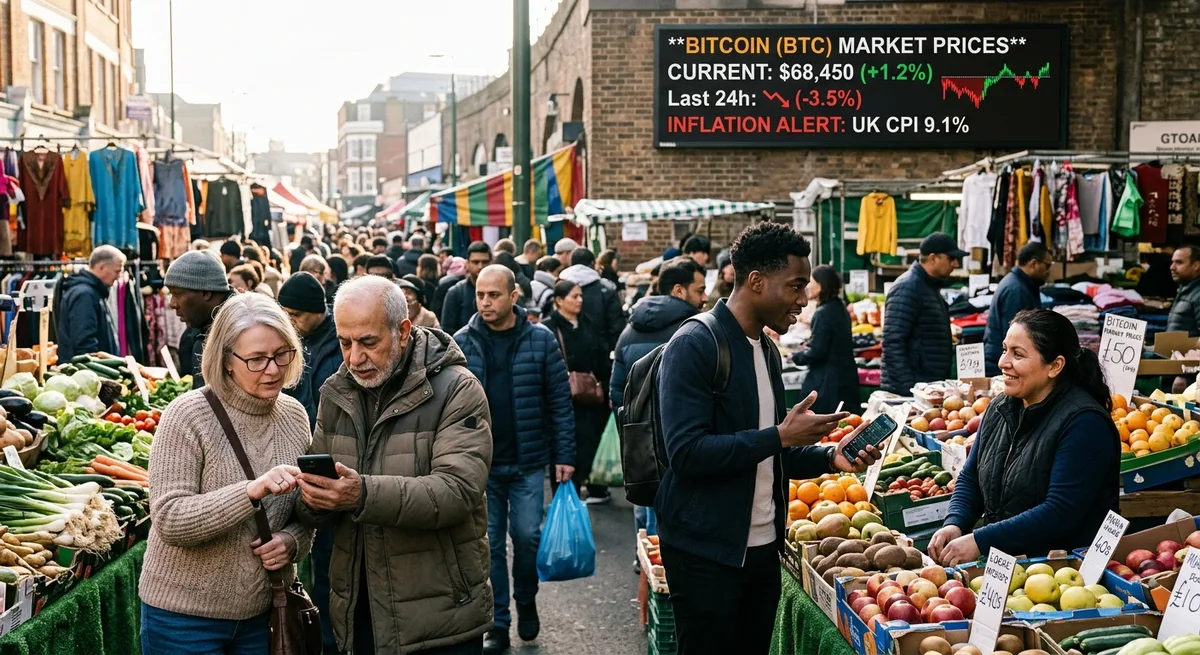
Inflation has a way of making people pay attention to their money. Suddenly the groceries cost more, the rent goes up, and the savings account that felt safe last year quietly loses ground. That uncomfortable feeling is exactly what pushes a lot of people to start asking questions they never asked before. One of those questions, increasingly, is whether Bitcoin deserves a spot in the conversation.
This article looks at the link between inflation and Bitcoin without the noise. No promises, no slogans, just a clear walk through how rising prices, money printing, and economic uncertainty shape the way people view Bitcoin, both as an idea and as an investment.
Introduction: Why Inflation Makes People Look at Bitcoin
When inflation runs high, holding cash starts to feel like watching ice melt on a warm day. You still have it, but it’s worth less every week. That sensation is usually what nudges people toward alternative assets, and Bitcoin tends to come up fast in that search.
Part of the appeal is structural. Bitcoin has a fixed supply, no central issuer, and no government able to print more of it. For someone who’s worried about central banks expanding the money supply, that sounds like a logical counterweight. But here’s the honest part: Bitcoin doesn’t always move the way the inflation story suggests. It can rally when inflation rises, and it can also drop hard in the same environment. Understanding why is more useful than picking a side.
So let’s start with the basics, because the word “inflation” gets thrown around a lot without much clarity.
What Inflation Actually Means Before Connecting It to Bitcoin

Inflation, in its simplest form, is the general rise in prices over time. When inflation goes up, the same euro, dollar, or peso buys you less than it did before. Your purchasing power slowly erodes, even if the number on your bank statement looks the same.
This matters because most people save in cash or cash-like assets. If prices rise 6% a year and your savings earn 1%, you’re losing 5% in real terms without ever seeing a transaction. That’s the quiet damage inflation does, and it’s the reason people start hunting for assets that might hold their value better.
Consumer Price Inflation vs Monetary Inflation
There are two flavors of inflation worth separating. Consumer price inflation is what you see at the supermarket: rising prices for goods and services, usually measured by indexes like CPI. Monetary inflation is different. It refers to the expansion of the money supply itself, how much currency exists in the system.
The two are related, but not identical. A central bank can expand the money supply for years without consumer prices rising sharply, and consumer prices can spike for reasons unrelated to money printing, like supply shocks. Bitcoin discussions tend to focus on monetary inflation, because Bitcoin’s supply schedule is fixed and predictable. Every four years, new issuance gets cut in half, and the total supply caps at 21 million. That’s the opposite of how fiat currencies are managed.
If you want a deeper breakdown of how this works, this piece on Bitcoin inflation and deflation explained goes into more detail.
Why Inflation Changes Investor Behavior
When inflation rises, sitting in cash becomes a losing strategy in real terms. That’s when investors start looking around. Some shift into real assets like real estate. Others move into equities, betting that companies can raise prices and maintain earnings. Gold tends to come back into the spotlight. And Bitcoin enters the same conversation, often as the youngest and most controversial option on the list.
The shift isn’t always dramatic. Sometimes it’s a financial advisor adjusting a portfolio. Sometimes it’s a 22-year-old who just realized their savings account pays less than inflation and starts reading. Either way, inflation tends to make people compare cash to alternatives, and that comparison is where this Bitcoin vs fiat currency discussion starts to matter.
Why Bitcoin Enters the Inflation Conversation
Bitcoin gets pulled into inflation debates for a few specific reasons: a hard supply cap, decentralized issuance, no central bank involvement, and global accessibility. None of these guarantee that Bitcoin will outperform during inflationary periods. They just explain why people consider it a candidate worth studying.
Bitcoin’s Fixed Supply and Scarcity
Bitcoin has a maximum supply of 21 million coins. New coins enter circulation through mining rewards, and those rewards are cut in half roughly every four years through an event called the halving. This issuance schedule is written into the protocol and isn’t subject to any committee, vote, or political decision.
That’s a sharp contrast to fiat money, which can be expanded by central banks during recessions, wars, or financial crises. Supporters of Bitcoin often compare it to hard money assets, where scarcity is built into the asset itself rather than promised by policy. If you want to understand the deeper logic behind this, this article on what gives Bitcoin value covers it well.
Bitcoin as a Store of Value Crypto
The idea of Bitcoin as a long-term store of value crypto rests on a simple assumption: if more people trust it, hold it, and use it over time, its purchasing power should be preserved across decades. That assumption depends on a lot of moving parts. Adoption needs to keep growing. Liquidity needs to deepen. Security needs to hold. Market confidence has to survive the inevitable drawdowns.
Bitcoin’s store of value case isn’t a finished story. It’s a thesis still being tested in real time. That’s worth keeping in mind whenever someone treats it as settled.
Is Bitcoin an Inflation Hedge?
This is the question most readers actually want answered. The honest answer is: it depends. Bitcoin can function as a bitcoin inflation hedge in theory, but its real-world track record is mixed. There’s a meaningful difference between an asset that should hedge inflation based on its design and an asset that reliably protects purchasing power in every macro environment.
The Bullish Argument: Fixed Supply vs Fiat Debasement
The case for Bitcoin as a hedge is straightforward. Fiat supply can grow indefinitely. Bitcoin’s supply cannot. If central banks keep expanding their balance sheets and governments keep accumulating debt, the long-term value of fiat currency comes under pressure. An asset with a fixed supply, the argument goes, should benefit from that pressure over time.
This view resonates with people who are skeptical of central banks, worried about sovereign debt, or simply tired of watching their currency lose purchasing power. It’s a logical position, and it’s why many long-term holders care more about the next decade than the next quarter.
The Reality Check: Volatility Still Matters
Now the other side. Bitcoin can fall 50% or more even when inflation is high. In 2022, inflation in many countries hit multi-decade highs, and Bitcoin dropped over 60% from its peak. Why? Because central banks raised interest rates aggressively, liquidity tightened, and investors moved out of risk assets. Bitcoin, despite the inflation narrative, behaved like a high-risk asset, not like gold.
That volatility makes Bitcoin a difficult short-term hedge. If you need to protect purchasing power over six months, holding an asset that can swing 30% in a few weeks isn’t comforting. This piece on Bitcoin volatility breaks down why these swings happen and what drives them.
Historical Performance: How Bitcoin Has Behaved During Inflationary Periods
Looking at history doesn’t tell us what comes next, but it helps clarify what the relationship between inflation and Bitcoin actually looks like in practice. Two periods are especially worth studying.
2020–2021: Stimulus, Liquidity, and the Inflation Narrative
The pandemic triggered massive monetary stimulus. Central banks cut rates to near zero, governments rolled out direct payments, and money supply growth accelerated. Inflation expectations started rising, and Bitcoin rallied from around $5,000 in March 2020 to nearly $69,000 in November 2021.
That move strengthened the inflation and bitcoin story enormously. But it’s important to be honest about what drove it. Cheap money, abundant liquidity, retail enthusiasm, institutional entry, and the maturing infrastructure all contributed. Inflation concerns were part of the picture, not the whole picture. For a fuller view of how the price has moved over the years, this Bitcoin price history overview is worth a read.
2022: High Inflation, Rising Rates, and Bitcoin’s Drawdown
Then came 2022. Inflation kept climbing, but Bitcoin collapsed. The reason was tied less to inflation itself and more to the response. Central banks raised rates faster than markets expected. Liquidity drained out of the system. Risk assets sold off across the board. Several crypto-native failures, like Terra and FTX, added to the damage.
The lesson here isn’t that Bitcoin failed as an inflation hedge. The lesson is that inflation isn’t the only variable. Interest rates, liquidity, leverage, and investor sentiment can overwhelm the inflation story in the short term.
What These Case Studies Tell Us
Bitcoin’s relationship with inflation is not linear. It’s filtered through liquidity, rates, sentiment, adoption, and time horizon. Treating Bitcoin as a guaranteed hedge ignores how markets actually work. Treating it as completely unrelated to inflation ignores its design. The truth sits between those two takes, and it requires looking at the full macro picture instead of one variable.
Economic Uncertainty and Bitcoin Adoption
Inflation isn’t the only thing that pushes people toward Bitcoin. Broader economic uncertainty does too. When trust in banks weakens, when capital controls tighten, when local currencies collapse, interest in Bitcoin tends to rise. Curiosity, however, doesn’t always translate into long-term adoption.
Why Individuals Turn to Bitcoin During Currency Stress
In countries with severe inflation or unstable banking systems, Bitcoin offers something practical: a way to hold value outside the local currency, move money across borders, and avoid relying on institutions people no longer trust. You see this in places like Argentina, Turkey, Nigeria, and Venezuela, where high inflation and capital restrictions have made Bitcoin and stablecoins genuinely useful tools rather than abstract investments.
It’s worth being careful not to overstate this. Most people in these countries aren’t full-time Bitcoin users. But adoption tends to grow faster where the alternative looks worse. This article on who uses Bitcoin shows real examples and stats around that.
How Inflation Can Accelerate Bitcoin Adoption Growth
Inflation creates curiosity. Curiosity creates Google searches. Searches turn into wallet downloads, small purchases, and, for some, deeper engagement. That’s the funnel adoption usually follows.
But there’s a difference between awareness, ownership, usage, and deep adoption. A lot of people own a small amount of Bitcoin without ever really using it. Others trade it actively but don’t consider it long-term savings. Adoption is layered, and inflation tends to push more people into the top of the funnel than the bottom. The longer-term trend is covered well in this piece on Bitcoin adoption growth.
Bitcoin vs Gold: Is Bitcoin Really Digital Gold?
The “digital gold” label gets used a lot. Sometimes it’s accurate. Sometimes it oversells what Bitcoin currently is. Comparing the two helps clarify where the comparison holds up and where it doesn’t.
Where the Digital Gold Comparison Makes Sense
Bitcoin and gold share some core monetary properties. Both are scarce. Both exist outside the traditional banking system. Both can be held without relying on a counterparty. Bitcoin adds portability and divisibility that gold can’t match. You can send Bitcoin across the world in minutes. Try doing that with a gold bar.
The digital gold framing makes the most sense when you focus on these monetary properties rather than price stability. Gold isn’t compared to Bitcoin because they move the same way week to week. They’re compared because they share a similar role in a portfolio: a scarce asset outside the fiat system. For more on this, this article on is Bitcoin really digital gold is a good follow-up.
Where Gold and Bitcoin Still Differ
Gold has thousands of years of history. Bitcoin has about 15. Gold has lower volatility, broader institutional acceptance, and a more established role in central bank reserves. Bitcoin has stronger digital-native properties, faster settlement, and a younger but rapidly growing market.
Neither replaces the other. A direct comparison between Bitcoin vs gold makes more sense when you treat them as complementary rather than competitive, especially during inflationary periods when both can play a role.
Why Inflation Can Increase Bitcoin Adoption Without Guaranteeing Higher Prices
Here’s a nuance that gets missed often. More adoption doesn’t automatically mean higher prices in the short term. Adoption builds the foundation, but price is set by the constant tug-of-war between buyers and sellers under specific market conditions.
Adoption Is a Long-Term Process
Real adoption involves education, wallet infrastructure, regulated exchanges, custody solutions, merchant acceptance, institutional products like ETFs, and clearer regulation. Inflation can accelerate parts of this, but it doesn’t build the infrastructure overnight. Adoption is a multi-year process that unfolds in waves.
Price Can Move Against the Inflation Narrative
Even as adoption grows, price can fall. If investors need cash, if leverage unwinds, if central banks tighten policy, Bitcoin can drop regardless of how strong the long-term story looks. Macro narratives are useful for context, but they don’t replace risk management. Plenty of people learned this lesson the hard way in 2022 after buying based on the inflation thesis alone.
Key Risks to Understand Before Treating Bitcoin as an Inflation Hedge
Before treating Bitcoin as a hedge, it’s worth being clear-eyed about the risks. This isn’t pessimism. It’s the honest checklist anyone should run through before allocating capital.
Short-Term Volatility Risk
Bitcoin can move 10–30% in a matter of weeks, sometimes days. If your goal is protecting purchasing power over the next six to twelve months, that volatility works against you. Bitcoin can absolutely outperform inflation over longer horizons, but the short-term ride is rough enough to shake out most people who weren’t ready for it.
Regulatory and Custody Risk
Owning Bitcoin involves more than just buying it. You need to think about exchange risk, wallet security, taxes, and whether to self-custody or trust a third party. Regulations vary by country and continue to evolve. None of this is a reason to avoid Bitcoin, but it’s a reason to take your setup seriously.
Narrative Risk
Market narratives change. In one cycle, Bitcoin is digital gold. In another, it trades like a tech stock. In a third, it gets framed as a payment system. These narratives influence price more than people like to admit. Anchoring your investment to a single story is risky. Looking at data, market structure, and historical behavior tends to age better than slogans.
How Investors Can Think About Bitcoin During Inflation
There’s no single right answer here, but there’s a useful framework for thinking it through. The key is matching the asset to your goals, risk tolerance, and time horizon, not the other way around.
For Beginners: Start With Understanding, Not FOMO
If you’re new to this, the worst thing you can do is buy because everyone else is and inflation is in the headlines. Start by understanding how Bitcoin works, how custody works, and how volatile it can be. Think in terms of small allocations, long time horizons, and emotional discipline. A 1–5% position that you actually understand is worth more than a larger position you panic-sell on the first drawdown.
For Active Investors: Watch Liquidity, Rates, and Market Structure
More experienced investors should watch the variables that actually move Bitcoin in the short and medium term: central bank policy, real yields, dollar strength, global liquidity, ETF flows, leverage in derivatives markets, and shifts in risk appetite. Inflation is one signal among many. Treating it in isolation usually leads to bad timing.
Questions to Ask Before Buying Bitcoin as an Inflation Hedge
A short checklist worth running through:
- What’s my time horizon? Six months looks very different from six years.
- Can I handle a 50% drawdown without selling?
- Am I diversified, or am I betting the farm on one thesis?
- Do I understand how I’ll store it, and how I’ll get it back if something goes wrong?
- Am I buying because of data and a plan, or because of headlines and emotion?
If you can answer these clearly, you’re already ahead of most people entering the market.
Data, Charts, and Expert Sources to Include
If you’re researching this topic seriously, the quality of your sources matters more than the volume. A few well-chosen data points beat hours of social media scrolling.
Recommended Visuals
The most useful visuals overlay multiple variables: CPI inflation, central bank interest rates, money supply growth (M2), Bitcoin price, and adoption metrics like wallet addresses or exchange volume. An infographic that shows how these move together over time will tell you more than any single chart. A comparison table between cash, gold, equities, and Bitcoin across different inflationary periods is also helpful for seeing how each asset actually behaved.
Recommended Sources
Stick to official inflation data from statistical agencies, central bank publications, reputable crypto research firms, peer-reviewed studies, and trusted historical datasets. Anonymous social media takes and influencer predictions belong far down the credibility list. The signal-to-noise ratio in crypto is brutal, and filtering aggressively is one of the most valuable habits you can build.
Conclusion: What Inflation Really Means for Bitcoin Adoption
Inflation and Bitcoin are connected, but the connection is more layered than the headlines suggest. Inflation makes people question fiat money, search for alternatives, and look more seriously at scarce assets like Bitcoin and gold. That curiosity often turns into adoption over time, even if it doesn’t always translate into immediate price gains.
At the same time, Bitcoin remains volatile. Its performance depends on liquidity, interest rates, sentiment, regulation, and the broader macro environment. Treating it as a guaranteed inflation hedge ignores how markets actually work. Treating it as irrelevant to inflation ignores its design. The realistic position sits in between: Bitcoin is a serious candidate worth studying, not a magic solution.
If you’re weighing whether Bitcoin fits your situation, think critically, manage your risk, and study the data instead of the noise. For a longer-term perspective on where things might go from here, this Bitcoin value outlook is a useful next step. The decision is yours, and the best ones usually come from understanding, not urgency.