

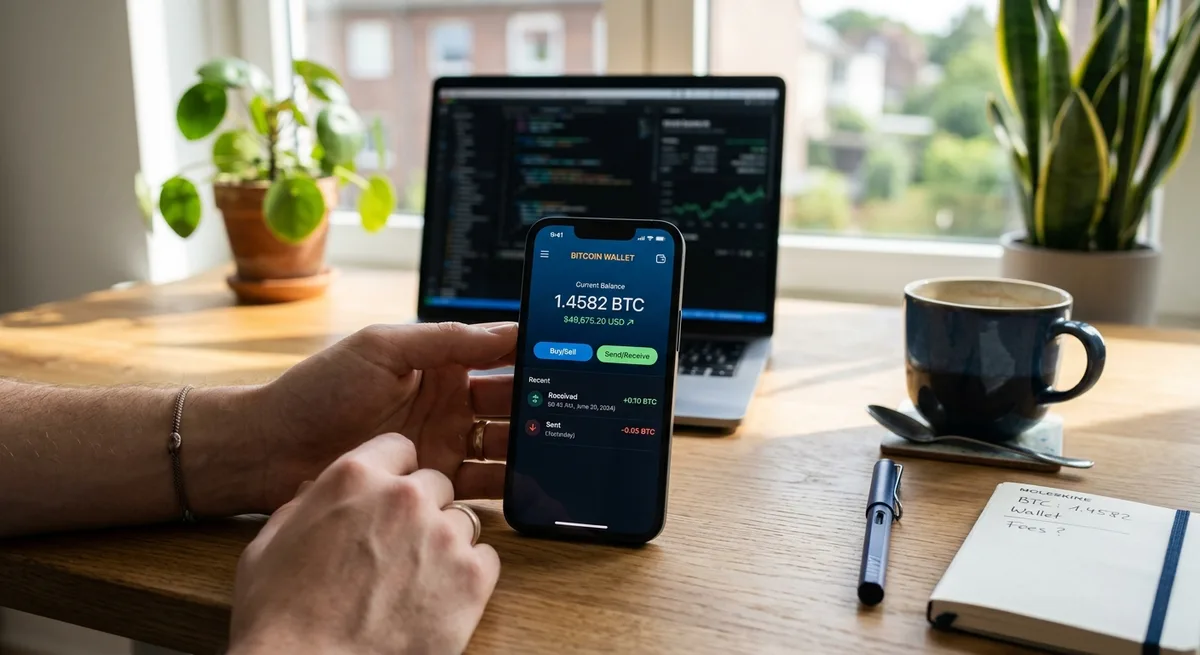
Best Bitcoin Wallets in 2026 (Top Picks Compared)
Choosing the best bitcoin wallet in 2026 is less about finding one perfect app and more about finding the right fit for how you actually use Bitcoin.
Some people want something they can set up in ten minutes and never think about again. Others care deeply about self custody, privacy, or fine-grained fee control. Those are genuinely different needs, and a wallet that feels perfect for one person can be a frustrating choice for someone else.
This guide compares the top bitcoin wallets based on things that matter in real use: security, ease of setup, backup and recovery, fees, mobile experience, and who each wallet actually suits. No financial advice here. The goal is simpler. I want to help you make a clear, practical choice without getting lost in hype or jargon.
We’ll start with the quick answer, then move through a side-by-side comparison, security basics, wallet reviews, and a decision framework you can genuinely use.
Quick Answer: What Is the Best Bitcoin Wallet Right Now?
Short version: there is no single best bitcoin wallet for everyone. The right option depends on whether you are a beginner, a long-term holder, an active sender, or someone who puts privacy above convenience.
For most beginners, a simple non-custodial mobile wallet like BlueWallet is one of the easiest starting points. Clean, fast, and not overwhelming.
For long-term holders, a hardware wallet like Trezor Safe 3 stands out. Offline key storage and solid self-custody controls make it a much stronger fit for protecting savings.
For active users who want more control, Electrum is still one of the strongest choices thanks to custom fees, mature security, and advanced features.
For Lightning payments, Phoenix handles fast, low-cost Bitcoin payments without too much friction. It works well if you actually spend Bitcoin regularly.
For privacy-focused users, Sparrow paired with a hardware wallet is a serious setup, though it asks more from you in terms of time and learning.
That quick snapshot is useful, but a side-by-side view makes the differences much easier to absorb.
Best Bitcoin Wallets Compared at a Glance

| Wallet | Type | Platforms | Security Model | Fees | Best For | Main Pros | Main Cons | |—|—|—|—|—|—|—|—| | BlueWallet | Software wallet | iOS, Android | Non custodial for on chain use | Network fees vary | Beginners | Very easy setup, clean interface, reliable mobile app | Not ideal for large holdings | | Trezor Safe 3 | Hardware wallet | Desktop via Trezor Suite | Cold storage, self custody | Device purchase plus network fees | Long term storage | Strong offline security, beginner friendly hardware option | Less convenient for daily payments | | Electrum | Software wallet | Windows, Mac, Linux, Android | Non custodial, advanced controls | Adjustable network fees | Advanced users | Mature, flexible, strong fee control, multisig support | Interface feels dated to some users | | Phoenix | Mobile Lightning wallet | Android, iOS | Non custodial Lightning focused | Lightning related service and routing costs | Fast everyday payments | Excellent for Lightning, smooth user experience | Less suited for pure cold storage | | Sparrow | Desktop wallet | Windows, Mac, Linux | Non custodial, privacy and hardware friendly | Network fees vary | Privacy conscious users | Great UTXO control, hardware integration, privacy tooling | Steeper learning curve | | Exodus | Software wallet | Desktop, iOS, Android | Non custodial | Spread on swaps, network fees | Multi asset convenience | Attractive interface, multi currency support | Less Bitcoin focused, not the strongest for advanced privacy |
If you just want something simple, BlueWallet or Exodus may be enough. If serious self custody matters to you, Trezor, Electrum, and Sparrow deserve a closer look. To make that comparison fair, it helps to know how these wallets were actually evaluated.
How We Evaluated the Best Bitcoin Wallet Options
A lot of wallet roundups just repackage marketing pages. That is not useful. To compare these wallets in a way that holds up in real use, I looked at criteria that matter once actual money is involved.
Security model comes first. Does the wallet give you control of your keys, or are you relying on a third party? Hot or cold storage? Does it support passphrases, hardware pairing, or multisig?
Backup and recovery matter almost as much. A good wallet makes recovery possible without making it easy to mess up. Clear seed phrase setup, a reliable recovery flow, and honest documentation matter more than sleek design.
Reputation and transparency count too. A wallet with years of real-world use, active maintenance, and a strong track record is generally safer than a newer product with bold claims and limited history. Open source development also matters because it allows external scrutiny.
Ease of use is relevant, but I weighted it against the audience each wallet is actually built for. A powerful wallet that is easy to misuse is a different risk than a simple wallet that caps what you can do.
Real-world fit reveals more than feature lists. Sending Bitcoin, restoring a backup, adjusting fees, pairing with hardware, and handling daily use all surface things that spec sheets miss. If you want a refresher on wallet basics before comparing options, this guide on Bitcoin wallets explained gives a solid foundation.
Once you understand how the wallets were judged, the next step is knowing what security actually looks like in practice.
What Makes a Secure Crypto Wallet in 2026?
A secure wallet is not just one with a password or nice branding. The wallets worth trusting in 2026 share a few consistent traits: clear key ownership, strong backup options, regular updates, transparent development, and some protection against common user mistakes.
Security starts with one question: who controls the private keys? If the answer is not clearly you, you are carrying counterparty risk.
After that, look at practical protections. Does the wallet support biometric lock on mobile? Can you verify addresses on a hardware device screen? Are backups easy to create but hard to accidentally leak? Does the wallet have a long track record of being maintained?
For the bigger picture on Bitcoin safety, this article on Bitcoin security and how safe it is breaks down the risks in a grounded way.
Three concepts matter most when evaluating any wallet.
Custodial vs. Non-Custodial Wallets
A custodial wallet means a company controls the keys on your behalf. That can feel easier because account recovery is often simpler and the interface more familiar. But the trade-off is real: if the provider gets hacked, freezes access, or changes terms, your control is limited.
A non-custodial wallet means you hold the private keys. That gives you more freedom and less reliance on third parties, but it also means your backup process carries a lot more weight. If you lose your recovery phrase, there is no support team that can fix it for you.
For most people looking for the best bitcoin wallet, non-custodial is the stronger long-term choice. Not always the easiest, but closer to the actual point of Bitcoin. If you want a practical breakdown of what that looks like day to day, this guide on how to store Bitcoin safely is worth reading.
Once you understand who controls the keys, the next question is whether your wallet lives online or offline.
Hot Wallets vs. Cold Wallets
Hot wallets are connected to the internet. Faster, more convenient, better for regular use. Most mobile and desktop wallets fall here.
Cold wallets keep keys offline. Hardware wallets are the main example. Slower to use, but significantly better for protecting larger balances over time.
This is why many experienced users don’t try to force one wallet to do everything. A hot wallet handles spending. A cold wallet protects savings. That split is usually smarter than expecting a single wallet to serve both roles well.
Which brings us to the part most people overlook until it is too late.
Seed Phrases, Backups, and Recovery
Your seed phrase is the master backup for any non-custodial wallet. Phone dies, laptop is stolen, app gets corrupted. The seed phrase is what gets you back in. Picture yourself standing in front of a blank phone, trying to remember where you wrote that phrase. This is exactly why you sort it out before you need it.
That also means: never store it in screenshots, cloud notes, email drafts, or chat apps. Those are some of the easiest ways to lose funds without realising the risk until it is far too late.
Write the recovery phrase down clearly. Store it somewhere only you can access. If you are protecting meaningful value, a second written backup in a separate location is worth the effort.
And test your recovery before relying on the wallet for larger amounts. A backup is only useful if it actually works.
Top Bitcoin Wallets Reviewed for 2026
The top bitcoin wallets in 2026 are not all competing for the same job. Some are built for first-time buyers. Some are designed for long-term self custody. Others are best for fast payments or detailed transaction control.
That is why it makes more sense to judge each wallet by what it is trying to do, not by whether it has the longest feature list. More features do not always mean a better wallet. In crypto, extra complexity often creates extra ways to make mistakes.
Here are the strongest picks by use case.
Best Bitcoin Wallet for Beginners
BlueWallet is one of the best bitcoin wallet choices for beginners because it keeps the early steps genuinely simple. Setup is fast, the interface is clean, and basic actions like receiving and sending Bitcoin are easy to follow. You are not bombarded with options you don’t yet understand.
It supports on-chain Bitcoin well and doesn’t overload new users with technical detail from the start. That matters because beginners are often not confused by Bitcoin itself, but by wallet design that assumes too much knowledge already.
Strengths:
- Easy setup
- Clear receive and send flow
- Good mobile experience
- Non-custodial for standard Bitcoin use
Weaknesses:
- Not the strongest option for storing large amounts long term
- Advanced users may outgrow it relatively quickly
Best for: New investors who want an easy-to-use bitcoin wallet without being nudged into a custodial setup.
If you are just starting out, it also helps to understand what actually happens when you send Bitcoin, so that fee choices and confirmation times don’t feel arbitrary. This walkthrough of Bitcoin transactions explained step by step is worth reading before your first transfer.
Best Bitcoin Wallet for Long-Term Storage
Trezor Safe 3 is one of the strongest cold storage bitcoin wallet options for long-term holders. It is a hardware wallet, which means your keys stay offline and transaction signing happens on the device itself rather than on an internet-connected phone or laptop.
That is a meaningful security improvement if you are holding a significant amount of BTC and don’t need daily spending access. Think of it like keeping savings in a safe rather than your back pocket.
Strengths:
- Strong self-custody model
- Offline key protection
- Solid, beginner-friendly hardware setup
- Good balance between usability and security
Weaknesses:
- Requires an upfront device purchase
- Less convenient for frequent transactions
- Backup discipline is still entirely your responsibility
Best for: Long-term holders who want to separate their savings from their spending wallet, and want a trusted hardware-based setup to do it.
Best Mobile Bitcoin Wallet
BlueWallet also earns a mention here because its app experience is smooth without feeling stripped down. QR-based payments work well, address generation is simple, and it holds up reliably for everyday use.
Biometric locking adds practical protection on modern phones, and the interface avoids the clutter that makes some mobile wallets genuinely frustrating to use.
Strengths:
- Fast mobile setup
- Good QR usability
- Biometric access support
- Clean design without unnecessary complexity
Weaknesses:
- Still a hot wallet, so not ideal for storing your full holdings
- Some users will want deeper Lightning integration than it offers
Best for: Users who want quick access, mobile flexibility, and a secure enough daily wallet for moderate amounts.
Best Bitcoin Wallet for Advanced Users
Electrum remains one of the best bitcoin wallet options for advanced users because it gives you control in areas where other wallets quietly simplify things away. You can adjust fees manually, connect hardware wallets, use multisig, and manage transactions with real precision.
The interface is not polished in the way mainstream apps are. That is honestly fine, because Electrum was not built to look good. It was built to work well for people who know what they are doing.
Strengths:
- Excellent fee control
- Long and solid track record
- Hardware wallet compatibility
- Advanced features including multisig
Weaknesses:
- Not friendly for beginners
- Interface feels technical and dated
- More room for user error if you rush through setup
Best for: Users who already understand wallet basics and want advanced self-custody controls or features that most apps don’t offer.
Best Bitcoin Wallet for Lightning Payments
Phoenix is one of the top bitcoin wallets for Lightning payments because it makes a technically complex system feel manageable. It is especially useful for smaller, frequent payments where standard on-chain fees can feel disproportionate.
If you buy coffee with Bitcoin, test merchant payments, or send small amounts regularly, Phoenix will likely make more sense than a standard on-chain wallet.
Strengths:
- Smooth Lightning experience
- Fast, low-cost payments
- Good mobile design
- Genuinely useful for day-to-day Bitcoin spending
Weaknesses:
- Not a good fit for long-term cold storage
- Lightning still involves concepts worth learning
- Service costs can vary depending on usage patterns
Best for: Users who actually plan to make regular Bitcoin payments, not just hold BTC and wait.
If Lightning still feels unclear, this guide on what the Lightning Network is and how it helps Bitcoin scale makes the use case much easier to understand.
Best Bitcoin Wallet for Privacy-Conscious Users
Sparrow is one of the strongest choices if privacy and transaction control are what you care about. It gives you solid visibility into UTXOs, integrates well with hardware wallets, and supports more intentional Bitcoin management than most beginner-friendly wallets come close to.
This is not a wallet I would hand to someone on day one. But for users who understand why address reuse, transaction structure, and wallet metadata matter, Sparrow is excellent.
Strengths:
- Strong privacy tooling
- Great hardware wallet support
- Detailed transaction control
- Good for users working to improve their on-chain habits
Weaknesses:
- Steeper setup and learning curve
- Desktop-first workflow
- Too much for casual or occasional users
Best for: Privacy-conscious users who are ready to trade some convenience for stronger control over how their Bitcoin moves.
Pros and Cons of the Top Bitcoin Wallets
Here is the fast version if you want to narrow things down quickly.
BlueWallet Pros: beginner friendly, fast setup, clean mobile app, simple non-custodial experience Cons: better suited for smaller amounts, limited compared to more advanced wallets
Trezor Safe 3 Pros: strong offline protection, well suited for long-term holding, trusted hardware approach Cons: upfront cost, less convenient for regular spending
Electrum Pros: advanced controls, excellent fee management, long-standing reputation, multisig support Cons: not beginner friendly, interface feels technical, easier to misuse if you rush setup
Phoenix Pros: strong Lightning usability, fast payments, low friction for everyday transactions Cons: not ideal as a savings vault, Lightning adds a layer of complexity
Sparrow Pros: privacy focused, excellent control, strong hardware integration Cons: real learning curve, not suitable for first-time users
Exodus Pros: polished design, simple multi-currency support, good general convenience Cons: less Bitcoin-focused, not the strongest choice for privacy or advanced security
Once you see the trade-offs clearly, choosing becomes less about brand loyalty and more about matching the wallet to your actual habits.
How to Choose the Best Bitcoin Wallet for Your Needs
Start with your habits rather than the wallet name.
Ask yourself five honest questions:
- How much Bitcoin will you store?
- How often will you send it?
- Do you want full self-custody?
- Are you comfortable managing your own backups?
- Will you mostly use desktop or mobile?
If you hold a small amount and transact often, convenience matters more. If you hold a larger amount and rarely move it, security should lead. If you are still learning, simplicity reduces a very real kind of risk.
The best bitcoin wallet is usually the one that addresses your biggest vulnerability, not the one with the most impressive feature page.
If You’re New to Bitcoin
Your first wallet should be easy to set up, easy to back up, and hard to misuse. That usually means avoiding advanced desktop tools at the start.
BlueWallet is a strong beginner option because it lowers friction without pushing you into full custodial dependence. If you are still buying your first BTC, it also helps to understand how wallets and exchanges fit together. This guide on what Bitcoin exchanges are can clear that up.
As a beginner, focus on three things:
- Learn the recovery phrase process before you do anything else
- Send a small test transaction first
- Don’t store large amounts until you feel genuinely confident
Once you are comfortable, you can always upgrade your setup. And if you plan to hold more value, your priorities should shift accordingly.
If You’re Holding Larger Amounts
When the amount becomes meaningful to you, convenience should stop being the top factor. A secure setup for larger holdings usually means cold storage, careful backups, and some separation between savings and spending funds.
That can look like:
- A hardware wallet for long-term storage
- A mobile wallet for a smaller spending balance
- Written backups stored securely in more than one location
This structure limits the damage if your phone is lost, your laptop is compromised, or you make a rushed decision under pressure. Long-term holders should think more like risk managers than app users.
If You Send Bitcoin Frequently
If you send Bitcoin often, the right wallet should offer fast scanning, reliable broadcasting, clear fee settings, and strong day-to-day usability.
A mobile wallet with smooth QR support may be enough for on-chain payments. If you make smaller payments regularly, a Lightning wallet like Phoenix is probably more practical.
Frequent senders should prioritize:
- Fee visibility
- Fast access
- Reliable app performance
- Simple transaction confirmation flow
You are optimizing for execution here, not maximum cold storage security. That brings us to something equally important: avoiding bad wallet choices in the first place.
Common Risks to Watch Out for When Choosing a Wallet
The biggest wallet risks are usually not technical exploits. They are human mistakes: fake apps, weak backups, phishing, and blind trust in good marketing.
A wallet that promises to be a guaranteed safe and secure crypto wallet should actually make you more skeptical, not less. There are no guarantees in self-custody. There are only better and worse security practices.
Common red flags:
- Apps with cloned branding
- Wallets with no visible team or history
- Promises of guaranteed returns or free Bitcoin rewards
- Pressure to store your seed phrase online
- Poor reviews mentioning missing funds or withdrawal issues
Scams in crypto look polished now. They don’t always look obviously fake. This overview of common Bitcoin scams and frauds to avoid is worth reading before you install anything new.
How to Spot a Fake or Unsafe Wallet
Before downloading any wallet, run through a few basic checks:
- Verify the official website through trusted sources, not through search ads
- Check how long the wallet has actually existed
- Read real user reviews, not just the testimonials on the homepage
- Look for public documentation and signs of active development
- Be cautious if the app asks for unusual permissions
- Never enter your seed phrase into a website to “sync” or “restore” a wallet
If a wallet is hard to verify, skip it. There are too many established options to take unnecessary risks. For a more detailed checklist, this guide on how to spot Bitcoin scams gives practical warning signs you can actually use.
Fees, Buying, and Cashing Out: What Wallet Users Should Know
Many users compare wallets without realizing that wallet fees and Bitcoin network fees are not the same thing, and the difference matters.
A wallet might be free to install but expensive to use for swaps or in-app purchases. Another wallet might charge nothing itself but still require higher network fees during busy periods. Some wallets also connect to third-party services for buying and selling, which adds spread, processing fees, or regional restrictions.
That is why the best bitcoin wallet for one person might not be the cheapest in practice for another. It genuinely depends on how you use it.
Wallet Fees vs. Bitcoin Network Fees
Bitcoin network fees go to miners for including your transaction. They are not set by your wallet provider and they change based on network demand.
Wallet fees are a different category and can include:
- In-app buy fees
- Sell fees
- Swap spread
- Withdrawal charges
- Convenience markups from third-party providers
This matters because some bitcoin wallets that look cheap on the surface can get expensive the moment you use their built-in buying tools. If you want a quick reference point while comparing costs, a Bitcoin to USD converter can help you judge what a fee actually represents in real terms.
Can You Buy and Sell Bitcoin Directly in a Wallet?
Yes, many wallets now let you buy or sell Bitcoin directly through integrated partners. But in most cases, the wallet itself is not the exchange. It is connecting you to a third-party service.
That means you should check:
- Who actually processes the trade
- What fee or spread they charge
- Whether identity verification is required
- Which countries are supported
- Whether withdrawals are immediate or delayed
Integrated buying is convenient, but convenience often costs something. The same logic applies when selling. If you are planning your exit path, this guide on how to cash out Bitcoin covers the main options clearly.
Frequently Asked Questions About the Best Bitcoin Wallet
Which wallet is safest?
For pure storage security, hardware wallets are generally the safest because they keep private keys offline. A wallet like Trezor Safe 3 is usually a stronger choice for long-term storage than any mobile app.
Are hardware wallets worth it?
If you hold enough Bitcoin that losing it would seriously hurt, yes. The upfront cost is usually small compared to the added protection and peace of mind.
Is a mobile wallet secure enough?
For smaller amounts and regular use, yes, if you choose a reputable wallet, secure your phone, and protect your recovery phrase properly. For larger balances, mobile alone is usually not a strong enough setup.
Do I need more than one wallet?
Often, yes. Many users keep one wallet for spending and another for savings. That is a practical way to balance convenience and security without compromise.
Can I recover a lost wallet?
Usually yes, if you still have the seed phrase or recovery backup. If you lose both the device and the recovery phrase, recovery is most likely impossible. This is exactly why the backup process matters so much before you ever need it.
Conclusion: Choosing the Best Bitcoin Wallet Without Guesswork
The best bitcoin wallet in 2026 is not the one with the loudest marketing or the most features. It is the one that fits your habits, your risk tolerance, and the level of responsibility you are genuinely ready to take on.
If you are new, start simple. Choose a wallet that reduces the chance of mistakes. If you are holding long-term, move toward hardware-based self-custody. If you send Bitcoin often, prioritize reliability and fee control. If privacy matters most, accept that stronger control usually comes with more complexity and a steeper learning curve.
That is the real filter. Not hype, not rankings, not brand loyalty.
Use this guide to compare the wallets that match your needs, then take your time. A careful choice now is worth far more than a rushed one later.