

How to Store Bitcoin Safely (Complete Beginner Guide)
How to Store Bitcoin Safely (Complete Beginner Guide)
If you’re trying to figure out how to store bitcoin safely, you’re already asking the right question.
Buying Bitcoin is usually the easy part. Storing it properly is where a lot of beginners get stuck. You see terms like wallet, seed phrase, cold storage, hardware device, and suddenly something that felt simple starts to feel a bit risky.
The good news is that secure bitcoin storage doesn’t need to be complicated. You don’t need to be technical, and you don’t need an advanced setup from day one. What you do need is a clear understanding of your options, an honest look at the tradeoffs between convenience and security, and a few habits that keep you out of trouble.
This is an educational guide, not a pitch for a specific product. The goal is to help you make a decision you can actually stick with.
First, though, it helps to clear up one of the biggest beginner misunderstandings: what a wallet actually stores.
What “Storing Bitcoin” Actually Means
A lot of people imagine Bitcoin sitting inside an app or device, like files in a folder. That’s not really how it works.
Your Bitcoin lives on the blockchain. A wallet doesn’t hold the coins themselves. What it manages is your private key, which is what gives you control over your funds. If you have the private key, or the recovery phrase that recreates it, you have control. If someone else gets it, they can move your Bitcoin. Simple as that.
That’s why storage is really about key management. The wallet is the tool that lets you view your balance, receive Bitcoin, and send it. But behind the scenes, the only thing that truly matters is who controls the private keys.
This is also why there’s such a big difference between keeping Bitcoin on an exchange and storing it in your own wallet. On an exchange, the company manages the keys for you. In a self-custody wallet, you hold them yourself.
If you want a solid beginner breakdown of wallet types, this guide on Bitcoin wallets explained is a useful next read.
Once you understand that storage means protecting access rather than hiding coins in a digital box, the security side starts to make a lot more sense.
Why Secure Bitcoin Storage Matters
Bitcoin gives you direct control over your money. That’s one of its biggest strengths. It’s also why mistakes can be expensive.
If your exchange account gets compromised, your phone picks up malware, your recovery phrase ends up in the wrong hands, or you accidentally send funds to the wrong address, there’s usually no customer support team that can fix it. Transactions are final.
The main risks aren’t mysterious. They tend to come down to a handful of things:
- Hackers targeting exchange accounts or vulnerable devices
- Phishing attempts designed to trick you into entering your login or recovery phrase
- Device loss without a proper backup
- Human error, like copying the wrong address or storing sensitive info somewhere unsafe
- Exchange failure or withdrawal restrictions when you don’t control your own keys
This can sound intimidating, but it’s genuinely manageable. Most losses happen because people skip basic security steps, trust the wrong platform, or rush the setup. Slow down, follow a few straightforward rules, and your risk drops considerably.
A lot of crypto losses also come from hidden weaknesses people don’t notice until something goes wrong. This piece on crypto security flaws adds helpful context if you want a broader look at those vulnerabilities.
The Main Ways to Store Bitcoin
There’s no single storage method that fits everyone. The right choice depends on how much Bitcoin you own, how often you use it, and how much responsibility you’re comfortable taking on.
Most people end up choosing between four approaches: leaving Bitcoin on an exchange, using a software wallet, using a hardware wallet, or setting up a more offline-focused cold storage solution.
If you’re still getting your bearings, it also helps to understand what Bitcoin exchanges are and what role they actually play before deciding whether to leave funds there.
Here’s how each option works.
Leaving Bitcoin on an Exchange
This is the most convenient option. You buy Bitcoin and leave it on the platform. The exchange handles custody, meaning it manages the keys on your behalf.
For small amounts or active trading, that convenience can genuinely make sense. You log in, see your balance, and can buy or sell quickly without much friction.
The tradeoff is control. If the exchange holds the keys, you’re trusting the platform to secure your funds, stay solvent, and let you withdraw when you want. That’s counterparty risk. You may own the Bitcoin economically, but you’re not fully in control of it.
That’s why most people use exchanges for buying and selling rather than long-term storage. Once your balance becomes meaningful, self-custody usually becomes more attractive.
Using a Software Wallet
A software wallet is an app on your phone or computer that lets you control your own Bitcoin. Easy to access, practical for regular use, and usually a solid place to start learning.
For small balances, frequent transactions, or just getting comfortable with how Bitcoin moves, software wallets are often a good first step. They’re faster to set up than hardware wallets and more convenient when you need quick access.
The tradeoff is that they live on internet-connected devices. That creates more attack surface than offline storage. If your device gets compromised or you mishandle your recovery phrase, your Bitcoin can be at risk.
For many beginners, a software wallet works well early on. As your holdings grow, you may want stronger separation from online threats.
That’s where hardware wallets come in.
Using a Bitcoin Hardware Wallet
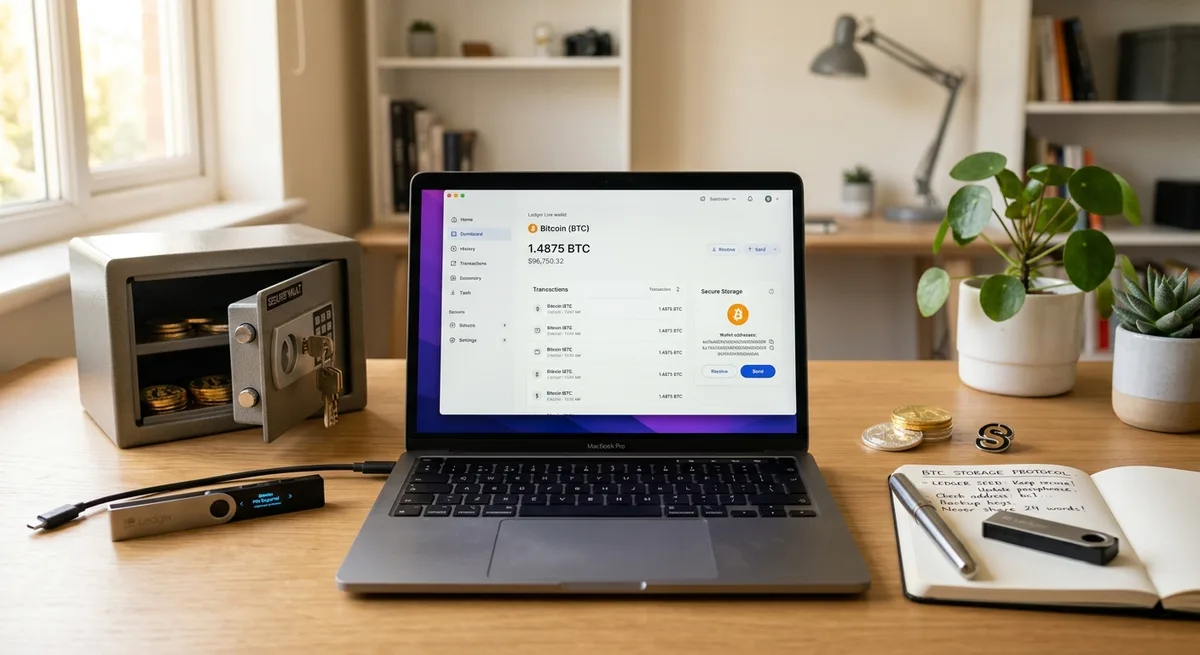
A bitcoin hardware wallet is a physical device designed to keep your private keys offline. You use it to approve transactions, but the sensitive key material never sits exposed on your phone or laptop.
For long-term holders, this is one of the most practical ways to combine strong security with real usability. It requires careful setup, but it gives you a much better position than keeping large amounts in a hot wallet or on an exchange.
A hardware wallet is especially useful if you’re storing Bitcoin for months or years rather than moving it regularly. A lot of beginners assume this is only for advanced users. That’s not really true. If you can follow setup instructions carefully and store your recovery phrase properly, it’s very manageable.
Using a Bitcoin Cold Wallet Setup
A bitcoin cold wallet is any setup where the private keys stay offline. That could mean a hardware wallet, a dedicated offline signing setup, or other cold storage approaches.
In practice, most beginners mean hardware wallets when they talk about cold storage, and that’s usually the right mental model. More advanced setups exist, but they can add complexity and introduce new ways to make mistakes. For someone learning how to keep bitcoin safe, a reliable and understandable setup beats chasing maximum sophistication.
Hot Wallet vs Cold Wallet: Which One Fits Your Situation?
The difference between hot and cold wallet setups comes down to internet exposure.
A hot wallet is connected to the internet. That includes exchange wallets and most software wallets. Easy to access, convenient for active use.
A cold wallet keeps keys offline. Lower exposure to online attacks, but usually a bit more setup and slightly less convenience day-to-day.
Neither is universally better. If you want fast access and hold a small amount, a hot wallet may be enough. If you’re thinking about where to store bitcoin safely long-term, cold storage is usually the stronger option.
The best setup tends to match the level of access to the size of the balance. Small amount, easier access. Larger amount, stronger separation.
When a Hot Wallet Makes Sense
If you’re just learning, making small purchases, sending occasional payments, or testing how Bitcoin actually works, a hot wallet is often the simplest path. It gives you fast access and removes friction.
It also works well for active users who move funds regularly. If you trade often or need quick transfers, keeping some Bitcoin in a software wallet or exchange account can be practical.
The key is balance size. A hot wallet is better treated like spending money than deep storage. Because it’s connected, the attack surface is bigger. That doesn’t make it unsafe by default, it just means it should be used with clear limits.
Once the amount becomes something you’d genuinely miss, cold storage deserves a closer look.
When Cold Storage Is the Better Choice
Cold storage is usually the better choice for larger holdings, long-term investors, and anyone who wants to reduce online exposure.
If you’re buying Bitcoin as a long-range asset and don’t need daily access, an offline setup gives you stronger protection with fewer internet-based risks. There’s also a quiet psychological benefit: funds stored offline are less likely to be moved impulsively, which for some people is a genuine advantage.
Cold storage isn’t about fear. It’s about reducing unnecessary risk when the amount justifies extra care.
How to Choose the Best Storage Method for Your Needs
The best storage method isn’t the one with the most features. It’s the one you can use correctly and consistently.
Start with four questions:
- How much Bitcoin are you storing?
- How often do you need access?
- How comfortable are you with setup and backups?
- Would you rather optimize for convenience or stronger security?
Small amount and still learning? A software wallet may be enough. Larger amount for the long term? A hardware wallet is usually more appropriate. Active trader? A split setup often makes the most sense.
This doesn’t need to be perfect from day one. Your storage can evolve as your balance and experience grow.
For Complete Beginners
Keep things simple.
A beginner-friendly wallet with a proper offline backup is often the safest starting point because it reduces the chance of setup mistakes. Simplicity is genuinely underrated here. A clean setup you understand beats an advanced one you mismanage.
If your amount is very small, it’s okay to temporarily keep it on a reputable exchange while you learn, but have a plan to move beyond that if your holdings increase. The goal at this stage is to understand how wallets work, practice good backup habits, and avoid unnecessary complexity.
For Long-Term Investors
If you plan to hold Bitcoin for months or years, security matters more than immediate convenience.
This is where a hardware wallet becomes attractive. It reduces online exposure and gives you direct control over your keys. Long-term holders should focus on secure backup storage, low online exposure, and a calm process for recovery if a device is ever lost. Learn how to back up your wallet correctly and test that understanding before large amounts are involved.
For Active Users and Traders
If you trade, move funds often, or use Bitcoin regularly, separating storage by purpose often makes sense.
Keep a smaller amount in a more accessible wallet for daily use. Keep long-term holdings in colder storage. Think of it like having a checking account and a vault. One is for movement, the other is for protection. That practical split is often the easiest way to manage both usability and security.
Step-by-Step: How to Store Bitcoin Safely
Step 1: Decide Where Your Bitcoin Should Live
Before moving any funds, decide which storage method actually matches your situation.
Small amount, regular access needed? A software wallet may be fine. Larger amount or long-term investment? A hardware wallet is usually the better fit. Still in learning mode? Start small and avoid overengineering it.
Make this decision before you click send. A lot of mistakes happen when people move funds first and figure out storage later.
Step 2: Set Up Your Wallet Correctly
Download wallet software only from the official source. If you’re using a hardware wallet, buy it from the manufacturer or an authorized seller, and check that the packaging and device setup look legitimate.
Follow the setup prompts slowly. Don’t skip steps. Don’t search for shortcuts in random videos or forum posts when the official documentation already explains the process clearly. This is also the stage where fake apps and cloned sites tend to catch people out, so attention matters.
Step 3: Back Up Your Recovery Phrase Safely
Your recovery phrase is what lets you restore your wallet if your phone, computer, or hardware device is lost, stolen, or damaged.
Write it down clearly and store it offline somewhere only you can access. No screenshots. No cloud storage. No email drafts. No notes apps. Imagine coming back to this in two years with wet hands after a long session and needing to find it quickly. That’s the kind of real-world reliability it needs to have.
If someone gets your phrase, they can take your funds. If you lose the phrase and lose access to the wallet, recovery may not be possible. This single step is often what makes or breaks self-custody.
Step 4: Transfer a Small Test Amount First
Before moving your full balance, send a small amount first.
This confirms you copied the right address, selected the right network, and understand how the receiving wallet works. It also removes a lot of stress because you’re not risking everything on the first try. This small step prevents a surprising number of expensive mistakes.
Step 5: Move the Full Amount and Confirm Receipt
After the test transfer lands successfully, send the full amount.
Double-check the receiving address before confirming. Watch for network confirmations and make sure the final balance appears correctly before treating the transfer as complete. Don’t rush this part. Address verification is a normal habit, not paranoia.
Step 6: Review Your Security Setup Regularly
Secure storage isn’t a one-time event.
Every so often, check that you still know where your backup is, that your wallet software or device is up to date, and that your account security habits are still solid. You don’t need to obsess over it. A simple periodic review is enough.
Security Best Practices Every Bitcoin Holder Should Follow
Wallet type matters, but habits matter just as much.
Protect Your Recovery Phrase Offline
Never share your recovery phrase with anyone. No real support team will ever ask for it.
Keep it offline. Paper works fine if stored carefully. More durable backup materials can make sense for long-term storage. However you do it, the rule stays the same: no photos, no cloud files, no email, no messaging apps.
This is the foundation of secure bitcoin storage and one of the clearest protections against theft.
Use Strong Passwords and Two-Factor Authentication
For exchange accounts and wallet apps that use logins, use a strong unique password and enable two-factor authentication.
2FA adds a useful layer, but it doesn’t replace safe recovery phrase management. Think of it as account protection, not full key protection.
Keep Devices and Apps Updated
Outdated phones, computers, browsers, and wallet apps can create avoidable security gaps. Updates often patch known weaknesses. You don’t need to understand every technical detail. Just know that old software is easier to exploit than current software. Make updates part of your normal routine.
Verify Addresses Before Sending
Always check the wallet address before sending Bitcoin. Clipboard malware can silently replace copied addresses. Simple copy-paste mistakes happen too.
Check at least the first and last few characters of the address, and take extra care with larger transactions. This habit takes seconds and can prevent irreversible loss.
Common Bitcoin Storage Mistakes to Avoid
Most storage failures don’t come from sophisticated attacks. They come from simple mistakes made at the wrong moment.
Keeping Large Amounts on an Exchange
Exchanges are useful, but convenience becomes a liability when balances grow.
If you’re holding a meaningful amount of Bitcoin long-term, leaving it all on an exchange means relying on a third party for security, access, and withdrawals. That may be acceptable for active trading capital. For long-term ownership, it’s less ideal. As a general rule: the larger the amount, the more important self-custody becomes.
Saving Seed Phrases Digitally
A digital seed phrase is easy to leak.
Notes apps, email drafts, screenshots, cloud storage, chat apps: all of these create a single point of compromise. If your device or account gets breached, your funds can be exposed without you even realizing it. Your recovery phrase should stay offline. It’s basic advice, but it’s often ignored.
Falling for Fake Wallet Apps or Phishing Sites
Scammers know that beginners search quickly and often click the first result they see.
Fake wallet apps, cloned websites, and phishing pages are built to look convincing. Their goal is simple: get you to enter your login, private key, or recovery phrase. Always verify official sources before downloading anything or entering sensitive information. This guide on how to spot Bitcoin scams is worth bookmarking.
Ignoring Scam Red Flags
A lot of crypto theft is social engineering, not technical hacking.
Fake support accounts, giveaway scams, urgent messages about account problems, strangers offering help while fishing for wallet details. The pressure usually comes from urgency, authority, or promises that sound too easy. If someone is rushing you, asking for secret information, or guaranteeing outcomes, slow down. That pause alone can save you.
For a broader breakdown of these tactics, this guide to common Bitcoin frauds to avoid is worth reading.
A Simple Storage Strategy Beginners Can Actually Use
Most beginners don’t need the most advanced setup. They need a setup they understand, can maintain, and won’t misuse.
A simple strategy often works best: keep a small amount accessible for learning or occasional use, and move long-term holdings to a more secure wallet as your confidence and balance increase.
Example Setup for Small Holdings
If you’re just starting with a modest balance, use a reputable software wallet or keep a very small amount on a trusted exchange while you learn the basics.
The important part is discipline. Back up your recovery phrase offline. Practice receiving and sending small amounts. Learn how wallet addresses work. Avoid trying to optimize everything at once. This lets you build confidence gradually without taking on unnecessary risk.
Example Setup for Growing Holdings
Once your Bitcoin balance becomes meaningful, moving to a hardware wallet or cold storage setup usually makes sense.
You can still keep a smaller amount in a hot wallet for convenience, but your larger long-term position should sit in colder storage with a carefully protected backup. You don’t need to jump into advanced multi-device setups. A solid hardware wallet process with a careful backup is enough for most people.
FAQ About Bitcoin Storage
Is a bitcoin hardware wallet worth it for beginners?
Often, yes. If you’re holding a meaningful amount of Bitcoin or planning to keep it long-term, a hardware wallet is usually worth considering. It adds a setup step, but it also gives stronger protection by keeping keys offline. If your balance is tiny and you’re still learning, you may not need one immediately. But as holdings grow, many beginners find the added security worth the extra effort.
Is it safe to leave Bitcoin on an exchange?
It can be acceptable for small amounts or active trading, but it’s not the strongest option for long-term storage. The main issue is custody: the exchange controls the keys, which means you’re trusting a third party. For larger holdings, self-custody is usually the safer choice.
What happens if I lose my wallet device?
In most cases, you can recover access using your recovery phrase. That’s why offline backup matters so much. If the device is lost but the recovery phrase is safe and accurate, you can usually restore your wallet on a new device. If both are lost, recovery may not be possible. That’s the hard reality of self-custody.
Can I use more than one storage method?
Yes, and for many people that’s the best approach. Keep a small amount in a hot wallet for regular use and the bulk of your Bitcoin in cold storage for long-term protection. Splitting funds this way can improve both flexibility and risk management, as long as you stay on top of your backups and don’t create confusion.
How do I cash out Bitcoin after storing it safely?
When you want to sell or withdraw, you typically move Bitcoin from your wallet to an exchange or service that supports cash-outs, then convert it to your local currency. If you need a practical walkthrough, this guide on how to cash out Bitcoin covers the process clearly.
Conclusion: Choose a Storage Setup You Can Use Safely and Consistently
If you’re learning how to store bitcoin, here’s the most important thing to take away: the best setup is not the most impressive one. It’s the one that matches your balance, your goals, and your ability to use it correctly.
For some people that means starting with a simple software wallet. For others it means moving to a hardware wallet or cold storage setup sooner. What matters is that you understand the tradeoffs, protect your recovery phrase, and don’t let convenience quietly become a security risk.
Start simple. Back up properly. Use test transactions. Review your setup from time to time. As your holdings grow, let your security grow with them.
That’s the practical path to secure bitcoin storage, and for most beginners, it’s more than enough to get started safely.