

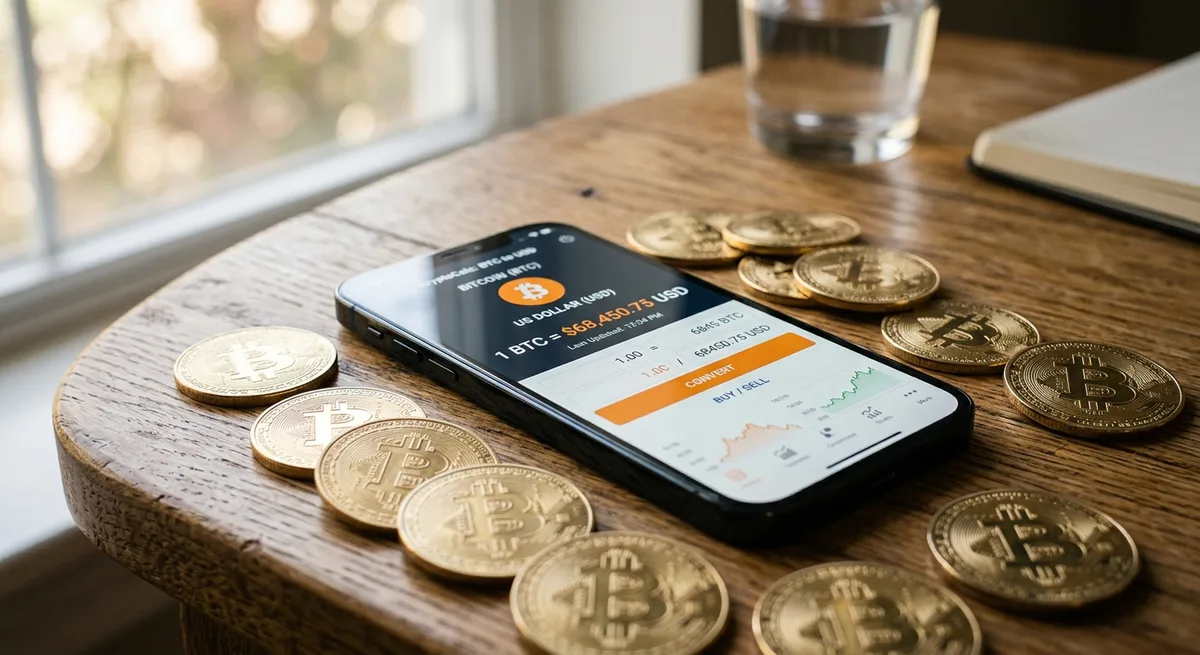
Bitcoin to USD Converter
Introduction: Use a Bitcoin to USD Converter Without Overthinking It
A good bitcoin to usd converter does one thing fast: it tells you how much your BTC is worth in dollars right now. Simple enough. But if you have ever checked one platform and then quickly opened a second tab to double-check, you have probably noticed the number is not always exactly the same.
That is completely normal.
The goal here is not just to show a number. It is to help you understand what a bitcoin to usd converter actually does in practice, how live pricing works, and what can quietly change the result before you sell, transfer, or cash out. If you want a solid foundation first, the guide on Bitcoin to USD conversion is a useful starting point.
For most people, speed matters. But so does reliability. A quick estimate is helpful, but if you are about to move real money, you also need to know whether you are looking at a live market price, a broker quote, or a sell price with fees already baked in. That is where the details start to matter.
What a Bitcoin to USD Converter Actually Does
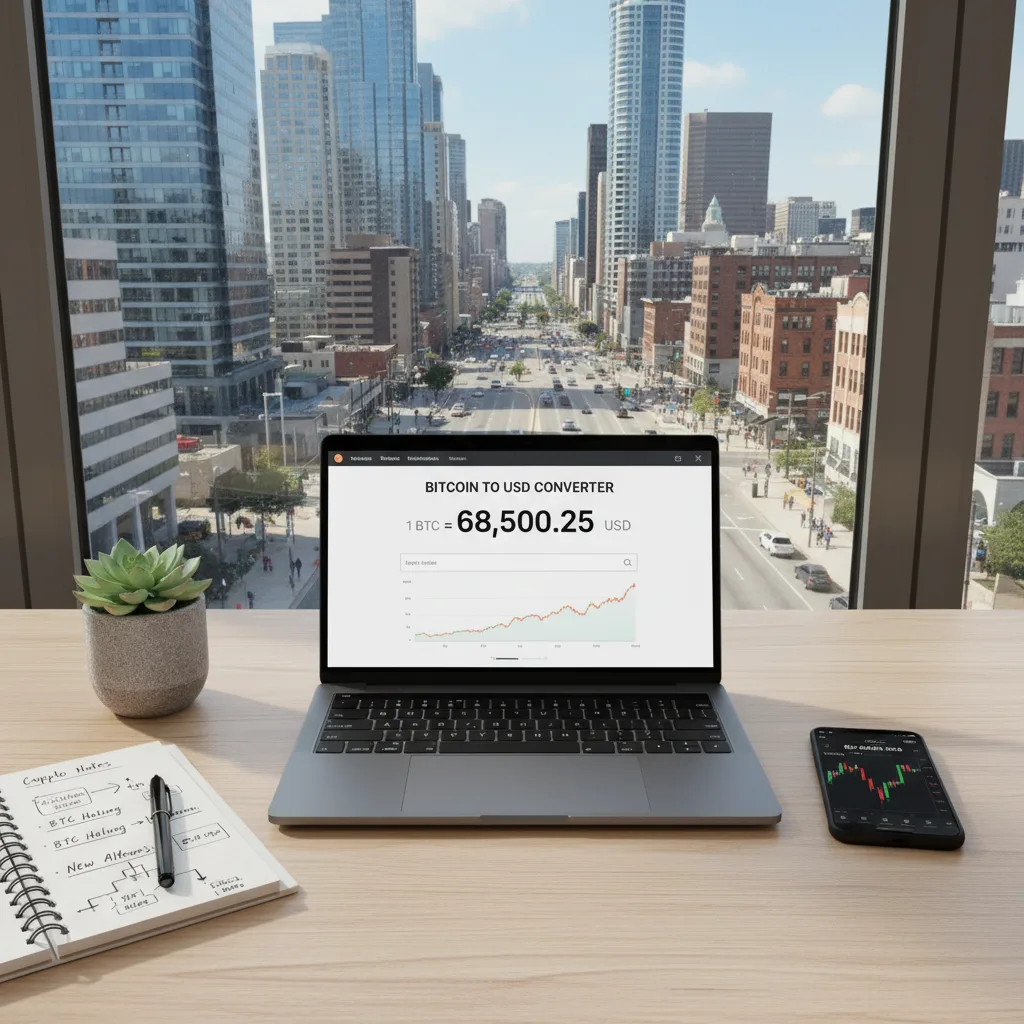
At its core, a converter takes a Bitcoin amount and multiplies it by the current BTC/USD market rate. If Bitcoin is trading at $65,000 and you enter 0.1 BTC, you get $6,500. That is the basic function.
But there is an important gap between a simple estimate and a real execution price. When people ask what a bitcoin to usd converter actually shows, they are usually trying to figure out whether that number reflects what they would genuinely receive in dollars. In many cases, it does not. It reflects an estimate based on the latest available market data, not a guaranteed payout.
Different tools also pull prices from different exchanges or pricing feeds. That is why the converter you use can affect the number you see, even if the difference looks small. Some platforms update every second. Others refresh less often. Some build in a spread. Others track spot price more closely.
If you want to understand why platforms show different numbers, it helps to know how Bitcoin exchanges work and where pricing actually comes from.
A converter is useful for speed and a general sense of direction, but it is only as accurate as its price source and update frequency. That matters even more when prices are moving fast.
Why the Converted USD Amount Changes Constantly
Bitcoin trades all day, every day. No market close, no fixed daily reset. Prices move as buyers and sellers place orders across exchanges around the world, around the clock.
That means the USD value of the same BTC balance can shift every few seconds. During a volatile stretch, you can refresh a page and see a meaningfully different number almost immediately.
A few practical reasons explain this:
- Bitcoin is volatile, so demand can rise or fall fast
- Liquidity shifts across platforms, especially during major news events
- Large buy or sell orders can move price in the short term
- Each exchange has its own order book and trading activity
If you want a clearer view of the mechanics, the guide on how Bitcoin price is determined breaks it down in a practical way.
The key point is simple: a converter shows a live estimate, not a permanent truth. That becomes especially relevant when you are using one to make an actual conversion.
How to Use a Bitcoin to USD Converter Correctly
Using a converter is easy. Using it correctly takes one extra layer of attention, and most people skip that layer entirely.
Start with the BTC amount you want to convert. Enter it into the tool. Look at the estimated USD value and confirm the rate is actually live. If the page shows a timestamp or refresh indicator, glance at it before trusting the number.
This matters because what a converter shows you today should reflect the current market, not a delayed feed from fifteen minutes ago. If you are comparing tools, the best one usually comes down to three things: update speed, transparent pricing, and whether the rate matches the exchange where you actually plan to sell.
A simple process that works well:
- Enter the exact BTC amount
- Check the current bitcoin price in USD
- Confirm whether the rate is live or delayed
- Compare the number against at least one other reliable source
- If you plan to sell, check trading fees and withdrawal costs
That last step is where beginners often get caught out. They see a clean estimate, assume that is what they will receive, and only notice the gap after the trade goes through.
Before You Convert, Check Whether You Need Spot Price or Sell Price
Spot price is the market price of Bitcoin at that moment. Sell price is what you may actually receive when you place an order on a platform.
Those two are often close. They are not always the same.
If you are just tracking value, spot price is enough. If you are about to convert BTC into cash, what matters more is the net amount you will actually receive after all costs. A few things can quietly reduce that final payout:
- Platform spread between buy and sell quotes
- Trading fee on the transaction
- Network fee if you are moving BTC first
- Withdrawal fee when sending USD to your bank
For example, a converter might show $3,250 for 0.05 BTC, but the actual sale after spread and fees could land a bit lower. That is not necessarily a problem. It just means the estimate was not the full picture. Knowing that before you click sell makes a real difference.
Bitcoin to USD Converter Today: What Affects the Live Rate
A bitcoin to usd converter only reflects the market. It does not create the price. So if you want to understand why the live rate looks the way it does today, you need to know what is actually moving Bitcoin.
The biggest short-term drivers are usually market sentiment, trading volume, macro news, regulation, and institutional flows. A major ETF update, an interest rate signal, a surprise regulatory headline, any of those can shift the bitcoin exchange rate quickly and visibly.
A few live factors that tend to matter most:
- Positive or negative crypto market sentiment
- Large inflows or outflows from investment products
- Economic data affecting risk assets broadly
- Government policy and regulation updates
- Sharp moves in volume across major exchanges
For ongoing context, it helps to follow Bitcoin today latest updates rather than looking at the converter in isolation.
The converter gives you the number. The market gives that number meaning.
Why Today’s Rate May Differ Across Platforms
Open Coinbase, Binance, and Kraken at the same time and you will likely see slightly different BTC/USD figures on each. That is normal, and it is worth understanding why before you act on any single quote.
The differences usually come down to pricing source, liquidity depth, and how each platform constructs its quotes. Some exchanges use their own order book directly. Some use an index price. Some add a spread into the visible quote. Broker apps often simplify the experience but that convenience can quietly mean less favorable pricing.
That is also why choosing a platform depends on priorities. Some users want lower fees. Others want simplicity, strong compliance, or faster bank withdrawals.
The important thing is not to assume every quote is interchangeable. A live rate is only useful if you know what kind of rate you are actually looking at.
When to Convert Bitcoin to USD
There is no universal best time to convert Bitcoin into dollars.
The right time depends entirely on your goal.
If you are taking profit after a strong move, your timing framework looks completely different from someone converting BTC to cover a bill or reduce portfolio risk. That is why charts come up so often in these conversations. People are not just looking for a number. They are trying to decide whether now actually makes sense.
A few valid reasons to convert:
- Locking in gains after a rally
- Reducing exposure during a period of uncertainty
- Meeting short-term cash needs
- Rebalancing a portfolio
- Managing the emotional strain of high volatility
Build your decision around a plan rather than a reaction. Ask yourself what would genuinely make you convert, what would make you wait, and how much risk you are actually comfortable carrying. If you want more perspective on timing, this piece on Bitcoin price forecast and buy timing gives useful context.
Timing should come from structure, not noise.
Use Charts and Context, Not Just Emotion
You do not need to be a technical analyst to get value from a chart.
At a basic level, a chart helps you see whether Bitcoin is trending up, pulling back, or grinding sideways. That alone is useful. Imagine you are sitting there watching the price tick up for the third day straight, trying to decide whether to hold or take some off the table. A quick look at recent structure can help you think more clearly than just watching a number move.
Pay attention to:
- Recent direction of price
- Areas where price has repeatedly stalled or bounced
- Whether momentum looks strong or is starting to fade
- How the current move compares to recent volatility
Charts do not predict the future. They just help reduce emotional decisions. And once you are ready to act, the next question is where to convert safely.
Where to Convert Bitcoin to USD Safely
There are several ways to convert BTC into dollars, but the options are not equal.
The safest and most practical route for most users is a reputable centralized exchange with strong liquidity, transparent fees, and reliable fiat withdrawals. Broker apps can also work well, especially for beginners, though the added convenience sometimes comes with higher costs.
Common options include:
- Centralized exchanges
- Broker and investing apps
- Peer-to-peer platforms
- Crypto payment processors
For most users, which platform works best depends on trust, speed, and access to banking. If you are still choosing a platform, the guide on where and when to buy Bitcoin also helps clarify what to look for.
A strong platform should offer a clear fee structure, deep liquidity for smoother execution, solid security, reliable USD withdrawal methods, and a good reputation in your region.
Safety is not only about avoiding scams. It is also about avoiding poor execution, unexpected fees, and delays when you try to actually get your money out.
What to Check Before Choosing a Platform
Before using any service to convert BTC to USD, run through these points:
- Check whether identity verification is required
- Confirm the full fee structure, not just the headline trading fee
- See which payment and withdrawal methods are supported
- Make sure your country is fully supported
- Look at estimated bank withdrawal times
- Review the platform’s security features
- Compare the spread, not just the visible price
- Read recent user feedback specifically about withdrawals
A platform can look great on the surface and still be frustrating when you actually try to cash out. That last point, real user feedback about withdrawals, tends to reveal more than any marketing page will.
Bitcoin to USD Chart and Price History Matter More Than Most People Think
A converter tells you what Bitcoin is worth right now. A chart and price history help you understand whether that number is small, routine, or genuinely significant in context.
That context matters more than most people realize.
Bitcoin has a history of large swings, fast recoveries, and deep drawdowns. Without that background, a live conversion number can feel far more dramatic than it really is. Seeing a ten percent drop feels very different once you know Bitcoin has done that repeatedly during broader uptrends and kept moving higher.
That is why real-time charts and historical data are so useful together. They help you separate short-term noise from larger market structure. This breakdown of Bitcoin price history and growth is worth reading if you want that longer view.
A converter is stronger when paired with history. Once you see where the current price fits in the bigger picture, your decisions tend to become less reactive.
How Historical Price Moves Can Improve Conversion Decisions
Historical data helps in three practical ways.
First, it gives you perspective on volatility. A two percent move may feel significant to a beginner, but in Bitcoin that can be an ordinary afternoon.
Second, it shows how quickly sentiment can shift. Markets often move harder and faster than expected, in both directions.
Third, it helps you avoid making decisions based on a single candle or one dramatic headline.
If you know Bitcoin has repeatedly pulled back ten to twenty percent during broader uptrends, you are less likely to panic sell during a normal correction. If you know previous rallies ran hot before cooling off, you may be more patient when taking profit. You do not need perfect timing. You just need enough awareness to avoid the obvious mistakes.
Bitcoin to USD Converter for Pesos and Mexico-Based Searches
A lot of users search for Bitcoin conversion in dollars even when they ultimately use a different local currency. That is common in countries where USD acts as the main reference point for crypto pricing.
If you are looking for bitcoin to usd converter options with pesos in mind, or searching for services relevant to Mexico, the logic is usually the same. You first check the BTC/USD rate, then compare it against the BTC to local fiat conversion offered by your exchange or payment provider.
Many users are not confused about currency. They are simply using USD as a benchmark because it is the clearest global pricing reference.
In practice, that means checking:
- The BTC/USD reference rate
- The USD to local currency conversion rate
- Local platform fees
- Local withdrawal availability
That gives you a more accurate picture than relying on a single quoted number.
What Gives Bitcoin Its USD Value in the First Place
Bitcoin has a USD value because people are willing to buy and sell it in open markets. That may sound obvious, but the reasons behind that demand actually matter.
Bitcoin is scarce. Supply is capped. It is liquid, globally traded, and relatively easy to transfer compared to many traditional assets. Some people value it as a store of value. Others use it for trading, portfolio allocation, or macro exposure. That combination creates demand, and demand creates price.
Confidence plays a role. Utility matters. Liquidity matters. Narrative matters too. If you want a deeper explanation, this article on what gives Bitcoin value connects the dots clearly.
Bitcoin’s dollar value is not random. It is market-based, constantly repriced, and shaped by both practical use and investor belief. Once you understand that, it becomes easier to spot the mistakes people make when using a converter.
Common Mistakes People Make With a Bitcoin to USD Converter
Most mistakes are not technical. They are simple misunderstandings that a bit of awareness can prevent.
Trusting a delayed price as if it were live is probably the most common. In a fast-moving market, even a small delay can make a real difference. Ignoring fees is another one: a clean estimate can look great until trading fees, spread, and withdrawal costs chip away at the final amount.
A lot of people also confuse the USD estimate with their actual payout. A converter is usually showing market value, not guaranteed proceeds. And converting during thin liquidity is something worth avoiding too, since price execution tends to be worse in those windows.
Finally, relying on a single platform quote, especially for a larger transaction, is a mistake worth skipping. A value tracker is useful, but execution happens somewhere specific, and the rate on your tracker may not match what you actually receive there.
Avoid these and you are already ahead of most casual users.
Quick Checklist Before You Convert
Before converting BTC to USD, run through this list:
- Check the bitcoin to usd live rate
- Confirm the rate is live, not delayed
- Compare the quote on at least one other platform
- Review spread, trading fees, and withdrawal costs
- Verify your USD withdrawal method
- Check current market conditions and volatility
- Make sure the platform supports your country and bank
- Know whether you are viewing spot price or actual sell price
Takes less than a minute. Can easily save you from an avoidable surprise.
Conclusion: Use a Bitcoin to USD Converter With Better Context
A good bitcoin to usd converter is useful because it gives you a fast answer. But the real value is understanding what that answer actually represents.
The number on the screen is a starting point, not the whole picture. To make better decisions, you also need to consider the current exchange rate, platform differences, fee structure, chart context, and whether you are looking at a spot estimate or a real sell quote.
Combine live conversion data with a basic understanding of volatility, timing, and execution and you will make calmer, more accurate decisions. Whether you want to convert bitcoin to dollars quickly, compare platforms, or simply track your holdings with more confidence, that combination is what separates checking a price from actually understanding it.
Use the tool for speed. Use context for judgment.