

Who Accepts Bitcoin and Who Controls It?
Who Accepts Bitcoin and Who Controls It?
If you’re asking who controls Bitcoin and who accepts Bitcoin, you’re really asking two different questions. Related, but not the same.
The first is about power. Who makes the rules, who approves transactions, who can actually change things. The second is about usefulness. Who takes Bitcoin as payment, and where can you spend it in the real world.
Here’s the short version: Bitcoin has no single owner, no boss, no central authority. No government, company, or developer can fully control it on their own. At the same time, Bitcoin only becomes useful when merchants, payment processors, and users choose to support it.
That’s why it helps to keep Bitcoin itself separate from the businesses built around it. The network is decentralized. The services layered on top often aren’t. If you want a solid foundation before going further, start with this guide on what Bitcoin is.
Once that distinction clicks, everything else gets easier to follow.
The Short Answer: No One Fully Controls Bitcoin

No one fully controls Bitcoin. Not governments, not exchanges, not miners, not developers, not large holders. Some of these groups have real influence, sometimes a lot of it, but influence isn’t the same as control.
Bitcoin was built to run without a central authority. Its rules are enforced by a distributed network of participants running compatible software. If one group tries to push changes the rest of the network doesn’t want, those changes typically go nowhere.
This also answers the question of who controls the Bitcoin algorithm. No single person does. The code is open source, visible to anyone, and changes only matter if enough of the network actually adopts them. If you want a focused breakdown of that idea, this explanation of Bitcoin decentralization is worth your time.
Which raises the obvious follow-up: if nobody’s in charge, how does the whole thing keep working?
How Bitcoin Actually Works Without a Central Authority
Bitcoin works because thousands of computers around the world follow the same rulebook.
Instead of a bank maintaining one private ledger, Bitcoin uses a public blockchain. A shared record of transactions, copied across many machines, kept in sync through agreed rules. When someone sends Bitcoin, the transaction is broadcast to the network. Participants check whether it follows the rules. Does the sender actually have the coins? Is the digital signature valid? If so, the transaction can be included in a block and added to the chain.
No central office approves this. The network coordinates through software, incentives, and verification. That’s the practical answer to how Bitcoin network governance works. Rules aren’t enforced by trust in one institution. They’re enforced by many independent participants checking each other. For a fuller step-by-step view, see how Bitcoin works explained.
To understand why this holds together, you need to understand consensus.
The Role of Consensus in Bitcoin
Consensus is what allows Bitcoin to function without a referee.
In simple terms, it means the network agrees on which transactions are valid and which version of the blockchain is the legitimate one. That agreement doesn’t come from voting or from anyone’s opinion. It comes from participants following the same rules and recognizing the same valid chain.
If someone tries to send coins they don’t own, nodes reject that transaction. If a miner creates a block that breaks the rules, nodes reject that block too. Consensus is really about rule enforcement, not agreement in the casual sense.
This is also why Bitcoin is hard to fake and hard to manipulate at the protocol level. Agreement is earned through verifiable rules, not granted by authority. If you want context on how this differs from other systems, this guide on Proof of Work vs Proof of Stake explains the tradeoffs clearly.
Consensus alone isn’t enough, though. It needs a security mechanism behind it.
Why Proof of Work Matters
Proof of Work is the mechanism that secures Bitcoin and makes attack attempts genuinely expensive.
Miners compete to add the next block by solving a computational challenge. This requires real-world resources: hardware, electricity, time. That cost isn’t a side detail. It’s what gives the system economic weight. Rewriting transaction history isn’t just technically hard, it’s financially brutal. An attacker would need enormous computing power and sustained cost to outcompete the honest network.
This matters a lot for the control question. Nobody can simply declare a new history or force invalid transactions into the chain. Power in Bitcoin is constrained by cost, rules, and network verification. For a more practical breakdown of the mining side, read Bitcoin mining explained.
So if Bitcoin has no ruler, who actually has meaningful influence over it?
Who Influences Bitcoin If No One Controls It?
This is where the conversation gets more realistic.
No one fully controls Bitcoin, but several groups shape how it develops, how it’s used, and how it’s perceived. Developers write and maintain software proposals. Miners secure the chain and process transactions. Nodes enforce the rules. Users, exchanges, businesses, and markets influence adoption, liquidity, and price.
The best way to think about Bitcoin’s control structure is as a system of distributed checks. Different groups carry weight, but none can act alone for long without broader cooperation. This piece on the battle over blockchain governance gives useful context on that tension.
Here’s how each group actually fits in.
Developers Maintain the Code, But Don’t Rule the Network
Developers write, review, and maintain Bitcoin software. That’s genuinely important work, but it doesn’t make them rulers.
Bitcoin is open source. Anyone can inspect the code. Anyone can propose changes. In practice, experienced contributors do most of the serious work because the stakes are too high for careless updates. But even the most respected developers can’t force the network to adopt anything. Users and node operators choose what software they run. If developers propose something controversial and the broader network rejects it, that proposal goes nowhere. Simple as that.
This is one of the clearest answers to who controls the Bitcoin algorithm. Developers influence the codebase, not the network by decree. Even Bitcoin’s origin story points that way. Satoshi Nakamoto created Bitcoin but didn’t retain permanent authority over it. For background, see Bitcoin history and founder.
If developers aren’t in charge, people often assume miners must be.
Miners Secure Transactions, But Can’t Rewrite the Rules Alone
Miners gather transactions into blocks and compete to add those blocks to the blockchain. That gives them an important operational role. They can influence which pending transactions get confirmed sooner, especially during congested periods, and they contribute directly to network security through their computing power.
But miners don’t get to rewrite Bitcoin’s rules on their own. Imagine a miner deciding to bend the rules and producing invalid blocks. Nodes would simply reject them. All that work, wasted. Mining power is influential, but it’s not absolute. Miners matter most when they’re working in line with broader network support. Without that, they’re constrained by the same rulebook as everyone else.
This is where a lot of headlines get it wrong.
Nodes Enforce the Rules
Nodes are one of the strongest answers to who actually regulates Bitcoin’s protocol in practice.
A Bitcoin node is a computer running software that independently verifies transactions and blocks. It checks whether the rules have been followed, without needing to trust miners, developers, or exchanges. As long as enough independent nodes exist across many participants, rule enforcement stays decentralized. That’s a core part of how Bitcoin decentralization works in practical terms.
If you want to understand why this matters so much, read this guide on what a Bitcoin node is.
Nodes explain how rules are enforced. Markets explain how Bitcoin’s direction gets shaped in real life.
Users, Businesses, and Markets Also Shape Bitcoin
Bitcoin is not only software. It’s a living market.
Users choose whether to hold, spend, or sell. Exchanges provide liquidity. Merchants decide whether to accept it. Wallet providers shape the experience of millions of people. Institutional buyers affect market perception. None of these groups control Bitcoin, but all of them influence its practical trajectory.
A rise in businesses accepting Bitcoin strengthens its utility narrative. Greater exchange access increases liquidity. Negative regulation in one region can reduce local adoption without shutting the network down globally. That’s the difference between control and influence. Markets shape outcomes without owning the protocol. For examples of who is already using it, see who uses Bitcoin with examples and stats.
Once you understand influence, the next question is usually about rule changes.
Can Anyone Change Bitcoin’s Rules?
Yes, Bitcoin’s rules can change. Just not easily.
That difficulty is intentional. It protects the network from rushed decisions, power grabs, and poorly tested ideas. Changes usually begin as proposals, then move through discussion, review, testing, and only after all that, possible adoption. Even then, a proposed update only matters if enough of the ecosystem actually accepts it. Developers can suggest. Miners can signal. Businesses can prepare. But users and node operators ultimately decide what software they run.
Bitcoin can evolve, but only through coordination across a skeptical and often conservative network. For investors and newer users, this is a feature, not a bug.
Soft Forks, Community Debate, and Upgrade Adoption
Most Bitcoin changes are introduced carefully, with extensive discussion beforehand.
A common path is a soft fork, a backward-compatible rule update where older software may still recognize newer blocks as valid under certain conditions. Less disruptive than a hard split, though it still requires serious coordination. Before activation, proposals are debated by developers, miners, businesses, and the wider community. Technical merit matters, but so do incentives and trust. If a major group believes an update creates more risk than value, adoption stalls.
Disagreement is completely normal in Bitcoin governance. Debate isn’t a sign that something’s broken. It’s how a decentralized system resists being rushed.
Why Bitcoin Governance Moves Slowly
Bitcoin governance moves slowly because stability matters more than speed. People store real savings in this network. Companies build infrastructure on top of it. Miners commit capital to secure it. A careless change could break trust that took years to build.
Slow governance reduces the chance of sudden rule changes that benefit one group at another’s expense. It also gives the market time to decide whether a proposal is genuinely worth adopting.
For beginners, this is worth remembering: a lack of central leadership doesn’t mean chaos. In Bitcoin, slowness usually reflects caution, and caution is often what protects the whole thing.
That covers control. Now for the second part of the question: who actually accepts Bitcoin.
Who Accepts Bitcoin in the Real World?
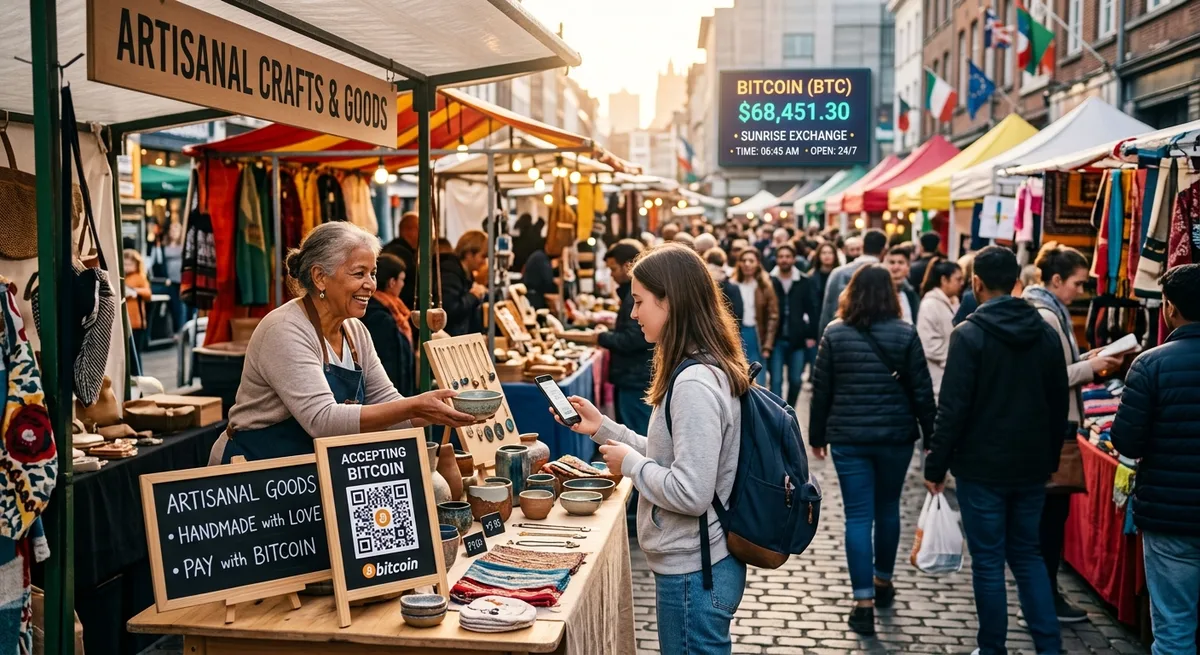
If you’re asking who takes Bitcoin or where you can pay with it, here’s the honest answer: more businesses accept it than many people expect, but fewer than the hype sometimes implies.
Bitcoin payments are most common in online services, digital products, international commerce, and among merchants using cryptocurrency payment platforms. Direct in-store retail use exists, but it’s still uneven and highly regional. Some businesses accept Bitcoin natively. Others use payment processors that convert Bitcoin into local currency instantly, which lets them offer crypto payments without holding the asset or taking on price volatility.
For a practical overview of how this works, read Bitcoin payments, where and how to use.
Here’s how it breaks down by type of business.
Online Businesses, Service Providers, and Global Merchants
Online businesses are still the most common places to spend Bitcoin.
That includes digital service providers, software sellers, some travel platforms, hosting companies, freelancers, and global merchants serving international customers. Bitcoin tends to work best where cross-border payments, lower friction, or faster settlement actually matter. This is why Bitcoin adoption is stronger in online marketplaces than in local shops. Online businesses can integrate crypto payment tools more easily, and their customers are often already comfortable with digital wallets.
You’ll also see Bitcoin used for gift card services, subscriptions, VPNs, gaming credits, and other digital categories. Practical use cases, even if they’re not visible on the average high street.
Which Ecommerce Platform Accepts Bitcoin?
When people ask which ecommerce platform accepts Bitcoin, the answer usually isn’t about the platform alone.
Most major ecommerce platforms don’t accept Bitcoin natively as a built-in default. Instead, they support it through plugins, extensions, APIs, or third-party payment processors. Merchants using platforms like Shopify, WooCommerce, or Magento may still be able to accept Bitcoin, even if the platform itself isn’t directly handling the payment.
The platform provides the storefront. The crypto payment processor handles the Bitcoin transaction, settlement, and sometimes optional conversion to fiat. So the real question isn’t just which platform accepts Bitcoin, it’s which platform supports integrations that make Bitcoin payments easy, compliant, and usable for your customers.
Online use is growing, but what about spending Bitcoin locally?
How People Spend Bitcoin Offline and Locally
Offline Bitcoin spending exists, but it varies a lot by city, country, and merchant preference.
In crypto-friendly areas you might walk into a café, pay with a QR code scan, and be out the door in seconds. In most regions, though, you won’t find that. Local use remains much less common than online use, and adoption tends to cluster around active local communities where merchants already understand how wallets and payment flow actually work.
This is also where confusion starts around Bitcoin ATMs, because access points aren’t the same as payment acceptance.
Where Can I Find Bitcoin ATM in Texas?
If you’re searching for Bitcoin ATMs in Texas, you’re looking for access infrastructure, not necessarily stores that accept Bitcoin as payment.
A Bitcoin ATM typically lets you buy Bitcoin with cash or card, and sometimes sell Bitcoin for cash depending on the machine and operator. The nearby businesses may take zero Bitcoin. Texas has a large number of Bitcoin ATMs compared with most other states, especially in Houston, Dallas, Austin, and San Antonio. ATM locator websites, exchange apps, and maps provided by ATM operators are the most practical way to find one. That said, always check fees, identity requirements, and machine status before making the trip. Fees can be surprisingly high.
If your question is how to find Bitcoin ATMs nearby, think of them as on and off ramps. If your question is where to spend Bitcoin in Texas, you need a different search focused on merchants, local directories, or crypto-friendly business communities. Knowing that difference saves real time and frustration.
What Bitcoin Control Means for Investors and New Users
For investors and newer users, understanding Bitcoin control isn’t just theory. It affects how you assess risk, evaluate information, and build genuine conviction.
If you think one company owns Bitcoin, you’ll misread both its resilience and its limits. If you think no one influences Bitcoin at all, you’ll miss how developers, miners, nodes, exchanges, and markets actually shape outcomes. This matters especially for investing in Bitcoin safely as a beginner. A decentralized asset behaves differently from a company stock or a bank account. You need to separate protocol risk from platform risk. Bitcoin itself may be decentralized, while the exchange, wallet app, or payment provider you use almost certainly isn’t.
It also helps you evaluate the endless stream of narratives. When someone claims Bitcoin is broken because one group is too powerful, ask whether they’re describing real control or temporary influence. That distinction alone prevents a lot of bad decisions.
Common Myths About Bitcoin Control
One myth is that developers control Bitcoin. They don’t. They can propose and maintain code, but they can’t force anyone to run it.
Another is that miners own the network. They don’t. They secure transactions, but nodes still verify whether blocks follow the rules.
A third is that whales control Bitcoin. Large holders can move price, especially short term, but price influence isn’t protocol control. Owning a lot of coins doesn’t let you rewrite consensus rules.
There’s also confusion around Bitcoin wallet providers. A wallet provider may control the service interface or even hold your keys in a custodial setup, but that’s not the same as controlling Bitcoin itself. Self-custody risk and service risk are separate issues, and mixing them up leads people to wrong conclusions.
Questions Readers Should Ask Before Trusting Any Bitcoin Claim
Before accepting any strong claim about Bitcoin governance or adoption, a few basic questions cut through most of the noise:
- What exactly is being controlled here: the protocol, the price, the mining industry, or a specific platform?
- Who benefits if this claim is believed?
- Did the wider network actually accept the change, or is someone just pointing to one influential group?
- Are they confusing short-term market influence with long-term governance power?
- Are they talking about Bitcoin itself, or about a company built around Bitcoin?
Simple questions, but they filter out an enormous amount of noise. In crypto, clarity usually comes from asking better questions rather than following the loudest voices.
Conclusion
Bitcoin has no CEO, no central bank, no single authority. That’s the clearest answer to who controls Bitcoin. No one fully does. Developers maintain code, miners secure blocks, nodes enforce rules, and users, businesses, and markets influence adoption and direction.
On the utility side, who accepts Bitcoin depends on the payment infrastructure around it. Online businesses, service providers, global merchants, and crypto-enabled ecommerce stores are the most common examples today. Local acceptance exists but varies heavily by region and merchant choice.
The distinction worth holding onto: Bitcoin itself is decentralized. The tools and companies around it may not be. Understand that difference and you’ll make better sense of headlines, stronger investing decisions, and more realistic judgments about where Bitcoin is actually useful right now.