


Bitcoin Energy Debate: How Much Energy Does It Use?
Why the Bitcoin Energy Debate Matters
The bitcoin energy debate keeps coming up for a simple reason: the electricity use is real, and people genuinely disagree on whether it’s justified.
Critics see a system with high energy consumption, real environmental impact, and questionable social value. Supporters see a global monetary network that runs without a central authority, stays open to anyone, and uses energy as a core part of the security model. Both sides have a point, which is why this conversation has moved way beyond crypto Twitter and into policy offices and boardrooms.
If you’re new here, it helps to separate a few things people tend to blur together. Bitcoin’s electricity use is one question. Its carbon emissions are another. And its overall sustainability depends not just on how much power the network consumes, but where that power comes from, how efficiently miners are running their hardware, and what you’re actually comparing it to.
So let’s work through it properly. Mining mechanics, why estimates conflict, the strongest criticisms, what supporters argue back, and where realistic improvements might come from.
For investors, this isn’t just an ethical side topic. Bitcoin’s environmental profile can shape regulation, institutional adoption, and long-term market perception. If governments restrict mining activity or public companies avoid bitcoin exposure over emissions concerns, the whole ecosystem feels it.
For environmentally conscious readers, the concern is more direct. Large electricity consumption naturally raises the question of whether that energy could go somewhere else, and whether the environmental cost fits with a world trying to cut emissions.
For policymakers, it’s a genuine tradeoff. An open monetary network that no government controls sits on one side. Grid pressure, emissions from fossil-fuelled operations, and public frustration about power prices sits on the other.
Bitcoin isn’t just an app. There are warehouses full of machines, cooling systems, power contracts, and grid connections making this debate very concrete. If you want a deeper look at the environmental arguments critics make, this overview of bitcoin mining’s environmental impact adds useful context.
But to judge those arguments fairly, you first need to understand what miners actually do.
How Bitcoin Mining Works in Simple Terms
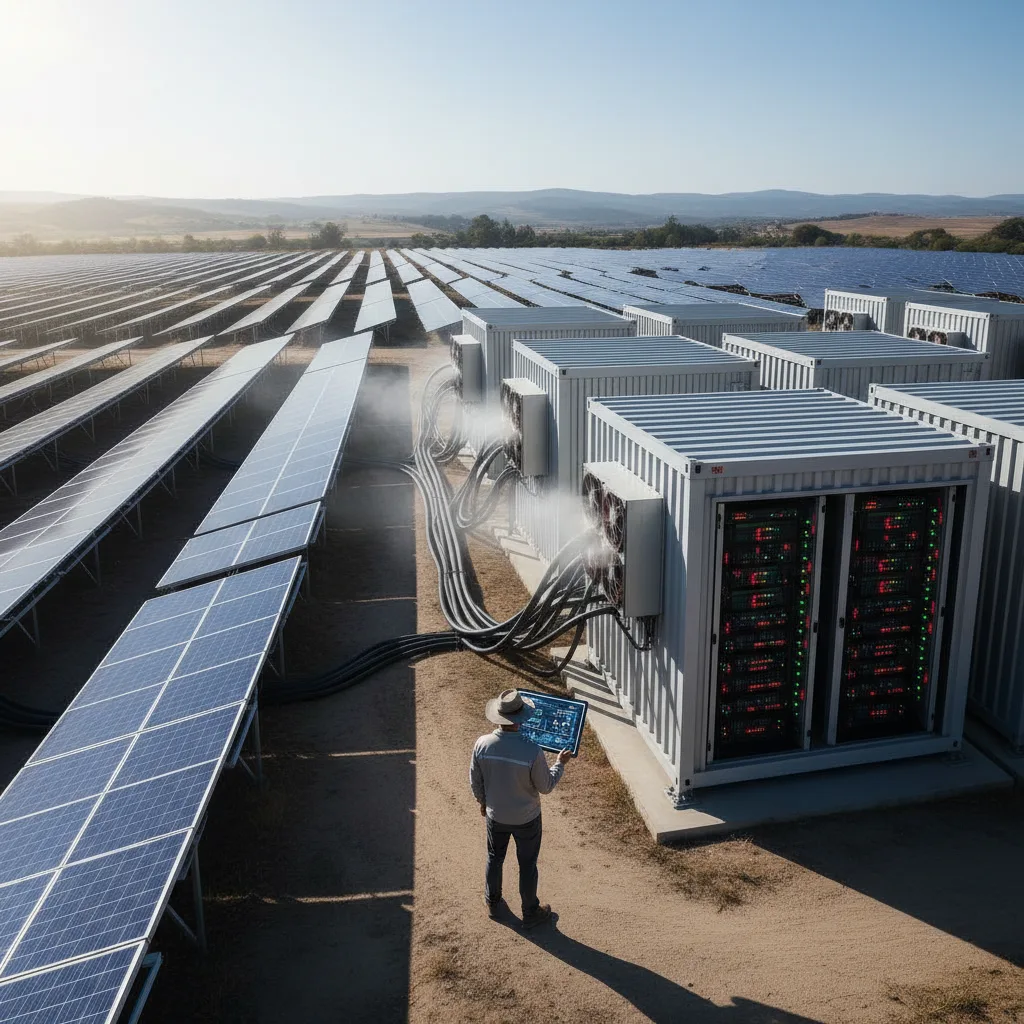
Mining is the process that keeps the network running and secure. Miners use specialized computers to verify transactions and pack them into blocks. Successful miners earn newly issued bitcoin and transaction fees in return.
The core mechanism is proof of work. Instead of trusting a central party, the network makes miners compete to solve a difficult mathematical puzzle. First one to solve it earns the right to add the next block.
That competition requires real computational work, and real computational work requires electricity. The more machines you run, the more guesses you can make per second. This is why mining operations use ASICs: chips built for exactly one purpose, which is mining bitcoin as efficiently as possible.
Proof of work is often dismissed as pointless number-crunching. In practice, the energy cost is what makes attacking the network expensive. If rewriting bitcoin’s history were cheap, the whole thing would be trivially easy to manipulate. This guide on proof of work vs proof of stake is worth a read if you want a clear comparison of the two approaches.
That explains why mining uses power. It doesn’t yet explain why the demand can get so large.
Why Proof of Work Requires So Much Electricity
Proof of work uses competition as its security mechanism. Thousands of miners around the world are constantly racing to find the next valid block. One wins. All of them spend electricity trying.
This creates a direct link between hash rate and energy demand. Hash rate is the total computing effort the network is throwing at the problem at any given moment. When more miners join, or existing miners deploy more machines, hash rate rises. Higher hash rate generally means more electricity being consumed across the network.
This is not an accident. Bitcoin is intentionally resource-intensive because the cost of producing valid blocks is part of what protects the system. To attack the network, you’d need enormous hardware capacity and access to vast amounts of power. That barrier is exactly what supporters point to when they call the system resilient.
The tradeoff is that electricity use tends to climb when mining becomes more profitable. Which brings us to the practical factors that determine how high bitcoin’s total consumption actually gets.
What Determines Bitcoin’s Total Energy Use
A few things drive the number up or down.
The bitcoin price matters first. When market price rises, mining rewards become more valuable, which attracts more miners or pushes existing ones to expand. More competition usually means more machines running.
Mining difficulty matters too. Bitcoin adjusts its difficulty roughly every two weeks so blocks keep arriving at a fairly stable pace. If hash power surges, the puzzle gets harder. That keeps competition intense.
ASIC efficiency matters at the hardware level. Newer machines produce more hash rate per unit of electricity than older models. That can improve efficiency even if the total network still consumes a lot, because there are simply more miners entering the race.
And local power costs matter a lot. Energy is one of the biggest operating expenses in mining, so operators are constantly hunting for cheap electricity. Some chase surplus renewable power. Others move to regions where fossil fuel electricity is still affordable. This resource on the best electricity sources for crypto mining gives a practical view of how those choices affect both economics and environmental profile.
Once you understand those drivers, the obvious next question is: how much power does the network actually consume right now?
How Much Energy Does Bitcoin Use Today?
There’s no single perfect number, and anyone who gives you one without caveats is probably oversimplifying. Most serious estimates place bitcoin’s annual electricity use in a range comparable to a medium-sized country, landing somewhere in the tens to low hundreds of terawatt hours per year depending on the methodology.
The Cambridge Centre for Alternative Finance is one of the most cited sources. It updates its models regularly as conditions shift. But the exact figure matters less than many headlines suggest, because the number moves with price cycles, hardware turnover, and miner relocation. A snapshot taken during a bull market looks very different from one taken after a sharp drawdown.
It’s also worth reading energy metrics carefully. Some figures measure theoretical maximum usage. Others estimate likely consumption based on which machines are actually running profitably. Those are not the same thing. This article on bitcoin mining energy and environmental impact offers a useful starting point if you want to understand how these estimates are built.
Why Energy Estimates Often Conflict
Estimates conflict because they depend on assumptions that are genuinely hard to verify.
One study might assume miners mostly use older hardware, which burns more electricity per unit of hash rate. Another assumes a faster shift toward newer ASICs. One report might focus on likely operating machines. Another includes a wider range of possible hardware scenarios. Add in the fact that miner location can change quickly after regulation shifts or grid disruptions, and you see why the numbers diverge.
Many private mining operations don’t disclose their exact power sources, uptime, or hardware fleet either. Researchers end up inferring a lot from indirect data. So when you see one report saying bitcoin is cleaner than critics claim and another saying it’s dirtier than supporters admit, the gap is usually methodological rather than purely political.
Energy Use vs Carbon Footprint: Not the Same Thing
This distinction matters more than most coverage suggests. High electricity use does not automatically mean high emissions.
If a miner runs on coal-heavy grid power, the emissions intensity is high. If a miner uses hydro, geothermal, or curtailed renewable energy, the emissions profile can look very different. The same amount of energy can produce very different climate outcomes depending on the source.
So when you’re evaluating the environmental impact of bitcoin mining, you can’t stop at the electricity number. You need to know where the power comes from, whether it displaces other demand, and how carbon-intensive the local grid actually is. A mining site in one region can have a dramatically different footprint from an equally large site somewhere else.
The challenge, of course, is verification. Claims about low-carbon mining are easy to make and harder to prove. For readers who want to think about this more concretely, this crypto carbon footprint calculator is a helpful reference.
The Main Criticisms in the Bitcoin Environment Debate
The strongest critics of bitcoin don’t usually deny that the system has technical value. Their argument is that the environmental cost may be too high relative to the benefit, and that’s a fair thing to put on the table.
One criticism is fossil fuel dependence. In regions where miners rely on coal or natural gas, bitcoin can add to carbon emissions in a meaningful way. Critics argue that a global push toward cleaner infrastructure shouldn’t coexist comfortably with an industry that can still profit from carbon-heavy power.
Another is grid pressure. Large mining operations can strain local electricity systems, especially during periods of tight supply. In some places this has raised real concerns about electricity prices, infrastructure stress, and competition with households and public services. This article on crypto’s environmental impact explains why these concerns keep resurfacing.
A third is opportunity cost. Even if miners pay fairly for their electricity, critics ask whether scarce energy and infrastructure should support a monetary network that many people still view as speculative rather than essential.
Environmental Concerns Around Mining Expansion
Mining expansion can create local problems even when the global network discussion feels abstract and distant.
Picture a small town with limited grid capacity suddenly hosting a large mining facility. Electricity bills go up. The transformers are stressed. The noise from the cooling systems runs day and night. In regions with carbon-heavy grids, extra mining activity can pull in additional fossil fuel generation. In areas with already-strained infrastructure, miners can compete directly with households and industry.
The key point is that these effects are not evenly distributed. A global network may be measured in terawatt hours, but the real costs often show up at the regional level through power markets, infrastructure strain, and local regulation.
The “Is It Worth It?” Question
At the centre of the bitcoin environment debate is a value judgment: is the system worth the energy it uses?
Critics say no. They see bitcoin as a volatile asset whose economic utility doesn’t justify large-scale power consumption. If similar goals could be achieved through less energy-intensive systems, they argue bitcoin’s model is hard to defend.
Supporters answer differently. They don’t see bitcoin as just another payment app. They view it as a decentralised monetary system with no central issuer, no single point of control, and strong resistance to censorship. From that perspective, the energy cost is tied to a kind of monetary independence that traditional systems simply don’t offer.
Reasonable people can disagree here. The answer depends heavily on how much value you place on open access, neutrality, and financial sovereignty.
The Case Bitcoin Supporters Make
Supporters don’t usually deny that bitcoin uses a lot of electricity. Their argument is that energy use isn’t automatically waste.
From their view, bitcoin converts energy into security. The costliness of proof of work helps keep the network decentralised and difficult to attack. No central operator gets to rewrite balances, censor payments, or inflate supply on demand. That matters especially to people who distrust traditional institutions or live under unstable monetary systems.
They also push back on the framing that energy use needs special justification. Societies spend power on many things they consider valuable: data centres, defence systems, entertainment infrastructure, and much more. The real question, supporters say, is whether bitcoin’s role as neutral monetary infrastructure justifies its share.
Why Some Compare Bitcoin to Banking and Gold
The banking system uses branches, office towers, ATMs, payment processors, card networks, armored transport, and large data infrastructure. Gold mining uses heavy machinery, land disturbance, chemical processing, and refining. Supporters argue that if society accepts those systems as part of finance, bitcoin shouldn’t be judged in isolation.
There’s genuine value in that comparison when discussing bitcoin energy use compared to traditional finance. It reminds people that legacy finance isn’t weightless. Gold, which bitcoin is often compared with as a store of value, has a substantial physical footprint of its own.
That said, these comparisons have real limits. Banking supports a much broader range of services than bitcoin currently does. Gold has industrial and jewellery demand beyond investment. So the comparison is useful for context, not as a precise equivalence.
Can Wasted or Stranded Energy Make Mining More Efficient?
One of the more serious pro-bitcoin arguments is that mining can absorb stranded energy or curtailed power that would otherwise go unused.
A remote energy project might generate power that’s difficult to transport economically because the grid connection is limited. A miner can set up close to the source and buy that electricity on site. In other cases, miners can participate in demand response programs, shutting down during grid stress and running when surplus power is available.
This doesn’t automatically make all mining sustainable. But it does mean the story is more nuanced than simple waste. In some contexts, miners can act as flexible buyers that improve project economics for low-carbon power or monetize energy that would otherwise be lost. This guide on profitable green mining strategies is a strong next step if you want to explore the business side of that idea.
Renewable Energy and Bitcoin Mining
Renewable energy can genuinely improve bitcoin’s environmental profile. If more mining runs on clean power, emissions can fall. That’s a real and important point. Renewable energy and bitcoin mining aren’t inherently incompatible, and in some markets miners actively seek low-cost hydro, solar, wind, or geothermal power because it can be both cheaper and cleaner.
But low-carbon mining isn’t automatically sustainable mining. A facility can use renewable electricity and still raise legitimate concerns about land use, local infrastructure, intermittency, or competition with other demand. Claims matter, but context matters more. This overview of renewable energy and bitcoin mining shows why the opportunity is real and so are the limitations.
Solar, Hydro, and Geothermal Mining in Practice
Solar mining works well in areas with high sunlight and falling equipment costs. The challenge is intermittency. Production drops at night and weakens in poor weather, so operators usually need batteries, grid backup, or flexible scheduling. This guide on setting up a solar-powered mining operation explains the practical tradeoffs clearly.
Hydroelectric power is attractive because it offers more stable generation than solar in many regions. That’s why hydro-powered mining features heavily in discussions about sustainable cryptocurrency mining solutions. It’s geography-dependent, though, and not every project has spare capacity to offer miners. This piece on hydroelectric mining covers both the upside and the constraints.
Geothermal energy offers another interesting model. Reliable baseload power with a relatively low carbon profile, but only in specific locations with suitable geology. Iceland and Kenya come to mind, but the scale is limited even where the concept makes sense. This article on geothermal crypto mining explores where it can work.
These examples show that renewable-powered mining is possible. They also show why implementation details matter more than slogans.
What Renewable-Powered Mining Still Doesn’t Solve
Intermittency remains a practical issue for solar and wind-linked operations. If a facility relies on variable generation, it may still need storage or grid support, which changes both the economics and the true environmental picture.
Verification is another problem. Some firms claim to use clean power, but proving the actual energy source over time is harder than a press release makes it look. Energy certificates and public reporting help, but transparency is still inconsistent across the industry.
There’s also the question of infrastructure limits. Even where renewable generation is available, that power could serve homes, transport, or industry. The question isn’t only whether mining can use clean power, but whether it’s the best use of that power in a given region.
This article on using renewable energy for crypto mining adds useful operational perspective if you want to dig further into the sourcing side.
How Regulation and Policy Shape the Debate
Regulation has a major influence on where mining happens and what power it uses.
Governments can affect mining through electricity pricing, grid access rules, emissions reporting, taxes, permits, and direct restrictions. They can also create incentives for cleaner operations through renewable programs, flexible load markets, or disclosure standards. Bitcoin mining is more mobile than most heavy industries. If one jurisdiction becomes hostile or expensive, miners relocate. Policy doesn’t just control local activity, it can reshape the global mining map.
Blanket bans may push mining elsewhere without reducing total emissions. Weak oversight may attract operations that exploit cheap fossil fuel power. Smarter policy tends to focus on transparency, emissions intensity, and grid impact rather than broad assumptions about the technology itself.
Why Geographic Shifts Change the Environmental Picture
Mining migration can alter bitcoin’s energy mix significantly and relatively quickly.
When mining moves from one country to another after a ban, tax change, or grid crisis, the energy sources often change too. A relocation from a coal-heavy region to an area with more hydro or gas can improve emissions intensity. A move in the opposite direction makes the network dirtier. This is why the bitcoin environment debate should always be treated as dynamic rather than fixed.
Improvement is possible. But the industry needs more than arguments to earn credibility. It needs better practices.
What Smarter Mining Could Look Like
Smarter mining is less about one grand solution and more about steady operational improvements.
Better hardware matters. Newer ASICs deliver more hash rate per unit of electricity, reducing waste at the machine level. That doesn’t guarantee lower network-wide consumption, but it improves the efficiency baseline.
Cleaner power sourcing matters. Operations that lock in low-carbon electricity, participate in flexible load arrangements, or use otherwise wasted energy sources can lower emissions meaningfully compared with fossil-heavy alternatives.
Operational transparency matters too. Public reporting on energy sources, uptime, emissions intensity, and grid participation would make sustainability claims far easier to evaluate. Without that, the market is left with too much marketing and too little evidence.
Participation in coordinated programs can also help. Some miners are joining cleaner ecosystems and specialised networks that prioritise better sourcing and reporting. This guide to clean energy mining pools is a useful resource if you want to explore that angle.
Questions Investors and Readers Should Ask
If a company or project claims sustainable mining, ask these specific questions before taking the claim at face value:
- What percentage of electricity comes from verifiable low-carbon sources?
- Is the claim based on annual averages, short-term purchases, or actual real-time energy sourcing?
- Does the operator disclose location, grid mix, and hardware efficiency?
- Are emissions measured directly or estimated with vague assumptions?
- Does the mining operation participate in demand response or curtail usage during peak stress periods?
- Is there third-party reporting, audits, or transparent sustainability documentation?
Be cautious with broad statements like “green mining,” “clean bitcoin,” or “carbon neutral operations” if there’s no hard data behind them. Also be careful with selective comparisons that ignore location, timing, or actual power mix.
Trust specifics more than slogans. That principle will take you a long way in this space.
Conclusion: A Balanced View of the Bitcoin Energy Debate
The bitcoin energy debate is real because the energy use is real.
Bitcoin consumes substantial electricity, and the criticism around emissions, grid pressure, and environmental cost is not baseless. At the same time, the defence isn’t baseless either. Bitcoin’s energy model is tied to proof of work security, decentralisation, and a form of monetary independence that many users consider genuinely valuable.
The honest view sits somewhere in between. Not all mining is equally harmful. Not all clean energy claims are equally credible. And not all comparisons with banking, gold, or traditional finance are equally useful.
If you want to understand the crypto energy concerns clearly, look at data, energy source, local context, and long-term trends rather than taking any single headline at face value. Ask where the power comes from, how efficient the operation is, what the emissions intensity looks like, and whether the claimed social value matches the actual cost.
That’s how you move from noise to something resembling an informed view.